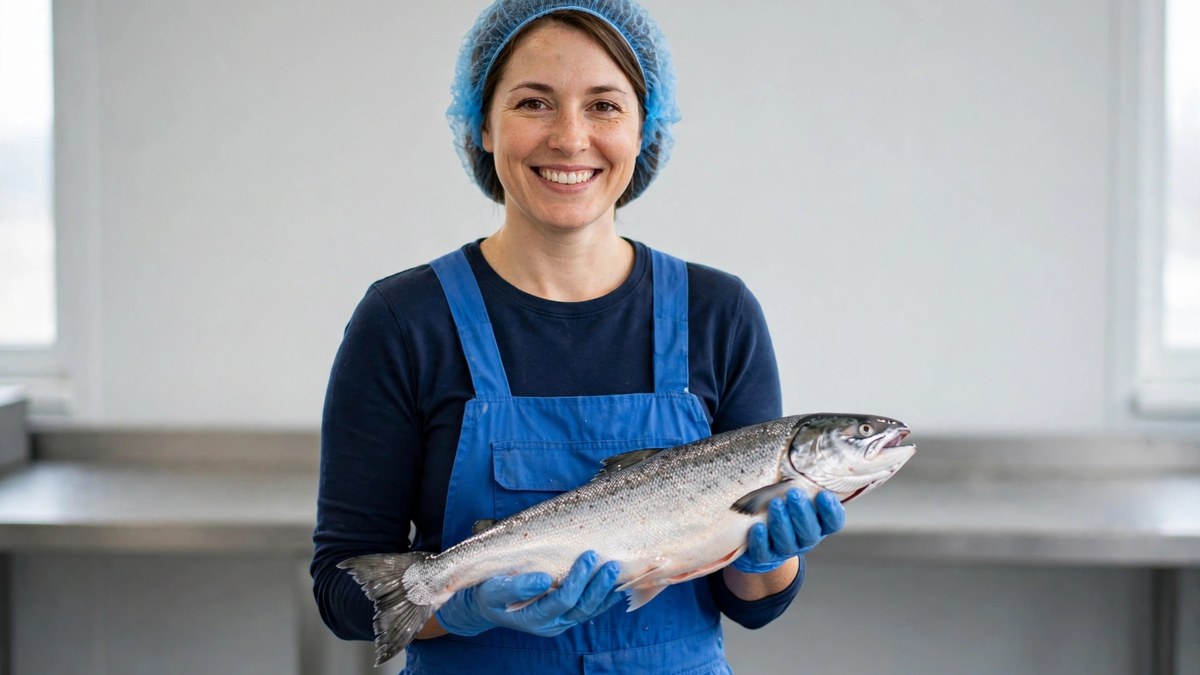
Norway has one of the largest fishing and fish farming industries in the world. Salmon, cod, herring and other fish are caught, farmed, processed and exported from coastal towns across the country. Fish processing plants need workers to clean, fillet, pack and freeze fish, and to keep the production line running. For many people outside the European Union, a fish processing job in Norway is a practical way to work legally in northern Europe, earn a steady income and live in a safe, well organised country.
Fish processing work suits people who are fit, hardworking and comfortable working in a cold, wet environment. You do not need a university degree. Most fish processing roles involve standing at a production line, handling fish, using knives and machines, and following strict hygiene rules. Employers value workers who are punctual, careful and able to work at a steady pace. The work is often done in shifts, including early mornings and weekends, because fish must be processed quickly after it is caught or harvested.
Visa sponsorship for fish processing jobs in Norway is possible, but it follows a strict official process. Sponsorship is employer led and never guaranteed. A Norwegian employer who wants to hire a worker from outside the European Union must offer a job that meets Norwegian labour standards, and the work permit must be approved by the Norwegian Directorate of Immigration. The final decision always belongs to the authorities. This guide explains the process honestly and step by step, so you know what to expect and how to apply in the right way.
Key Takeaways
- Norway has a large fishing and fish farming industry that hires foreign workers for processing plants
- Common roles include fish filleter, packer, production line worker and quality checker
- Most fish processing jobs do not need a university degree, and training is given on the job
- Work is physical and takes place in a cold, wet environment, often in shifts
- Visa sponsorship is employer led and never guaranteed, and the final decision rests with the Norwegian Directorate of Immigration
- You need a written job offer before you can apply for a Norwegian work permit
- Fish-processing pay in Norway depends on the plant, the region and the shift, and the exact amount is fixed by the employer in the written offer. Plants along the northern coast run long shifts during the catch season and quieter rosters outside it, so seasonal workers can earn more in peak weeks and less in the off-season, and the overtime rules matter as much as the basic rate.
- Norway has strong worker protections and clear rules on hours, safety and pay
Why Norway Needs Fish Processing Workers
Norway is one of the world leaders in seafood. The country catches and farms huge amounts of fish every year, and most of it is processed and exported. Salmon farming is especially large, with fish farms along the coast and processing plants in nearby towns. Cod, herring, mackerel and other species are also processed in large volumes.
Fish processing is labour intensive. Fish must be cleaned, filleted, trimmed, packed and frozen quickly to keep it fresh. Machines do part of the work, but many tasks still need people. Processing plants run in shifts and need workers all year round, with the busiest periods during the main fishing seasons and salmon harvests.
Many Norwegian workers prefer other industries, and processing plants are often in small coastal towns where the local labour supply is limited. This is why employers look for workers from other countries. Fish processing companies are used to hiring foreign workers and often provide accommodation and help with practical matters. If you are fit, reliable and willing to work in a cold environment, fish processing work in Norway is a realistic option.
Who Can Apply: Eligibility and Requirements
Fish processing jobs in Norway are open to many people, but there are some basic requirements to know about.
First, you must be at least 18 years old. Fish processing work is physical. You will be standing for most of your shift, handling fish, using knives and working with machines. You need to be fit and healthy. You also need to be comfortable working in a cold and wet environment, because processing halls are kept cool to keep the fish fresh.
Second, you do not need a university degree for most fish processing roles. A high school certificate is usually enough, and for some entry level roles no formal education certificate is required. What matters more is your reliability, your attention to hygiene and your ability to work at a steady pace.
Third, language is not a major barrier. English is widely used in Norwegian workplaces, especially in companies with international staff. Many fish processing plants have workers from several countries, and supervisors often communicate in English. Learning some Norwegian helps with daily life, but you do not need to be fluent to start fish processing work.
Fourth, you need a valid passport. You may be asked for a police clearance certificate from your home country as part of the work permit process. You need to be in good health and able to do physical work in a cold environment.
Finally, you need a genuine job offer from a Norwegian employer. The offer must meet Norwegian labour standards, including fair pay, proper working conditions and insurance. You cannot get a Norwegian work permit without a job offer. Be careful of anyone who asks you to pay a large fee for a job offer or a work permit. Real employers do not charge workers for a job offer.
Types of Fish Processing Jobs in Norway
Norwegian fish processing plants offer several kinds of roles. Here are the most common ones for foreign workers.
Filleters cut fish into fillets by hand or with the help of machines. This is skilled work that needs practice, but many plants train new workers. Filleting requires a steady hand and attention to detail, because the quality of the fillet matters for the customer.
Packers pack processed fish into boxes, add labels and prepare products for shipping or freezing. Packing is usually done at a station on the production line, and it requires care and speed.
Production line workers do a mix of tasks, including cleaning fish, trimming, sorting, grading and moving products along the line. This is a good entry level role for workers with no fish processing experience, and training is given on the job.
Quality checkers inspect fish and finished products to make sure they meet the required standards. This role needs attention to detail and an understanding of hygiene rules. Workers with experience may move into quality roles over time.
General plant workers help with loading and unloading, cleaning work areas, maintaining hygiene and supporting the production line. This role suits workers who are flexible and willing to do different tasks.
Each role has different demands. Filleting needs skill and practice. Packing needs speed and care. Production line work needs stamina. When you apply, ask the employer what the work involves and what training is provided.
How to Apply Step by Step
Applying for a fish processing job in Norway from outside the country follows a clear process. Here is how it usually works.
Prepare your documents and your CV. Write a clear CV in English that lists your personal details, your work experience, your education and your language skills. Keep it short and honest. If you have worked in food processing, fishing or a factory before, highlight it. Have your passport ready and make sure it is valid.
Search for real fish processing jobs. Use trusted job websites and official sources. Look for fish processing companies, seafood exporters and recruitment agencies that work with Norwegian employers. Focus on employers who clearly state that they hire foreign workers or offer work permit sponsorship. Apply directly to the employer when possible.
Apply and attend interviews. Send your CV to the employer. If they are interested, they will contact you for an interview, often by video call. Be polite, be on time, and be ready to talk about your experience, your fitness, and whether you can work in a cold environment and do shift work. Be honest about your English level and your experience.
Get a written job offer. If the employer wants to hire you, they will send you a written job offer or employment contract. Read it carefully. It should state your job title, your duties, your working hours, your pay, your start date and the length of the contract. The exact wage is set by the employer and must be checked in the written offer. The offer must also meet Norwegian labour standards. Do not accept a job based on a verbal promise alone.
The employer applies for a work permit. Once you accept the offer, the employer starts the work permit application with the Norwegian Directorate of Immigration. The employer must show that the job meets the requirements, including fair pay and proper conditions. In many cases the employer must also show that the job was advertised in Norway and the European Union first.
Apply for your residence permit for work. You apply online through the Norwegian Directorate of Immigration, or at a Norwegian embassy or consulate. You submit your passport, your job offer and contract, and other supporting documents. You may be asked to attend an appointment and provide fingerprints and a photograph.
Wait for the decision and prepare to travel. Work permit processing can take several weeks to a few months. Do not book flights until your permit is approved. Once you have your residence permit, you can travel to Norway and start work. After arrival, you may need to register with the local police and the tax authorities.
Documents You Need
Fish-processing plants in Norway hire for the catch season, and the paperwork should be ready before the season starts. The exact list can vary by nationality and employer, but the documents below are the ones most applicants are asked for, so preparing them early keeps the permit application from becoming the reason the start date slips.
- A valid passport with enough validity to cover your planned stay
- A written job offer or employment contract from the Norwegian employer
- A completed work permit and residence permit application
- Passport sized photographs that meet the official requirements
- Proof of your qualifications or work experience, where relevant
- A police clearance certificate from your home country, if requested
- Proof of accommodation in Norway, or a statement from the employer about housing
- Travel insurance or health cover, as required for the permit
Make sure all documents are genuine and up to date. If a document is not in English or Norwegian, you may need a certified translation. Keep copies of everything you submit.
Norway Work Permit Process
Norway uses a residence permit for work, managed by the Norwegian Directorate of Immigration. For most fish processing jobs, the employer applies for a work permit on your behalf, and you apply for a residence permit to live and work in Norway.
The employer must meet several conditions. The job must offer pay and conditions that match Norwegian standards for the role. The employer must provide proper working conditions and insurance. The employer must also show that the job was advertised in Norway and the European Union before offering it to a worker from outside the European Union, unless an exception applies.
You apply for the residence permit online or at an embassy. You need to show your passport, your job offer, and that you meet the requirements. The Directorate of Immigration reviews the application and makes a decision. Processing times vary, and can be several weeks to a few months depending on the case.
Once your permit is approved, you can travel to Norway. After arrival, you register with the police and the tax authorities, and you receive a residence card. Your permit is usually tied to your employer and your job for the first period, so check the conditions before you change employer.
Cost of Living in Norway
Norway has a high cost of living, especially for food, transport and services. However, wages in Norway are also higher than in many other European countries, which helps balance the cost. Fish processing jobs are often in smaller coastal towns, where rent is lower than in Oslo or Bergen.
Many fish processing employers provide accommodation or help new workers find housing. This is a big advantage, because it removes the cost of rent. Some employers also provide transport to and from the plant. Always confirm in writing what is included in your job offer before you accept it.
Food and daily expenses are higher in Norway than in many other countries, so it is important to plan a budget. If your accommodation is provided, your main costs will be food, phone and personal items. It is a good idea to bring some savings for your first weeks, until you receive your first pay. Ask your employer how and when you will be paid, so you can plan your budget.
Frequently Asked Questions
Do I need to speak Norwegian to work in fish processing?
No, not usually. English is widely used in Norwegian fish processing plants, especially in companies with international staff. Learning some Norwegian helps with daily life, but you can start fish processing work with English.
How long does the work permit take?
Processing times for fish-processing permits in Norway vary. It can take several weeks to a few months, depending on the case and the workload, and the catch season brings a surge of applications from the northern plants. Apply as early as possible and be patient. Do not book travel until the permit is approved, since the start date in the contract means nothing without it.
Is accommodation provided by fish processing employers?
Often, yes. Many fish processing companies provide accommodation or help new workers find housing, especially in small coastal towns. Confirm in writing what is included before you accept the job.
Is fish processing work very cold?
Yes, processing halls are kept cool to keep the fish fresh, and the work involves handling cold fish and water. Employers provide protective clothing, gloves and boots. You need to be comfortable working in a cold and wet environment.
Can I bring my family with me?
Family members can apply to join you in Norway in many cases, but it depends on your permit type, your income and your housing. Check the rules for your specific permit before you make plans.
Conclusion
Fish processing work in Norway offers a solid way to live and work in northern Europe. The seafood industry is large and stable, employers need reliable staff, and Norway has strong protections for workers. The work is physical and takes place in a cold environment, but the jobs are steady and the experience is valuable. For a closer look at a similar route, see our guide to meat processing jobs in Australia.
The key is to apply properly. Find a genuine employer, get a written job offer that meets Norwegian standards, and follow the work permit process through the Norwegian Directorate of Immigration. Do not pay for a job offer, do not trust anyone who guarantees a permit, and always read your contract carefully. If you are fit, reliable and willing to work in a cold environment, a fish processing job in Norway can be the start of a stable working life in Europe. For a closer look at a similar route, see our guide to food packing worker jobs in Canada.