Caregiver Jobs in USA with Visa Sponsorship 2026 are among the most searched job topics in the world, and also among the most misunderstood. The United States needs millions of caregivers. The Bureau of Labor Statistics counted about 4.7 million home health and personal care aide jobs in 2025 and projects employment in this field to grow by 18 percent from 2025 to 2035, with roughly 760,500 openings every year. That demand is real, and it comes from an ageing population, longer lives, and a strong preference for care at home rather than in institutions. What is not real is the promise that appears in thousands of online advertisements, that any foreign caregiver can get a quick work visa and start earning in America within weeks. The United States has no dedicated caregiver visa. The main route for a foreign care aide is an employer sponsored green card through the EB-3 category, and that route is slow, with a waiting line measured in years. This guide explains the real routes, the real pay, the real waiting times, and the real jobs, so you can decide whether this path is worth your time, and so you can recognise the scams that target caregivers more than almost any other group of workers.
What Care Work Really Looks Like Day to Day
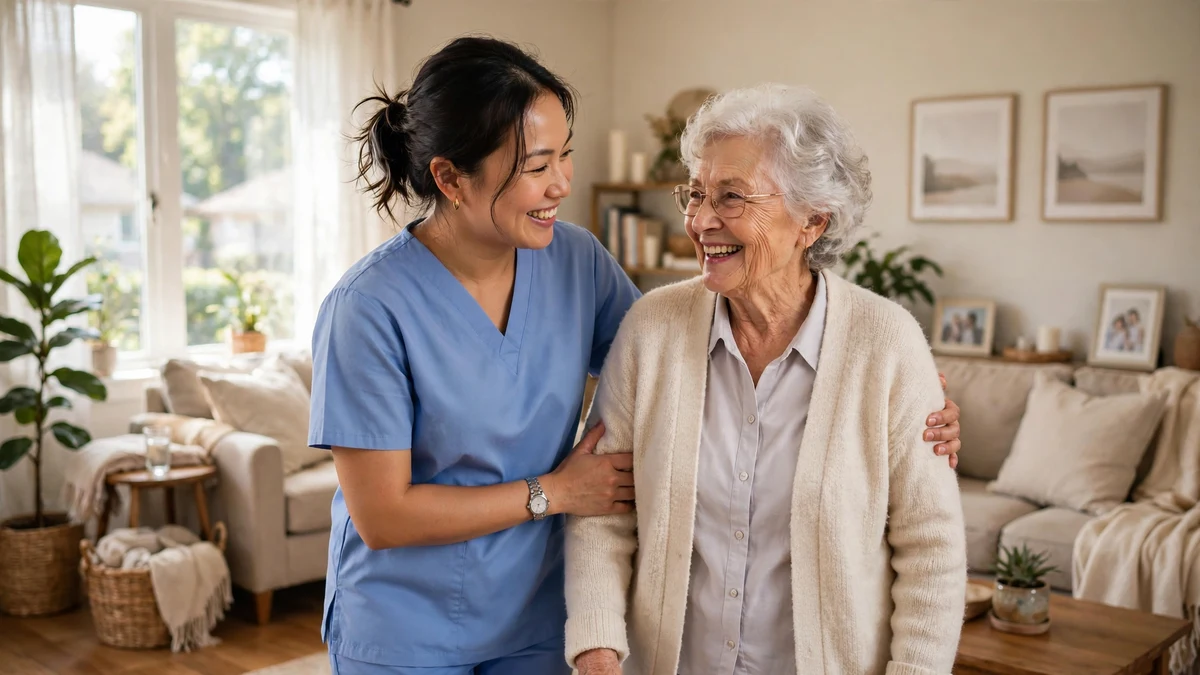
Care work in the United States is personal, physical, and emotional, and it is very different from the way it is shown in recruitment advertisements. A home health aide or personal care aide visits clients in their own homes and helps with the tasks of daily life. That means helping a person get out of bed, wash, dress, and eat, reminding them to take their medicine, preparing simple meals, doing light housework, and helping them move safely around the house. It also means companionship, talking, listening, and noticing when something has changed, a new bruise, a loss of appetite, a sudden confusion, and reporting it to a nurse or a family member. A nursing assistant in a nursing home or hospital does similar work with more patients, more lifting, and more pressure, including helping patients move between beds and wheelchairs, taking vital signs, and keeping careful records. The work is deeply meaningful, and many caregivers say the relationships they build with clients are the best part of the job, but it is also tiring, and it requires patience, strength, and a calm manner on difficult days.
A typical day for a home care aide starts with a visit to the first client, often early in the morning, and continues with several visits across the day, each lasting one to four hours, with driving time in between. Some aides work for an agency that sends them to different homes, and some work directly for one family. Live in caregivers, who are less common and usually arranged privately, live in the client’s home and have set hours and days off under an agreement. In a nursing home, a nursing assistant works a fixed shift, usually eight or twelve hours, and cares for a group of residents with the support of nurses. Weekend and night shifts are common, and holiday work is normal in this field, because clients need care every day of the year. The work is rarely desk based, it involves standing, walking, bending, and lifting for most of the shift, and it requires good personal hygiene, a tidy appearance, and the ability to communicate clearly in English with clients, families, and nurses.
The emotional side of care work is the part new workers underestimate most. Clients may be lonely, frightened, or in pain. Some have dementia and may repeat themselves, become confused, or forget who you are. Some are near the end of their lives, and their families are grieving. A good caregiver learns to stay patient, to speak gently, to respect privacy and dignity, and to keep professional boundaries while still being warm. Employers notice this quickly, and the caregivers who keep their jobs and get the best references are usually the ones who are reliable, honest, and kind on the days when the work is hardest. If you are considering this career, ask yourself honestly whether you can do this work day after day, not just whether you want to move to America, because the answer decides whether you will last.
Care Settings in the USA: Homes, Hospitals and Clinics
Caregivers in the United States work in four main settings, and each one offers a different life. Home care is the largest setting. Home health and personal care aides visit clients in their own homes, usually through an agency, and the work is one to one, flexible, and personal. The pay is modest, the hours can be irregular, and the work depends on the agency having enough clients, but many workers prefer it because they build real relationships and work independently. Nursing homes and assisted living facilities are the second setting. Nursing assistants and orderlies work in teams, follow fixed shifts, and care for many residents, and the work is steadier and more structured, with clearer supervision and more colleagues to learn from. Hospitals are the third setting, where nursing assistants support registered nurses with patients who are acutely ill, and the pace is faster, the training requirements are higher, and the pay is usually better.
The fourth setting is adult day care and community care, where caregivers support older adults and people with disabilities during the day, helping with meals, activities, and personal care. Hospice care is a related setting, where caregivers support people who are terminally ill and their families, and it requires special sensitivity and training. The setting you choose affects your pay, your hours, your training, and your visa options. Home care agencies are the most likely to hire large numbers of aides, but they are also the least likely to sponsor a foreign worker, because the EB-3 green card process is long and expensive, and most agencies prefer to hire locally. Larger nursing home chains and hospital systems are more likely to have the resources and the patience to sponsor, especially for nursing assistants and licensed practical nurses, so they are the employers worth targeting if sponsorship is your goal.
Skills and Training Employers Want
Employers in the United States look for a specific set of skills in a caregiver, and many of them can be learned before you apply. The most important is the ability to help with personal care safely, including bathing, dressing, toileting, feeding, and moving a person without injuring them or yourself. Safe lifting and moving techniques matter, and a short course in manual handling or a care certificate from your home country helps your application. Basic first aid and CPR are expected by many employers, and a certificate from a recognised provider is a real advantage. Infection control, including hand hygiene, the use of gloves, and the safe handling of waste, is essential, especially after the lessons of the pandemic, and employers will test your knowledge of it during training.
Communication is the skill that separates a good caregiver from an average one. You need to speak and understand English well enough to talk with an older person who may speak quietly or unclearly, to understand a nurse’s instructions, to read a care plan, and to write clear notes about what you did. You do not need perfect English, but you do need clear, polite, everyday English, and you should practise the vocabulary of care, medication, mobility, and daily routines before you apply. Employers also value reliability above almost everything else. Turning up on time for every shift, calling early if you are sick, and completing your notes honestly are the things that build trust. A clean background check, a health screening, and a tuberculosis test are standard requirements, and a driving licence is a strong advantage for home care work, because aides drive between clients, and an agency will prefer a worker who can drive.
Formal training helps, and the requirements depend on the role. A home health aide working for an agency that receives Medicare funding must complete at least 75 hours of classroom and supervised practical training, including at least 16 hours of classroom training before at least 16 hours of supervised practice, and must pass a competency evaluation. A nursing assistant must complete a state approved training programme and pass a competency exam to be listed on the state nurse aide registry. A licensed practical nurse needs about a year of postsecondary training and a licence, and a registered nurse needs a nursing degree and a licence. If you already hold a nursing qualification from your home country, check whether it can be recognised in the United States, because nursing offers a much clearer sponsorship route than care aide work, and the pay is far higher.
Shifts, Pay and Time Off
Pay for care work in the United States is modest, and anyone who tells you otherwise is not being honest. The Bureau of Labor Statistics reports that the median pay for home health and personal care aides was 35,800 dollars a year in May 2025, which works out to about 17.21 dollars per hour, or about 2,983 dollars per month for a full time worker. Nursing assistants and orderlies earned a median of 41,870 dollars a year. Licensed practical and vocational nurses earned a median of 64,400 dollars a year, and registered nurses earned a median of 97,550 dollars a year. These are national medians, which means half of workers earn more and half earn less. Pay varies by state, with California, New York, Massachusetts, and Washington paying more than the national median, and Mississippi, Alabama, Arkansas, and West Virginia paying less, but the cost of living in the higher paying states is also much higher, so the difference is smaller than it looks.
Most care aides work full time, but part time and casual work is common, especially in home care, where the number of hours depends on the number of clients. A full time aide usually works 35 to 40 hours a week, often including evenings and weekends, and overtime is paid at time and a half in most states. Some agencies offer health insurance, paid time off, and retirement plans, but many small agencies offer few benefits, so read the job offer carefully and ask what is included. Paid sick leave and paid holidays depend on the state and the employer, and they vary widely across the country. Live in caregivers may receive free housing and meals as part of their package, which changes the maths considerably, but they also have less personal time and must be clear about their hours and days off in writing before they accept the role.
To put the pay in context, a care aide earning 17.21 dollars per hour for 40 hours a week earns about 688 dollars per week before tax, or about 35,800 dollars per year. After federal and state income tax, Social Security, and Medicare deductions, the take home pay is lower, and rent, food, transport, and health insurance take a large share. A one bedroom apartment in a small American city can cost 800 to 1,200 dollars a month, and the same apartment in New York or San Francisco can cost 2,000 dollars or more. Workers who share housing, cook at home, and use public transport can save money, but care work is not a route to quick wealth. Its value is stability, legal status, and a foothold in the American healthcare system, which can lead to better paid nursing roles over time for workers who study and gain qualifications.
Checks, Documents and Registration
Working as a caregiver in the United States requires checks and documents that take time, so start them early. Every care employer will run a criminal background check, and most will require a drug test and a health screening, including a tuberculosis test and proof of vaccinations such as hepatitis B, influenza, and COVID-19, depending on the state and the employer. You will need a valid passport, your educational certificates, and references from previous employers, and you should have these translated into English by a certified translator if they are in another language. If you are applying for a nursing assistant role, you will need to complete a state approved training programme and pass the competency exam, and your name will be entered on the state nurse aide registry, which employers check before they hire you.
For the immigration process, the documents are more demanding. An EB-3 green card application requires the employer to obtain a PERM labor certification from the Department of Labor, which proves that no qualified American worker is available for the job, and then to file an immigrant petition with US Citizenship and Immigration Services. You will need a police clearance certificate, a medical examination by a panel physician, and proof of your identity and qualifications. The process is paper heavy and slow, and a mistake in one form can delay the case by months, which is why many employers use an immigration lawyer. You should never pay an agent for a job offer, and you should never send your original passport or your bank details to someone you met on social media. Keep copies of every document, and keep a written record of every payment you make and every person you deal with.
Visa Sponsorship for Care Workers in the USA
This is the section that matters most, and it needs complete honesty. There is no dedicated caregiver visa in the United States. Most foreign care aides who work legally in America do so through the EB-3 immigrant visa, in the subcategory called other workers, which covers permanent full time jobs that need less than two years of training or experience. The process has three stages. First, the employer files a PERM labor certification with the Department of Labor, showing that the job is genuine and that no qualified American worker applied. Second, the employer files an immigrant petition, Form I-140, with US Citizenship and Immigration Services. Third, when a visa number becomes available for your country of birth, you apply for the immigrant visa at a US embassy or for adjustment of status if you are already in America. The waiting line is the problem. The other workers category is limited by law to 10,000 visas a year for the whole world, and in the November 2026 Visa Bulletin the final action date for this category sat at 1 June 2022, which means applicants are waiting years between the petition and the visa. The wait is longer for workers born in India, China, Mexico, and the Philippines, where the queues are longest.
The H-2B visa, which many advertisements mention, rarely fits care work. H-2B is for temporary, seasonal, or peak load needs, and home care is a year round, permanent need, so most H-2B petitions for caregivers fail. The H-1B visa needs a degree level specialty occupation, which care aide work is not. The J-1 au pair programme lets young people live with a host family and provide childcare as part of a cultural exchange, but it is not a route to permanent residence and it is limited to childcare, not elder care. Two proposals discussed in 2026, a proposed H-1D visa for direct care workers and the proposed Careworker Visa Act, would create new routes for care workers, but both are proposals and bills, not law, and neither can be relied on. Nursing is different. Registered nurses can use the EB-3 skilled worker category or, in some cases, the Schedule A route, which avoids the PERM stage, and the waiting line for nurses is shorter than for care aides, which is why nurses with a recognised qualification and an English test have a much better chance than care aides.
Immigration rules shifted significantly during 2026, and you should know the direction of travel before you commit years to this route. Processing has become stricter, adjustment of status is treated with more discretion, and immigrant visa processing has been suspended for nationals of a large group of countries at US embassies and consulates, which affects applicants from several of the countries whose workers most often apply for care jobs. These rules change, and they change fast, so check the current Visa Bulletin and the US Citizenship and Immigration Services website before you start, and be wary of any agent who describes the 2026 rules as simple or settled. Sponsorship exists, but it is rare, slow, and competitive, and the honest expectation for a care aide is a wait of several years from the day an employer agrees to sponsor you to the day you land in America.
How to Apply
Applying for a caregiver job in the United States as a foreign worker starts with targeting the right employers, not with paying an agent. The employers most likely to sponsor are large nursing home chains, hospital systems, and established home care agencies with a history of hiring internationally, because they have the legal team and the budget to manage a multi year EB-3 process. Search for these employers on job sites such as Indeed, LinkedIn, and the career pages of large healthcare providers, and look for roles that mention visa sponsorship, EB-3, or international recruitment. A genuine advertisement will name the employer, describe the role and the location, state the pay, and explain the application process. It will not ask you to pay a fee, and it will not promise a visa in weeks. If you are already in the United States on another visa, your options are wider, and you can apply for care jobs locally and discuss sponsorship with the employer once you are hired and proven.
- Prepare a clear CV in American format, one or two pages, listing your care experience, your training, your English level, and your contact details, with no photo and no personal details such as your religion or marital status.
- Write a short cover letter explaining why you want to work in care, what experience you have, and that you are seeking EB-3 sponsorship, so the employer knows your situation from the start.
- Apply directly through the employer’s website or a recognised job site, and keep a record of every application, including the date, the role, and the employer’s name.
- Prepare for a video interview by practising clear answers about your experience, your reasons for choosing care work, and your willingness to commit to the employer for the years the green card process takes.
- If an employer offers you a role and agrees to sponsor you, ask for the offer in writing, with the job title, the pay, the hours, the location, and the sponsorship terms, and ask whether the employer will use an immigration lawyer and who pays the legal fees.
- Complete your medical examination and police clearance when the employer or the lawyer asks for them, and provide your documents promptly, because delays at this stage slow the whole case.
- Do not resign from your current job, sell property, or book travel until the immigrant visa is issued, because the process takes years and can be delayed or denied at any stage.
Be careful about who you trust. The care sector attracts scammers because the demand is real and the applicants are hopeful. A scammer will usually contact you on Facebook or WhatsApp, offer a high salary, send a fake job offer letter with a stolen company logo, and ask for a payment for a visa, a medical, or a work permit. A real employer will interview you, will give you a written offer with verifiable company details, and will not ask you to pay for the job. Check the employer by searching for their state business registration, calling the facility on a number you find yourself, and asking whether they sponsor foreign workers through the EB-3 programme. If the employer cannot be verified, walk away. You can also report suspected fraud to the Federal Trade Commission and to the job site where you found the advertisement.
Common Mistakes Applicants Make
The commonest mistake is believing a promise of a fast visa. No agent can speed up the EB-3 waiting line, and no payment can buy a visa number. Applicants who pay thousands of dollars for a quick caregiver visa lose their money and gain nothing. The second mistake is applying for the wrong route, such as paying for an H-2B application for a permanent home care job that will never qualify, or arriving on a visitor visa and working illegally, which can lead to removal and a ban from returning to the United States. The third mistake is underestimating the English requirement. Care work needs clear everyday English, and workers who cannot communicate with clients and nurses struggle, lose confidence, and sometimes lose their jobs. Practise English every day, and take a test so you know your level before you apply.
Another common mistake is accepting the first offer without reading it. Some offers pay below the local rate, provide no health insurance, and expect unlimited overtime without proper pay. Read the offer, ask about the pay, the hours, the benefits, and the sponsorship timeline in writing, and compare it with the Bureau of Labor Statistics figures for the role and the state. A further mistake is failing to keep records. Keep copies of your employment agreement, your pay slips, your training certificates, and every letter from the employer and from US Citizenship and Immigration Services, because you will need them again. Finally, many applicants forget to plan for their family. The EB-3 route allows your spouse and unmarried children under 21 to apply with you, but they are included in the same waiting line, and you should discuss schooling, housing, and health insurance for your family with the employer before you accept the offer, not after you arrive.
Frequently Asked Questions About Caregiver Jobs in the USA
Is there really a caregiver visa for the USA in 2026?
No, there is no visa created specifically for caregivers. The realistic route is the EB-3 green card in the other workers subcategory, which needs a permanent job offer, a PERM labor certification, and a long wait for a visa number. Temporary visas such as H-2B rarely fit care work, and the proposed H-1D visa and Careworker Visa Act are bills, not law.
How long does EB-3 sponsorship for a caregiver take?
The process commonly takes several years. The PERM stage can take a year or more, the immigrant petition takes months, and the wait for a visa number is the longest stage. In the November 2026 Visa Bulletin, the final action date for EB-3 other workers was 1 June 2022, which shows a queue of years. The wait is longer for applicants born in India, China, Mexico, and the Philippines.
How much do caregivers earn in the USA?
The Bureau of Labor Statistics reports a median of 35,800 dollars a year, or 17.21 dollars per hour, for home health and personal care aides in May 2025. Nursing assistants earn a median of 41,870 dollars a year, licensed practical nurses earn 64,400 dollars, and registered nurses earn 97,550 dollars. Pay varies by state and by employer, and the cost of living varies too.
Can a caregiver bring family to the USA?
Yes, under the EB-3 route, your spouse and unmarried children under the age of 21 can apply for immigrant visas with you, and they travel in the same queue. Your family cannot usually travel before your visa number becomes available, so plan for a wait of years, and discuss housing and schooling with your employer before you accept an offer.
Do I need experience to become a caregiver in the USA?
Most care aide roles accept workers with little formal experience and provide training, but any care experience, first aid certificate, or training course you hold will strengthen your application. Nursing assistant roles need a state approved training programme and a competency exam, and nursing roles need a recognised qualification and a licence.
Are caregiver jobs in the USA a scam?
Caregiver jobs themselves are real, and the demand is genuine, but many of the advertisements aimed at foreign workers are scams. A real offer comes from a verifiable employer, includes a written contract, involves an interview, and never asks you to pay for the job offer or the visa. If an offer promises a visa in weeks, guarantees sponsorship, or asks for money through a personal account, treat it as a scam and report it.
Final Word
Caregiver Jobs in USA with Visa Sponsorship 2026 are worth pursuing only if you go in with honest expectations. The need for caregivers in America is real and growing, the work is meaningful, and the EB-3 green card route is genuine, but it is slow, competitive, and limited to a small number of visas each year. The workers who succeed are the ones who train properly, who target large and verifiable employers, who apply directly, who keep their documents in order, and who are patient enough to wait years for a visa number. If you want a fast move abroad, this is not the route. If you want a stable, legal, long term career in American healthcare, and you are willing to start as a care aide and grow towards nursing, then it can be the right path. Train, apply honestly, refuse to pay for promises, and let the official Visa Bulletin, not an agent on social media, tell you where you stand.