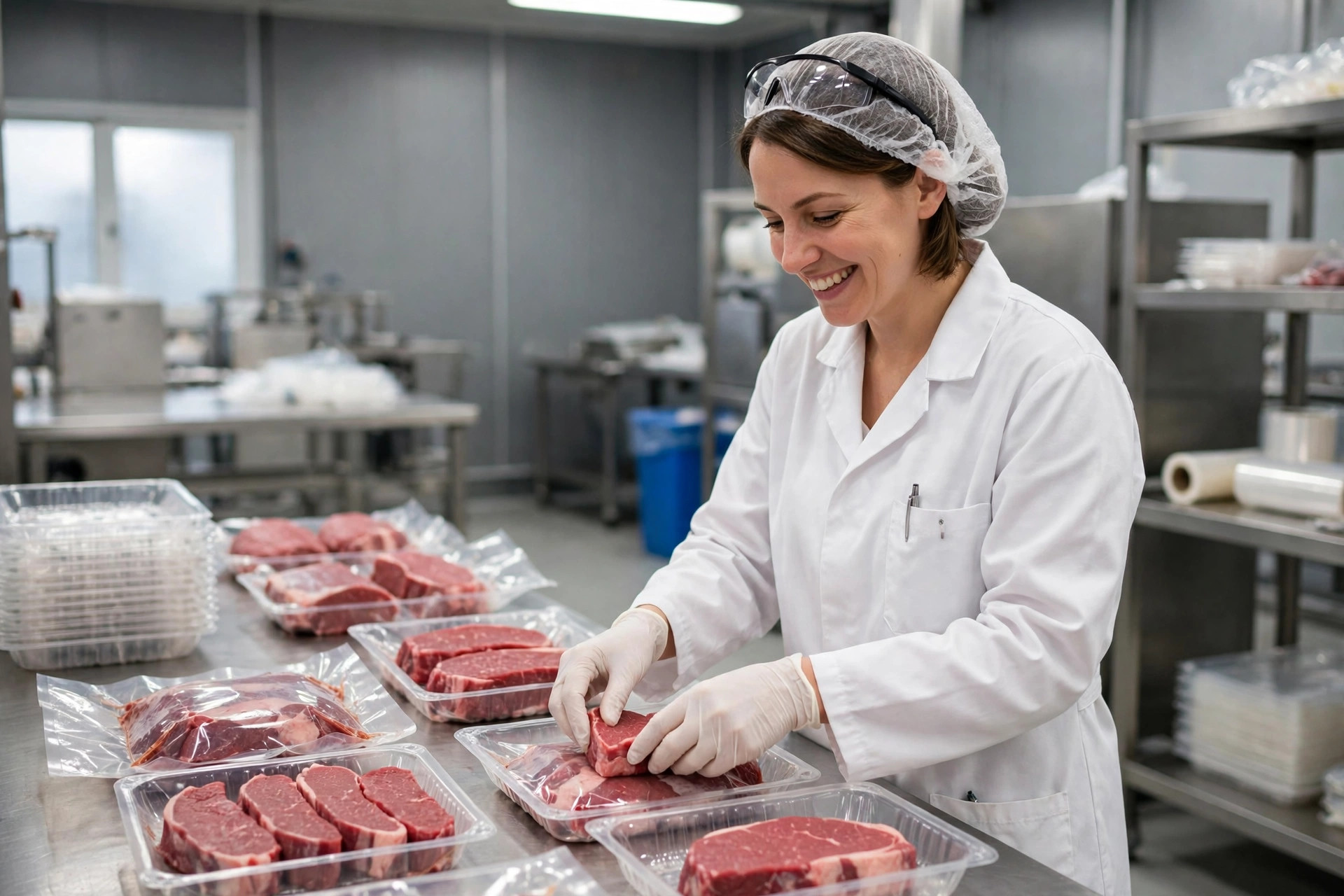
A meat processing worker in Australia works inside a processing plant, known as an abattoir or a meatworks, cutting, trimming, packing and loading meat for shops and export. The meat is beef, lamb, pork and chicken. The work is fast, indoor and team-based, with knives, machines, cold rooms and hygiene rules. This guide compares meat processing with fruit packing, dairy farm work and factory work, head to head, with a verdict per point, so a worker can see which job suits them.
Featured snippet answer: australia meat processing jobs with visa sponsorship in 2026 means an Australian meat processing plant offers a foreign worker a meat processing job and supports a visa, most often through an employer-sponsored work visa. Pay is usually hourly and varies by state, plant and experience. A valid job offer from an approved employer is normally required before any visa step, and a genuine employer never asks a worker to pay for the job offer.
Meat Processing vs Fruit Packing: Indoor Work, Different Temperature
Meat processing is indoor work, in a cold plant, with knives, machines and hygiene rules. Fruit packing is indoor work, in a cool shed, with conveyor lines, boxes and quality checks. Both are fast, indoor, team-based jobs, with targets and shifts. The difference is the temperature and the tool. Meat processing is cold, with knives and meat. Fruit packing is cool, with boxes and fruit.
Meat processing pays for cold work, with overtime and shift differences, and it runs all year, because meat is processed every day. Fruit packing pays for speed, with seasonal work, and it runs in harvest season. A worker who likes cold, indoor work, all year, will suit meat processing. A worker who likes cool, indoor work, in season, will suit fruit packing.
Verdict: Meat processing wins for all-year work. Fruit packing wins for seasonal work with a clear end.
Meat Processing vs Dairy Farm: All Year, Different Hours
Meat processing is indoor work, in a plant, with a set shift, and it runs all year. Dairy farm work is outdoor and indoor work, on a farm, with early starts twice a day, and it runs all year. Both are physical, all-year jobs, with early starts and long hours. The difference is the place and the animal. Meat processing is in a plant, with meat and machines. Dairy farm work is on a farm, with cows and milking.
Meat processing pays for plant work, with overtime and shift differences. Dairy farm work pays for farm work, with overtime and accommodation on many farms. A worker who likes plant work, with a set shift, will suit meat processing. A worker who likes animals, early starts and a farm will suit dairy work.
Verdict: Meat processing wins for a set shift in a plant. Dairy farm work wins for animal work on a farm.
Meat Processing vs Factory Work: Cold vs Warm
Meat processing is indoor work, in a cold plant, with knives, meat and hygiene rules. Factory work is indoor work, in a warm factory, with machines, production lines and quality checks. Both are fast, indoor, team-based jobs, with targets and shifts. The difference is the temperature and the product. Meat processing is cold, with meat. Factory work is warm, with many kinds of products.
Meat processing pays for cold work, with overtime and shift differences, and it runs all year. Factory work pays for production work, with overtime and shift differences, and it runs all year. A worker who can work in the cold, with knives, will suit meat processing. A worker who wants warm, indoor work, with machines, will suit factory work.
Verdict: Meat processing wins for workers who can handle the cold. Factory work wins for workers who want warm, indoor work.
What a Meat Processing Worker Does
A meat processing worker does five kinds of work. Slaughter and dressing means preparing animals for processing, under strict hygiene and animal welfare rules. Boning and cutting means cutting meat into primals, trimming fat and bone, and preparing cuts for shops. Packing means packing meat into boxes, labelling them and checking quality. Loading means loading boxes onto trucks for delivery to shops and export. Cleaning means cleaning the plant, machines and work areas, and keeping the plant safe.
The work is full-time, with shifts that include days, nights and weekends, because plants run around the clock. The worker stands all day, works with knives, follows hygiene rules and works as part of a team. The worker does not need a degree. The worker needs good English, physical fitness, reliability and a willingness to work in the cold.
Where the Jobs Are
Meat processing jobs are in every state, but Queensland, New South Wales, Victoria, South Australia and Western Australia hire the most meat processing workers, because they have the largest abattoirs and processing plants. Queensland hires workers in Rockhampton, Toowoomba, Ipswich and Brisbane, for beef and lamb plants. New South Wales hires workers in Wagga Wagga, Dubbo, Tamworth and Sydney, for beef, lamb and pork plants. Victoria hires workers in Warrnambool, Geelong, Melbourne and Bendigo, for beef, lamb and chicken plants. South Australia hires workers in Murray Bridge, Naracoorte and Adelaide, for beef, lamb and pork plants. Western Australia hires workers in Harvey, Katanning and Perth, for beef, lamb and pork plants.
A worker in a large plant works with a large team, a set shift and a fixed set of products. A worker in a small plant works with a smaller team, and often does more varied work, including cutting, packing and loading.
How Pay Works
Australia meat processing salary is not one number. It is a structure, with four parts: the hourly wage, the hours, the experience level, and the benefits. Meat processing pay in Australia is usually hourly, with award rates set in Australia, and with the minimum wage set by the Fair Work Ombudsman. Some plants offer overtime, paid holidays, accommodation and meals.
A meat processing worker in Queensland may earn a different hourly wage from a meat processing worker in Victoria, for the same job, because the state, the plant, the product and the experience are different. An experienced worker, or a worker who can bone and cut meat, often earns more than a new worker. Hours are usually full-time, with shifts that include days, nights and weekends, because plants run around the clock. None of these differences are visible in a single figure from a blog, a message or an agent. They are visible only in the written job offer, which must state the wage, the hours, the shift pattern and the benefits.
Meat-processing pay in Australia is set by the employer and the state, and it must be checked in the written offer. A single figure from a blog, a message or an agent is not a wage, because the plant, the shift, the state award and the overtime rules all shape the actual pay, and only the written offer from the plant shows the real figure.
The Visa Route
Most foreign meat processing workers in Australia work through an employer-sponsored work visa, most often the Temporary Skill Shortage visa (subclass 482), or through a working holiday visa (subclass 417 or 462), or through the Pacific Australia Labour Mobility (PALM) scheme, for workers from Pacific Island countries and Timor-Leste. The employer must be an approved sponsor, and must offer a job that meets the visa rules, including the skill level and the salary threshold. The worker must meet the English language requirement where it applies, and must have enough money to support themselves, unless the sponsor certifies maintenance.
A meat-processing worker should read the current visa rules on the official Australian Department of Home Affairs website before applying, because eligible jobs, salary thresholds and timelines change every year. This site does not provide immigration advice. Sponsorship is employer-led and never guaranteed, and it depends on the employer, the role and visa availability. A worker should never pay for a job offer or for a visa. A genuine employer will not ask for payment for sponsorship through WhatsApp, Telegram or unofficial agents, and a worker should never travel without a valid visa on the promise that the visa will be arranged after arrival.
How to Apply Safely
First, search meat processing plant career pages and official job boards, and note the employer name, the plant type, the location, the pay and the accommodation for each listing. Second, apply only through the employer’s official application link. Third, never pay for a job offer. Fourth, keep a copy of the job offer and check the employer’s details, pay, hours and accommodation before signing anything. Fifth, check the visa rules on the official Department of Home Affairs website, and do not travel without a valid visa.
A trial shift is normal in some plants. A request for money is not normal, in any plant. A job offer that arrives in a message, with no employer website, no address and no written contract, is not a job offer. It is a scam.
Honest Limitations and Where to Verify Officially
This guide is general information only. It is not a job offer, and it is not immigration advice. It does not list a specific plant, a specific wage or a specific visa approval, because those depend on the plant, the state, the product and the worker’s own situation. Pay varies. Hours vary. Sponsorship is never guaranteed. Australian visa rules and timelines change every year.
Meat-processing jobs in Australia need the same official checks as any sponsored role: the Australian Department of Home Affairs for visa rules, the Fair Work Ombudsman for pay rates and workplace rights, and the employer's own website for the plant job itself. Confirm every detail with the employer, in writing, and if a detail cannot be verified there, do not act on it.
Key Takeaways
- A meat processing worker cuts, trims, packs and loads meat inside a processing plant, for shops and export.
- Meat processing is cold, indoor, all-year work, with a set shift and a team.
- Meat processing wins for all-year work and a set shift. Fruit packing wins for seasonal work. Dairy farm work wins for animal work. Factory work wins for warm, indoor work.
- Pay is hourly, with award rates, and it varies by state, plant, product and experience. Check it in the written offer.
- Sponsorship is employer-led and never guaranteed. Never pay an agent for a job or a visa.
Winner: For a worker who can handle the cold, wants all-year work with a set shift, and likes fast, indoor, team-based work, meat processing is the winner in this comparison.
| Part of the job | Meat processing | Fruit packing | Dairy farm | Factory work |
|---|---|---|---|---|
| Place | Cold plant, indoors | Cool shed, indoors | Farm, outdoors and indoors | Warm factory, indoors |
| Season | All year | Harvest season | All year | All year |
| Hours | Set shift, days, nights, weekends | Full-time in peak | Early starts, twice daily | Set shift, days, nights, weekends |
| Skills | Knives, cutting, hygiene | Speed, grading, packing | Animals, milking, records | Machines, production, quality |
| Pay | Hourly, award rates | Hourly, award rates | Hourly, award rates | Hourly, award rates |
FAQ
Do Australia meat processing jobs offer visa sponsorship in 2026?
Yes, many Australian meat processing plants sponsor foreign meat processing workers, most often through an employer-sponsored work visa, with an approved sponsor. Sponsorship depends on the employer and visa availability, and it is not guaranteed for every role. For a closer look at a similar route, see our guide to food processing worker jobs in Germany.
Do I need experience for a meat processing job?
Meat processing experience helps, and many employers want at least one year of meat processing or factory experience. Training is often provided, but fitness, reliability and good English matter more than a long CV. For a closer look at a similar route, see our guide to mining engineer jobs in Australia.
Is accommodation provided for meat processing workers?
Accommodation is often provided on or near the plant, in shared housing. Ask the employer in writing, and check the cost of accommodation in the offer before signing anything.
Is meat processing work cold?
Yes, meat processing plants are cold, with cold rooms and chilled work areas. Protective clothing is provided, and a worker who can work in the cold will settle in fast.
Can a meat processing worker move up?
Yes, meat processing workers can move into team leader, supervisor, quality inspector, boner and plant manager roles with experience and training.
Should a meat processing worker pay an agent?
No. A real Australian meat-processing plant hires through its own careers page and never asks a worker to pay for a job offer or for sponsorship. The agents who charge fees usually promise a boning or packing role and a visa for money sent by message, with no plant name and no medical check arranged. A genuine plant names its location, runs a proper application and medical process, and puts the offer in writing before any visa step.