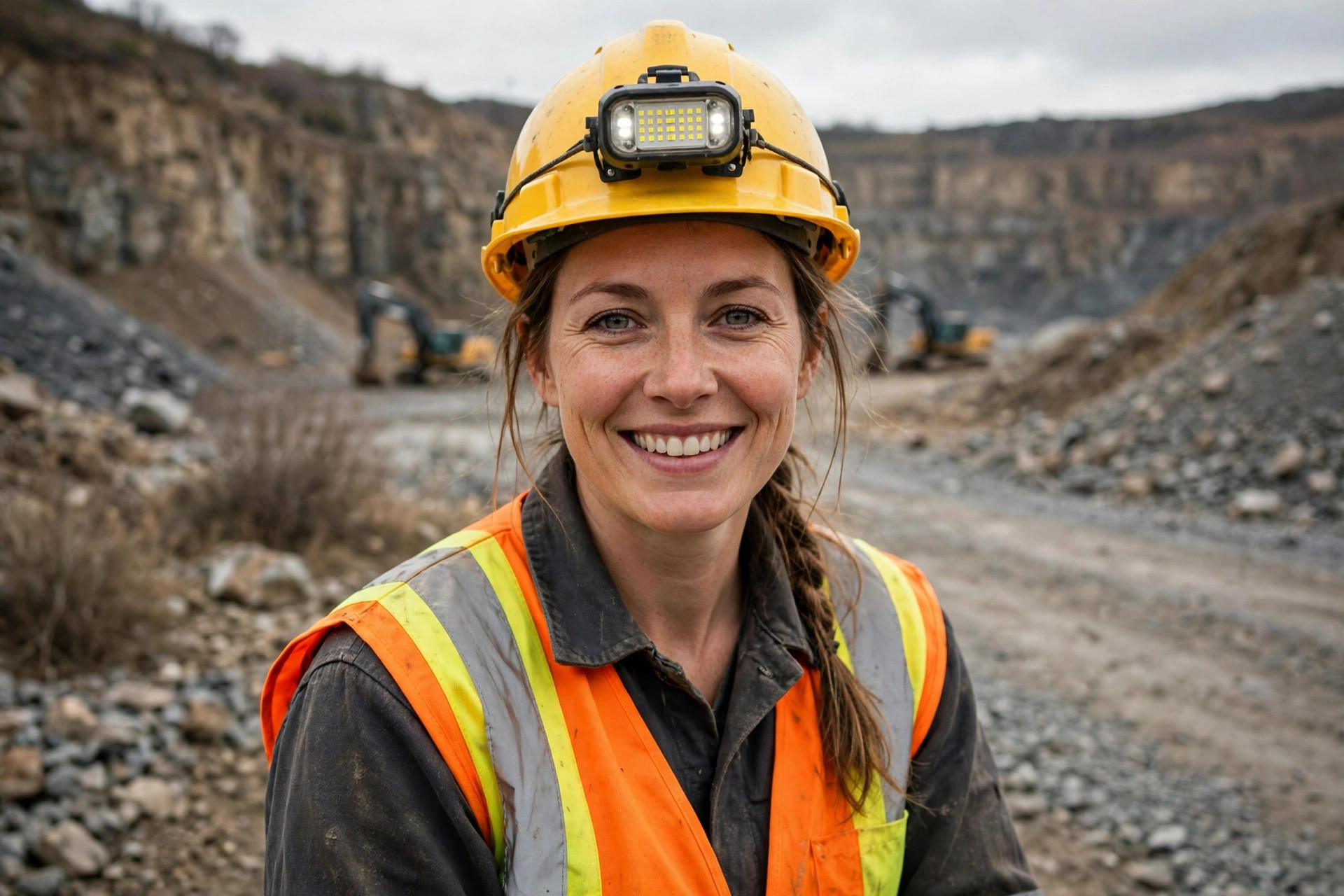
A mining engineer in Australia plans, designs and manages mines — open-cut and underground — for iron ore, coal, gold and other minerals, in Western Australia, Queensland and New South Wales, under a mine manager, with a team of geologists, surveyors and operators. The work is skilled, technical and site-based, with long shifts and a fly-in fly-out roster. This guide follows one clearly-labelled ILLUSTRATIVE scenario, with lessons after each phase, so an engineer can see the order of the stages.
Featured snippet answer: australia mining engineer jobs with visa sponsorship in 2026 means an Australian mining company offers a foreign mining engineer a mine engineering job and supports a visa, most often through an employer-sponsored work visa. Pay is usually salaried and varies by state, employer and experience. A valid job offer from an approved employer is normally required before any visa step, and a genuine employer never asks an engineer to pay for the job offer.
The Role: What a Mining Engineer Does
A mining engineer does five kinds of work. Planning means planning mine layouts, production schedules and blasting. Designing means designing pits, tunnels and ventilation systems. Safety means checking safety rules, risk assessments and emergency plans. Managing means managing production, budgets and teams of operators. Reporting means keeping accurate records of production, safety and costs.
The work is on a mine site, in an office and underground. On a mine site, the engineer works outdoors, with haul trucks, drills and red earth, in heat and dust. In an office, the engineer works with mine planning software, maps and reports. Underground, the engineer works with tunnels, ventilation and safety systems. The work is full-time, with a fly-in fly-out roster, often 2 weeks on and 1 week off, or 8 days on and 6 days off, because mines run around the clock.
ILLUSTRATIVE Scenario: Omar, a Mining Engineer
The scenario below is clearly labelled ILLUSTRATIVE. It is not a real reported case. It shows how one mining engineer could move through the stages, so a reader can see the order of the stages. Names, employers and dates are illustrative only.
Omar is a mining engineer with a bachelor’s degree in mining engineering and five years of experience in open-cut coal mining. He wants to work in Australia, in iron ore or coal, on a fly-in fly-out roster. He has a degree, experience and good English, but no Australian employer yet.
Phase 1: Background and Skills Assessment
Omar starts by checking his qualification against Australian rules. A mining engineer needs a bachelor’s degree in mining engineering, or a closely related degree, and a skills assessment through Engineers Australia, the assessing authority for engineers. Omar gathers his degree, transcripts, employment references and English test results, and applies for a skills assessment. The assessment takes time, and it must be completed before many employers will consider an application.
Lesson: A skills assessment through Engineers Australia is often required before a visa is granted. Start it before you apply for jobs, because it takes time and it is often needed before an offer is made.
Phase 2: Finding a Sponsor Mining Company
Omar searches mining company career pages and official job boards, and notes the employer name, the mine type, the location, the pay and the roster for each listing. Mining companies hire engineers in Western Australia, Queensland and New South Wales. Western Australia hires engineers in the Pilbara, for iron ore, and in Kalgoorlie, for gold. Queensland hires engineers in the Bowen Basin, for coal, and in Mount Isa, for copper and zinc. New South Wales hires engineers in the Hunter Valley, for coal, and in Broken Hill, for lead and zinc.
Omar checks that the employer is an approved sponsor, on the official Department of Home Affairs list, before applying. Omar ignores any listing with no employer website, no address and no written terms.
Lesson: Check the sponsor list before you apply. A job with no approved sponsor cannot lead to an employer-sponsored visa, no matter how good the listing looks.
Phase 3: Application and Interview
Omar applies only through the employer’s official application link, with a short CV: name, degree, mining experience, software, availability, and a request for the written job offer. Omar keeps a copy of every application, with the date, the employer name and the link used. The interview is usually in stages: a short screening call, a technical assessment, and a final interview with the mine manager.
Omar prepares for questions on mine planning, safety, production and software, and practises explaining his experience in English. A genuine employer will not ask for payment for sponsorship through WhatsApp, Telegram or unofficial agents. A request for money is not part of a real application, in any mining company.
Lesson: Prepare for the technical assessment. A mining engineer who prepares will pass. A mining engineer who applies without preparation will fail at the first assessment.
Phase 4: Offer and Visa
Australia mining engineer salary is not one number. It is a structure, with four parts: the pay method, the hours, the roster, and the benefits. Mining engineer pay in Australia is usually salaried, with award rates set in Australia, and with the minimum wage set by the Fair Work Ombudsman. Some employers offer overtime, paid holidays, superannuation, a fly-in fly-out allowance, meals and accommodation on site, and a relocation allowance.
A mining engineer in the Pilbara may earn a different amount from a mining engineer in the Hunter Valley, for the same role, because the state, the employer, the mineral and the experience are different. An experienced engineer, or an engineer with a specialty in open-cut or underground mining, often earns more than a new engineer. Hours are usually full-time, with a fly-in fly-out roster, often 2 weeks on and 1 week off, because mines run around the clock. None of these differences are visible in a single figure from a blog, a message or an agent. They are visible only in the written job offer, which must state the pay method, the wage, the hours, the roster and the benefits.
Mining engineering pay in Australia is set by the employer and the state, and it must be checked in the written offer. A single figure from a blog, a message or an agent is not a wage, because the company, the project, the roster and the state all shape the real package, and only the employer's written offer shows the full terms.
Most foreign mining engineers in Australia work through an employer-sponsored work visa, most often the Temporary Skill Shortage visa (subclass 482). The employer must be an approved sponsor, and must offer a job that meets the visa rules, including the skill level, the qualification and the salary threshold. The engineer must meet the English language requirement where it applies, and must have enough money to support themselves, unless the sponsor certifies maintenance. A skills assessment is often required before the visa is granted, through Engineers Australia.
A mining engineer should check the official Australian Department of Home Affairs website for current visa rules before applying, because eligible jobs, salary thresholds and timelines change every year. This site does not provide immigration advice. Sponsorship is employer-led and never guaranteed. It depends on the employer, the role and visa availability. A mining engineer should never pay for a job offer or for a visa. A mining engineer should never travel without a valid visa, on the promise that the visa will be arranged after arrival.
Lesson: Get the written offer, and check the pay, the hours, the roster and the benefits, before signing anything. A single figure from a blog, a message or an agent is not a wage.
Phase 5: Arrival and First Months
Omar arrives in Australia, flies to the mine site, and starts training and orientation, even with five years of experience. A new mining engineer learns the mine, the pit, the safety rules, the software and the team. A new mining engineer may work with an experienced engineer first, then work alone on a small project, then move to a full project.
Life as a mining engineer in Australia is demanding, and the first months are the hardest. A mining engineer who is careful, reliable and good with the team will settle in fast. A mining engineer who cannot work on a fly-in fly-out roster, or who cannot follow safety rules, will struggle. A mining engineer who cannot speak English well enough to read a mine plan will struggle. Prepare for the first months by learning the mine, the safety rules and the software, before arrival.
Lesson: Prepare for the fly-in fly-out roster. A mining engineer who cannot work away from home for two weeks at a time will not suit this job.
Mining Engineer vs Civil Engineer Australia
A mining engineer plans, designs and manages mines, for iron ore, coal, gold and other minerals, on a mine site, with a fly-in fly-out roster. A civil engineer plans, designs and manages roads, bridges, buildings and water systems, on a construction site or in an office, with a set shift. Both are engineers, with degrees, plans and safety rules. The difference is the place and the project. A mining engineer works on a mine, with minerals. A civil engineer works on infrastructure, with roads and buildings.
A worker who holds a mining engineering degree and wants site work on a mine will suit mining engineering. A worker who holds a civil engineering degree and wants infrastructure work will suit civil engineering. The choice is about degree, not about which job is better.
Honest Limitations and Where to Verify Officially
This guide is general information only. It is not a job offer, and it is not immigration advice. It does not list a specific employer, a specific wage or a specific visa approval, because those depend on the employer, the state, the mineral and the engineer’s own situation. Pay varies. Hours vary. Sponsorship is never guaranteed. Australian visa rules and timelines change every year.
Verify every detail with the employer, in writing, and with official sources: the Australian Department of Home Affairs for visa rules, Engineers Australia for skills assessment rules, the Fair Work Ombudsman for pay rates and workplace rights, and the employer’s own website for the job itself. If a detail cannot be verified on those sources, do not act on it.
Key Takeaways
- A mining engineer plans, designs and manages mines, for iron ore, coal, gold and other minerals, on a mine site.
- A bachelor’s degree and a skills assessment through Engineers Australia are often required.
- Pay is salaried, with a fly-in fly-out roster, and it varies by state, employer and experience. Check it in the written offer.
- The employer-sponsored work visa is the main route, with an approved sponsor.
- Sponsorship is employer-led and never guaranteed. Never pay an agent for a job or a visa.
| Phase | What happens | Lesson |
|---|---|---|
| 1. Background and assessment | Degree, skills assessment, English test | Start the assessment before you apply |
| 2. Find a sponsor company | Mining company career pages, sponsor list | Check the sponsor list first |
| 3. Apply and interview | Official link, technical assessment | Prepare for the technical assessment |
| 4. Offer and visa | Written offer, employer-sponsored visa | Check pay, hours, roster and benefits in writing |
| 5. Arrival and first months | Training, safety rules, software, team | Prepare for the fly-in fly-out roster |
FAQ
Do Australia mining engineer jobs offer visa sponsorship in 2026?
Yes, many Australian mining companies sponsor foreign mining engineers, most often through an employer-sponsored work visa, with an approved sponsor. Sponsorship depends on the employer and visa availability, and it is not guaranteed for every role. If that route does not suit you, our guide to plumber jobs in Germany covers a similar option.
Do I need a skills assessment?
A skills assessment through Engineers Australia is often required for a foreign mining engineer, before a visa is granted. Check the current rules on the Engineers Australia and Department of Home Affairs websites, because the rules change. If that route does not suit you, our guide to farm worker jobs in Australia covers a similar option.
What is a fly-in fly-out roster?
A fly-in fly-out roster is a work schedule where a mining engineer flies to a mine site, works for a set number of days, then flies home for a set number of days off. Common rosters are 2 weeks on and 1 week off, or 8 days on and 6 days off. For a closer look at a similar route, see our guide to heavy vehicle mechanic jobs in Australia.
What hours do mining engineers work?
Mining engineers work full-time, with long shifts on site, often 12 hours, and a fly-in fly-out roster, because mines run around the clock. Office work is usually 8 hours, with a set shift.
Can a mining engineer move up?
Yes, mining engineers can move into senior mining engineer, mine manager, operations manager and general manager roles with experience and training.
Should a mining engineer pay an agent?
No. A real Australian mining company hires engineers through its own careers page and never charges for an offer or for sponsorship. The fake version is an agent promising a fly-in fly-out engineering role and a visa for an upfront fee, with no interview and no site details. A genuine mining employer can be verified by its company website, its project names and its sponsor status, and the offer comes in writing after interviews, not after a payment.