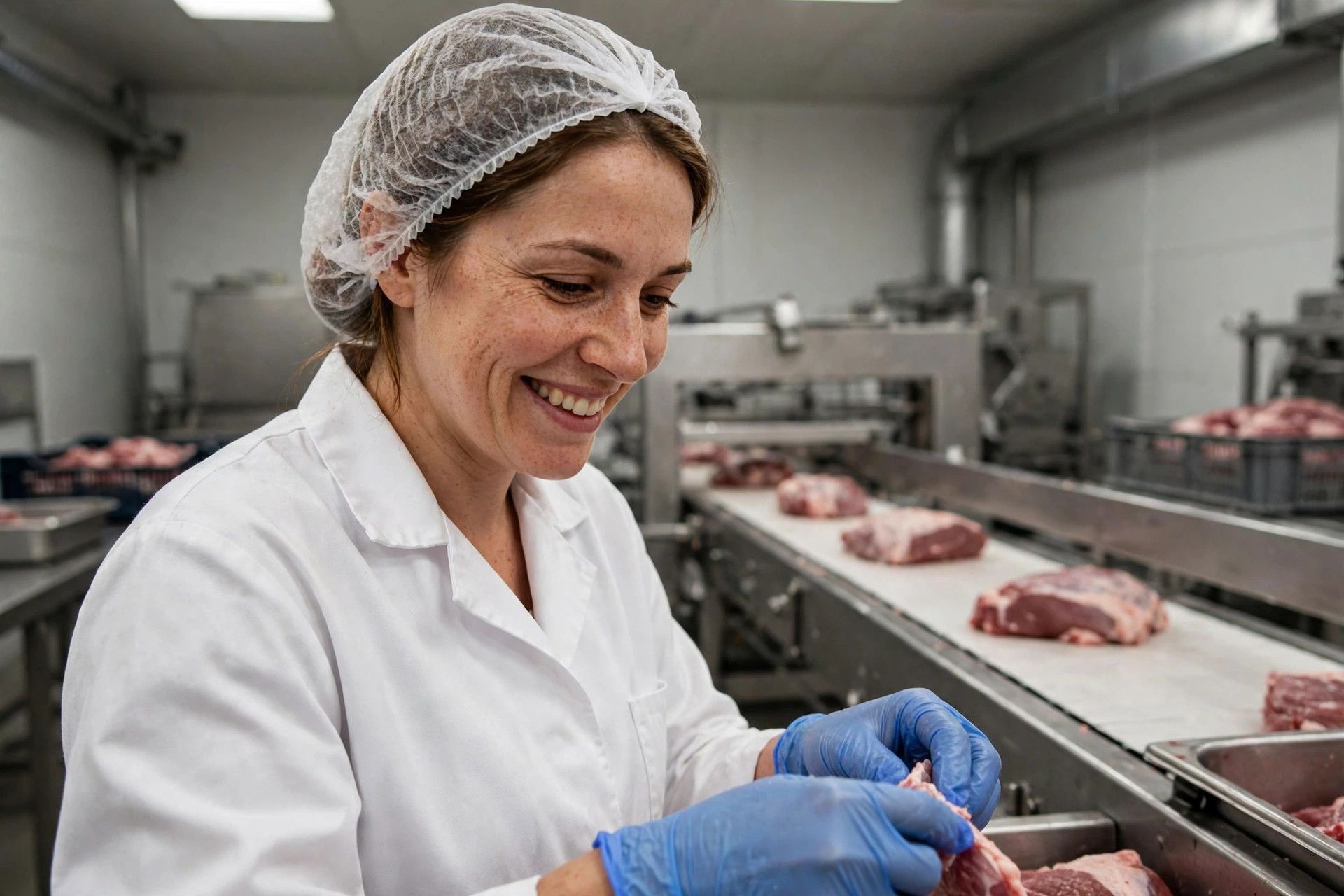
A meat processing operative in Ireland cuts, trims, packs and loads meat in a meat plant, under a production manager, with a team of operatives, butchers and quality staff. The meat is beef, lamb, pork and chicken. The work is fast, indoor and team-based, with knives, machines, cold rooms and hygiene rules. This guide breaks the process into phases, in order, so a worker can see each phase before starting.
Quick Answer box: ireland meat processing operative jobs with visa sponsorship in 2026 means an Irish meat plant offers a foreign worker a meat processing job and supports an employment permit, most often through a General Employment Permit. Pay is usually hourly and varies by county, plant and experience. A valid job offer from an employer is normally required before any permit step, and a genuine employer never asks a worker to pay for the job offer.
Featured snippet answer: ireland meat processing operative jobs with visa sponsorship in 2026 means an Irish meat plant offers a foreign worker a meat processing job and supports an employment permit, most often through a General Employment Permit. Pay is usually hourly and varies by county, plant and experience. A valid job offer from an employer is normally required before any permit step, and a genuine employer never asks a worker to pay for the job offer.
Key Takeaways
- A meat processing operative cuts, trims, packs and loads meat, in a meat plant, for shops and export.
- Food hygiene and safety training are provided on the job, but fitness, reliability and good English matter more than a long CV.
- Pay is hourly, with overtime and shift allowances in many contracts, and it varies by county, plant and experience. Check it in the written contract.
- The General Employment Permit, with an employment contract, is the main route.
- Sponsorship is employer-led and never guaranteed. Never pay an agent for a job or a permit.
Phase 1: Understand the Job and the Plant
A meat processing operative does five kinds of work. Cutting means cutting meat into primals, trimming fat and bone, and preparing cuts for shops. Boning means boning meat, with knives, following the plant’s standards. Packing means packing meat into boxes, labelling them and checking quality. Loading means loading boxes onto trucks for delivery to shops and export. Cleaning means cleaning the plant, machines and work areas, and keeping the plant safe.
The work is in a meat plant, for beef, lamb, pork and chicken. The work is full-time, with shifts that include days, nights and weekends, because plants run around the clock. The operative stands all day, works with knives, follows hygiene rules and works as part of a team. The operative does not need a degree. The operative needs good English, physical fitness, reliability and a willingness to work in the cold.
Phase 2: Learn Food Hygiene and Safety
Food hygiene and safety training are provided on the job, in many meat plants, but a worker who understands hygiene before starting will be hired faster. A worker needs to wash hands, wear protective clothing, follow hygiene rules, and report faults. A worker needs to work in the cold, with cold rooms and chilled work areas, and to wear the protective clothing provided.
A worker should learn the basics of food hygiene before applying, with a free course or a short training, and should practise the words for meat work: cut, trim, bone, pack, load, hygiene, knife, cold room, quality. A worker who learns hygiene before applying will have an advantage over a worker who applies with no hygiene knowledge.
Key Point: Food hygiene and safety training are provided on the job in many meat plants, but a worker who understands hygiene before starting will be hired faster.
Phase 3: Find Employers
Meat processing operative jobs are with meat plants, across Ireland. Meat plants hire operatives in every county, with the most jobs in Roscommon, Cavan, Monaghan, Longford, Waterford and Tipperary. Beef plants hire operatives in Roscommon, Cavan, Monaghan and Longford, for beef and lamb. Pork plants hire operatives in Cavan, Monaghan and Waterford, for pork and bacon. Poultry plants hire operatives in Monaghan, Cavan and Tipperary, for chicken and turkey.
A worker should search meat plant career pages and official job boards, and should note the employer name, the plant type, the location, the pay and the shift for each listing. A worker should check that the employer is a real company, with a website, an address and a written contract, before applying. A worker should ignore any listing with no employer website, no address and no written terms.
Phase 4: Apply Through the Official Link
Apply only through the employer’s official application link, or a well-known job board. The application is short: name, meat processing experience if any, availability, and a request for the written contract. Keep a copy of every application, with the date, the employer name and the link used.
A genuine employer will not ask for payment for a job offer or for an employment permit through WhatsApp, Telegram or unofficial agents. A request for money is not part of a real application, in any meat plant.
Phase 5: Get the Written Contract
Ireland meat processing salary is not one number. It is a structure, with four parts: the hourly wage, the hours, the shift, and the benefits. Meat processing pay in Ireland is usually hourly, with a minimum wage set in Ireland, and with overtime and shift allowances in many contracts. Some employers offer overtime, paid holidays, accommodation and meals.
A meat processing operative in Roscommon may earn a different hourly wage from a meat processing operative in Waterford, for the same job, because the county, the plant, the product and the experience are different. An experienced operative, or an operative who can bone and cut meat, often earns more than a new operative. Hours are usually full-time, with shifts that include days, nights and weekends, because plants run around the clock. None of these differences are visible in a single figure from a blog, a message or an agent. They are visible only in the written contract, which must state the wage, the hours, the shift pattern and the benefits.
Pay is set by the employer and the county, and it must be checked in the written contract. A single figure from a blog, a message or an agent is not a wage.
Phase 6: Apply for the Employment Permit
Most foreign meat processing operatives in Ireland work through an employment permit, most often a General Employment Permit, with an employment contract from an Irish meat plant. The employer offers a job, and the worker applies for an employment permit through the Department of Enterprise, Trade and Employment, with the contract, passport and other documents. The employer must meet the permit rules, including the salary threshold and the labour market test where it applies. The worker must meet the permit requirements, and must have enough money to support themselves, unless the employer certifies maintenance.
A meat-processing worker should check the official Department of Enterprise, Trade and Employment website and the Irish Naturalisation and Immigration Service website for current permit rules before applying, because eligible jobs, salary thresholds and timelines change every year. This site does not provide immigration advice. Sponsorship is employer-led and never guaranteed, and it depends on the employer, the role and permit availability. A worker should never pay for a job offer or for a permit, and should never travel without a valid permit on the promise that the permit will be arranged after arrival.
Key Point: Do not travel without a valid employment permit. A promise that the permit will be arranged after arrival is not a permit.
Phase 7: Arrival and First Weeks
The first weeks are training and orientation, even for experienced operatives. A new meat processing operative learns the plant, the production line, the knives, the hygiene rules and the quality checks. A new operative may work with an experienced operative first, then work alone on one station, then move to a full line.
Life as a meat processing operative in Ireland is fast and demanding, and the first weeks are the hardest. An operative who is fast, careful and reliable will settle in fast. An operative who cannot work in the cold, or who cannot follow hygiene rules, will struggle. An operative who cannot speak English well enough to read a safety sign will struggle. Prepare for the first weeks by learning the plant, the production line and the hygiene rules, before arrival.
Meat Processing vs Factory Worker Ireland
A meat processing operative cuts, trims, packs and loads meat in a meat plant, and needs food hygiene, fitness and good English. A factory worker operates machines, assembles products and checks quality in a factory, and needs factory experience or training, and good English.
Both are indoor, physical jobs, with shifts and safety rules. The difference is the place and the product. A meat processing operative works with meat, in a cold plant. A factory worker works with many kinds of products, in a warm factory. A worker who can work in the cold, with knives, will suit meat processing. A worker who wants warm, indoor work, with machines, will suit factory work.
What to Prepare Before You Travel
Prepare your documents first. Keep your passport valid for the full stay, and keep a copy of it separate from the original. Gather any food hygiene certificates, factory training certificates, and references from past employers, in writing. Keep a copy of the written contract, with the wage, the hours, the shift pattern and the start date, and carry it with you when you travel. Save the employer’s phone number and email, and the address of the plant, so you can find it on arrival.
Pack for cold work. Meat processing plants are cold, with cold rooms and chilled work areas, and the work is done standing all day. Pack warm layers to wear under the protective clothing provided, sturdy safety shoes, and a warm jacket for the journey to and from the plant. Pack toiletries, any medicine you need, and a phone charger that fits Irish sockets. Keep some money in euros for the first week, for food, transport and a phone SIM, until the first pay arrives.
Learn the basics before you travel. Food hygiene, knife safety, and the words for cut, trim, bone, pack, load, cold room and quality will help on the first day. A worker who understands hygiene before starting will be hired faster, and will settle in faster. Practise the words for a few minutes each day, and keep a small notebook of work words to carry in your pocket.
Plan the journey in advance. Know the address of the plant, the nearest bus or train stop, and the address of your accommodation. Arrive a day or two before the start date, so you can rest, find the plant, and buy food. A worker who prepares documents, clothing, hygiene and travel before leaving will start the job ready, and will spend the first week learning the plant, not fixing problems that could have been avoided. The first weeks are training, and a worker who listens, asks questions and follows hygiene rules will settle in fast, and will be trusted with more of the line.
Honest Limitations and Where to Verify Officially
This guide is general information only. It is not a job offer, and it is not immigration advice. It does not list a specific employer, a specific wage or a specific permit approval, because those depend on the employer, the county, the plant and the worker’s own situation. Pay varies. Hours vary. Sponsorship is never guaranteed. Irish permit rules and timelines change every year.
Meat-processing work in Ireland should be verified before anything is accepted: check every detail with the employer, in writing, and with official sources. The Department of Enterprise, Trade and Employment sets out the permit rules, the Irish Naturalisation and Immigration Service covers immigration rules, and the employer's own website shows the plant job itself. If a detail cannot be verified on those sources, do not act on it. If you are comparing options, our guide to fish processing worker jobs in Norway explains the permit route in detail.
That completes the process.
FAQ
Do Ireland meat processing operative jobs offer visa sponsorship in 2026?
Yes, many Irish meat plants hire foreign meat processing operatives, with an employment contract and a General Employment Permit. Sponsorship depends on the employer and permit availability, and it is not guaranteed for every role. If you are comparing options, our guide to horticulture worker jobs in Ireland explains the permit route in detail.
Do I need experience for a meat processing job?
Meat-processing experience helps in Ireland, and many employers want at least one year of meat-processing or factory experience. Training is often provided, but fitness, reliability and good English matter more than a long CV, because the boning hall and packing lines run at a steady pace from the first day. If that route does not suit you, our guide to dairy farm worker jobs in Ireland covers a similar option.
Is accommodation provided for meat processing workers?
Accommodation is often provided on or near the plant, in shared housing. Ask the employer in writing, and check the cost of accommodation in the contract before signing anything.
Is meat processing work cold?
Yes, meat-processing plants in Ireland are cold, with cold rooms and chilled work areas, and protective clothing is provided for the boning and packing halls. A worker who can work in the cold will settle in fast, while one who cannot should choose a different role, since the temperature does not change with the season.
Can a meat processing operative move up?
Yes, meat processing operatives can move into team leader, supervisor, quality inspector, boner and plant manager roles with experience and training.
Should a meat processing operative pay an agent?
No. A genuine Irish meat-processing employer will not ask for payment for a job offer or for an employment permit through WhatsApp or unofficial agents. The plant hires through its own recruitment process, with a written offer and a permit application the employer handles. Never pay for a job offer, and never pay anyone who promises a permit for a fee.