Introduction
Montenegro is a small Adriatic country with a big tourism industry, and in 2026 its hotels, resorts and guesthouses are once again looking for foreign workers to fill roles that local labour cannot cover during the busy season. From the beach resorts of Budva and Ulcinj to the historic old town of Kotor, the marina hotels of Tivat and the mountain resorts around Zabljak and Kolasin, hospitality is one of the largest employers in the country. For workers from South Asia, Africa, Eastern Europe and other parts of the world, a hotel job in Montenegro can mean a legal work permit, a regular income in euros, accommodation often arranged by the employer, and a chance to gain European hospitality experience in a beautiful coastal setting.
This guide explains what Montenegro hotel worker jobs with visa sponsorship involve in 2026, what employers usually expect, what the daily work is really like, what pay and benefits look like in approximate terms, and how to apply in a way that protects you from scams. Visa sponsorship is never guaranteed. It depends on the employer, on the job being genuine, and on the applicant meeting Montenegrin immigration requirements. No employer can promise a visa, and no article can promise that every applicant will be sponsored. What you can do is understand the process, prepare strong documents, and apply only to genuine hotels, resorts and licensed recruitment channels.
Why Employers in Montenegro Are Hiring Hotel Workers
Tourism is the backbone of the Montenegrin economy. The country receives far more visitors each year than its own population, and most of them arrive between late spring and early autumn. Hotels along the Budva Riviera, in Kotor Bay, in Herceg Novi and in Bar fill up quickly in summer, and they need large teams to run reception desks, restaurants, kitchens, housekeeping departments and bars. Winter brings a smaller but still real demand from ski resorts in the north, from business hotels in Podgorica, and from year-round resorts that stay open for conferences and spa guests.
Local workers often prefer jobs in the public sector, in offices, or abroad in other European countries where wages can be higher. That leaves gaps in hotel teams, especially for physically active and shift-based roles such as housekeeping, waiting tables, kitchen assistance and front office support. Many hotels are family-run or mid-sized, while others belong to international chains and large resort complexes that have experience hiring foreign staff and understand the work permit process. Smaller guesthouses and hostels may not offer sponsorship at all, so it is important to check each job advertisement carefully and ask directly whether the employer can support a work permit application.
Another reason Montenegro is attractive to foreign workers is its size and its way of life. The country is small, the coast is easy to reach from most towns, the climate is Mediterranean, and the cost of living is lower than in many Western European countries. English is widely spoken in tourist areas, and many hotels use English as their working language with guests. Learning some basic Montenegrin still helps a great deal, both at work and in daily life, and employers often see it as a sign that a worker plans to stay and take the job seriously.
What the Job Looks Like Day to Day
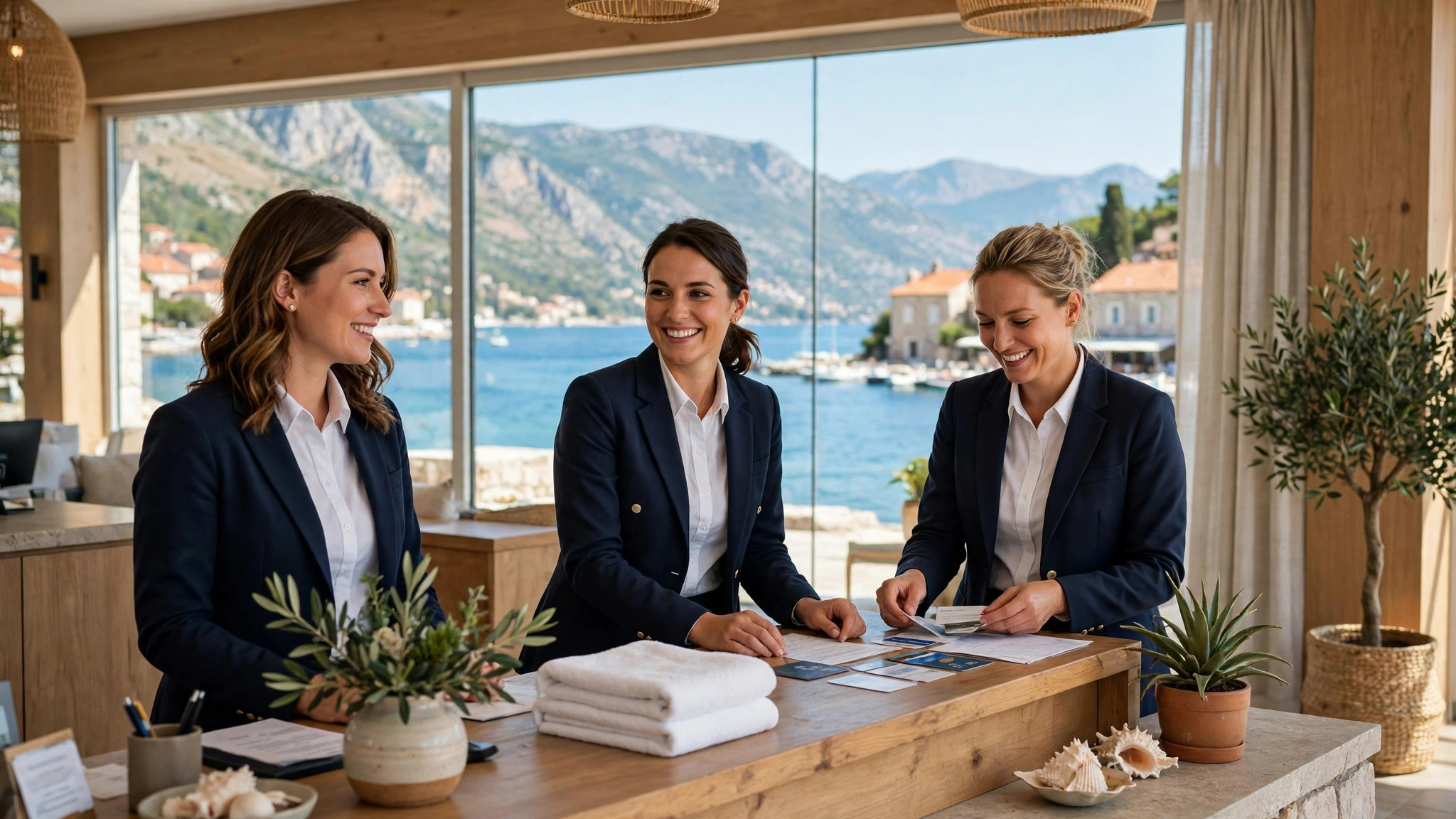
A hotel worker in Montenegro is responsible for giving guests a clean room, a good meal, a helpful welcome and a smooth stay. The exact tasks depend on the department. A housekeeper cleans rooms, changes linen, restocks bathrooms and reports damage or missing items. A waiter serves food and drinks in the restaurant, terrace or beach bar. A kitchen assistant helps chefs with food preparation, washing, storage and keeping the kitchen clean. A receptionist checks guests in and out, answers questions, handles bookings and deals with requests and complaints. A bartender prepares drinks, a porter carries luggage, and a maintenance worker keeps rooms, pools and public areas in good repair.
Most hotel workers in Montenegro work full time during the season, usually around 40 hours per week, although overtime is common during busy weeks, festivals, weddings and holiday periods. Shifts are often organised on a rotating basis. Some workers start early in the morning for breakfast service, others work afternoons or evenings for dinner and bar service, and night shifts exist in larger hotels with a 24-hour reception. Weekend work is normal in hospitality, and workers are usually given rest days during the week in return. The work is active and physical. You will spend most of your shift on your feet, walking between rooms or tables, carrying trays or linen, and working at a steady pace when the hotel is full.
Many modern Montenegrin hotels use booking and property management systems. Receptionists use computers to manage reservations, housekeepers follow digital room lists on a phone or printed sheet, and waiters use ordering systems to send food orders to the kitchen. You do not need advanced computer skills for most roles, but you should be comfortable following instructions, using a simple system after training, and working accurately under pressure. A smile, politeness and patience matter as much as speed. A guest who feels welcome is far more likely to leave a good review and return.
Daily Tasks and Responsibilities
The daily duties of a hotel worker in Montenegro usually include several of the following tasks, depending on the employer, the department and the shift:
- Welcoming guests politely, answering questions about the hotel, the town and local transport, and helping with directions and recommendations
- Cleaning guest rooms, bathrooms and public areas to the hotel standard, changing bed linen and towels, and restocking toiletries and supplies
- Serving food and drinks in the restaurant, terrace, pool bar or beach bar, taking orders accurately and clearing tables promptly
- Helping in the kitchen with washing, peeling, chopping, storing food correctly and keeping work surfaces clean and hygienic
- Checking guests in and out at reception, handling payments, issuing keys or cards, and updating booking records
- Carrying luggage, showing guests to their rooms, and helping with special requests such as extra beds, baby cots or late check-out
- Setting up breakfast buffets, conference rooms, wedding halls and outdoor dining areas before service and clearing them afterwards
- Reporting maintenance problems, damaged furniture, broken equipment or safety hazards to a supervisor straight away
- Following health, hygiene and food safety rules at all times, including hand washing, correct food storage and safe handling of cleaning chemicals
- Working as part of a team to meet daily service targets, covering for colleagues when the hotel is busy, and keeping a professional appearance and attitude
Some roles are more specialised. A chef or cook needs training and experience in preparing local and international dishes. A receptionist needs good English and computer skills. A bartender needs knowledge of drinks and responsible service. A housekeeping supervisor checks rooms after cleaning and trains new staff. When you apply, read the job description carefully so you know whether the role is general hotel work or a specialised position that needs a particular skill or certificate.
The Different Hotel Worker Jobs Available
There are several common types of hotel jobs in Montenegro in 2026. Housekeepers and room attendants are among the most widely available and usually require the least experience. Waiters and waitresses are hired in large numbers by resort restaurants, beach bars and hotel dining rooms. Kitchen assistants, dishwashers and cleaners support the kitchen team. Receptionists and front office staff work at the front desk and need stronger language and computer skills. Bartenders, baristas and pool attendants serve guests in bars and around pools. Porters, bell staff and drivers help guests with luggage and transfers. Cooks, chefs and pastry staff prepare food, while maintenance workers, gardeners and lifeguards look after the building, gardens and pools.
Seasonal hotel jobs are very common, especially along the coast from May to October. A seasonal contract can be a useful way to enter Montenegro, but it may offer a shorter stay. A full-time, year-round contract with a larger hotel or resort is generally stronger for a work permit and for longer residence, so ask about contract length before you accept an offer. Some hotels offer returning seasonal workers a new contract the following summer if they performed well, which can build into steady annual employment.
Skills, Experience and Language
Most Montenegro hotel jobs do not require a university degree. Employers usually look for reliability, a friendly attitude, physical fitness, willingness to work shifts, and a basic ability to communicate in English. That said, meeting the employer’s requirements is only part of the process. For a work permit and temporary residence, you must also meet Montenegrin immigration requirements, and the employer must be willing and able to support your application.
Common requirements include:
- Being at least 18 years old, with a valid passport that remains valid for the duration of your stay and beyond
- Good physical health and the ability to stand, walk, bend and lift for a full shift, often carrying trays, linen bags or luggage
- Basic English, and ideally some basic Montenegrin, for guest service and teamwork
- A clean criminal record, with a police clearance certificate from your home country when requested
- No previous immigration violations in Montenegro or the Schengen Area
- Willingness to work rotating shifts, including early mornings, evenings, weekends and public holidays when scheduled
- A neat appearance, politeness, honesty, punctuality and the ability to work as part of a team
- Previous hotel, restaurant, cleaning or customer service experience is helpful but not always required for entry-level roles
- A food hygiene certificate or similar training is an advantage for kitchen and restaurant roles, and some employers provide training after hiring
- Medical fitness for the role, which may involve a basic health check arranged by the employer
Education is rarely a barrier for entry-level hotel work. Some employers ask for secondary school completion, but many do not. What matters most is that you can do the work well, treat guests politely, follow procedures, and stay for the full contract period. Employers value workers who arrive on time, communicate problems early, and respect hygiene and safety rules. If you have experience with booking systems, food service, housekeeping or any customer-facing work, mention it in your CV, even if it was in a different country.
Pay, Hours and Overtime
Pay for hotel workers in Montenegro varies by location, employer, department, experience, tips and whether accommodation and meals are included. Figures below are approximate ranges only, based on typical advertised rates in 2026, and should not be taken as a fixed salary or a guarantee. Your actual pay will be stated in your employment contract, and you should read it carefully before you sign or travel.
A general hotel worker in Montenegro, such as a housekeeper or kitchen assistant, can typically expect a gross monthly salary in the approximate range of 600 to 1,100 euros for full-time work, before tax and social security deductions. Workers in popular coastal resorts such as Budva, Kotor and Tivat sometimes earn toward the higher end of the range during the peak season, especially when overtime is available. Receptionists and experienced waiters may earn slightly more, and cooks and chefs can earn more again depending on skill and responsibility. Tips from guests can add to income in restaurants, bars and front office roles, but tips are never guaranteed and should not be counted as part of your basic salary.
In addition to basic pay, many employers offer benefits that make the total package more valuable. Common benefits include free or subsidised staff meals during shifts, accommodation provided by the employer or help finding a room, transport support, health insurance or access to the public health system through social security contributions, paid annual leave, paid public holidays, and training. Some hotels provide a shared staff apartment near the hotel, especially when hiring from abroad, but this is not universal. Always confirm in writing whether accommodation is provided, whether it is free or deducted from pay, and for how long it lasts. Never accept a job where accommodation, food or transport deductions leave you with almost nothing.
Montenegrin employers must register workers with the relevant authorities and pay social security contributions, which gives access to public healthcare and counts toward future residence rights. Keep copies of your contract, payslips and any registration documents. These documents are important for permit renewals and for proving legal employment.
Where Hotel Worker Jobs Are Concentrated
Hotel jobs are concentrated along the coast and in the capital. Budva is the largest resort town, with many hotels, apartment hotels and beach resorts, and it hires large numbers of seasonal staff every summer. Kotor and the Bay of Kotor attract cruise passengers and cultural tourists, and its boutique hotels, guesthouses and restaurants need staff throughout a long season. Tivat, home to a luxury marina, has upscale hotels and restaurants. Herceg Novi, Bar and Ulcinj have family hotels, resorts and long sandy beaches, with a strong summer season. Podgorica, the capital, has business hotels that operate year-round and need receptionists, housekeepers and restaurant staff even in winter. In the north, Zabljak and Kolasin have mountain hotels and ski resorts that hire for the winter season.
When choosing a location, think about living costs, transport and the length of the season. Coastal resorts offer more jobs and tips in summer, but work can slow down in winter. Podgorica offers steadier year-round work, but fewer resort perks. Smaller towns can be cheaper and quieter. Ask the employer about the exact hotel location before you accept, and check how you would travel there by bus if you do not have a car.
How to Apply
Hotel employers on the Montenegrin coast hire quickly in the season, but they still read applications for honesty and fit. A careful application names real hotel or restaurant experience, the departments worked in, and the languages spoken, and it is sent through the hotel's own careers page rather than through an unknown agent. An exaggerated application is usually exposed at the interview or in the first week, when the work itself shows what the worker can really do.
- A hotel CV for Montenegro should be one or two pages in English, with the name and contact details at the top, then the hotel and restaurant experience, the departments worked in, and the languages spoken. Coastal hotels hire for the season, so the CV should show the seasons worked and the service tasks handled. Keep it honest and simple, because the interview will test the languages and the service skills claimed on the page.
- Prepare a short cover note explaining why you want hotel work in Montenegro, your availability for shifts, and your experience with guests or customers.
- Search for jobs on reputable job portals, hotel career pages, and licensed recruitment agencies that list Montenegro hotel roles. Look for employers that state clearly whether they can support a work permit.
- Apply directly on the hotel website or through the job portal where possible, rather than through unknown agents on social media.
- If an agency contacts you, check that it is licensed, ask for its registration details, and never pay a large upfront fee for a job offer. Genuine employers in Montenegro do not normally charge workers for a job.
- Attend interviews by video call or phone. Be ready to answer questions about your experience, your health, your shift availability, and your plans to live in Montenegro.
- When a hotel in Montenegro offers the job, ask for a written employment contract or a formal offer letter and read it before accepting. Check the job title, the wage, the working hours, the contract length, the hotel location, the accommodation terms and the notice period, and ask for anything unclear in writing. Seasonal hotel work moves fast, but a contract signed without reading it can leave a worker with the wrong hours and no way to fix them.
- Once you have a genuine offer from an employer that can sponsor, follow the Montenegrin work permit and temporary residence process. The employer usually provides documents proving the job offer and that the role is genuine.
- Prepare the documents the authorities ask for, which commonly include your passport, contract or offer letter, proof of accommodation in Montenegro, health insurance, criminal record certificate and application forms.
- Do not travel to Montenegro on a tourist visa expecting to start work immediately. You need the correct work authorisation first. Starting work without it can lead to fines, removal and a ban from the region.
The Visa Route for Hotel Workers in Montenegro
Montenegro issues work permits and temporary residence for non-EU citizens who have a genuine job offer from a Montenegrin employer. The exact permit category, documents and processing time can change, and they depend on your nationality, the type of contract and the office handling your case. In general, the employer applies for or supports a work permit, you submit a residence application with the required documents, and you attend an appointment for biometrics if required. Processing can take several weeks or longer, especially before the summer season, so apply early and do not book non-refundable travel until your permit is approved.
After arrival in Montenegro, you will normally need to register your address, complete health insurance and tax registration with the employer’s help, and keep your residence card safe. Keep all original documents in a safe place. If your application is refused, read the refusal reasons carefully. You may be able to correct a missing document or reapply, but you should not use a different agent or pay for a shortcut that promises a guaranteed visa. No one can guarantee a visa outcome.
Practical Tips Before You Apply
Learn basic Montenegrin before you arrive. Even simple phrases for greetings, numbers and directions make a strong impression on employers and guests. Be honest about your experience and health. Employers prefer a worker who is upfront about what they can do. Keep your documents organised and translated where needed. Avoid agents who promise a visa in days, ask for payment through unofficial channels, or refuse to give a written contract. Apply to several genuine employers rather than relying on one offer. If you have hotel or restaurant experience, describe it clearly with the type of hotel, the department, the number of rooms or covers, and the systems you used. If you have no experience, highlight friendliness, reliability, shift flexibility and willingness to learn.
Living in Montenegro as a Hotel Worker
Life in Montenegro can be pleasant for foreign workers who plan carefully. The climate is warm on the coast, food is affordable, and local people are generally welcoming to visitors. Rent, food and transport are cheaper than in many Western European countries, but Budva and Kotor have become more expensive in recent years, especially in summer. Sharing accommodation with colleagues is common in the first months. Public transport by bus is reasonable between towns, and many hotels are within walking distance of staff housing. Healthcare is available through the public system once you are registered and contributing to social security. Many workers use their time in Montenegro to learn the language, save money, gain hospitality experience, and later apply for longer residence when they meet the legal requirements.
The work itself is demanding in peak season. You will be on your feet, moving quickly, and working to high standards when the hotel is full. Good shoes, proper lifting technique and regular rest help prevent injury. Follow hygiene and safety training, report hazards, and do not lift loads that are too heavy for you alone. A good hotel team looks after each other, and supervisors expect workers to speak up if equipment is broken or a guest area is unsafe.
Common Questions, Answered
Do Montenegro hotel jobs offer visa sponsorship in 2026?
Some employers do, especially large resorts, international hotel chains and established hotels that regularly hire foreign workers. Sponsorship depends on the employer and on the applicant meeting Montenegrin immigration requirements. Many small guesthouses do not offer sponsorship, so always confirm before you apply.
Do I need to speak Montenegrin to work in a hotel in Montenegro?
Not always. Many hotels hire workers with basic English, especially in tourist areas. Basic Montenegrin is a strong advantage for guest service, teamwork and daily life, and it improves your chances of being hired and promoted.
How much can a hotel worker earn in Montenegro?
Pay varies by employer, location and role. A rough approximate range for full-time general hotel work is 600 to 1,100 euros gross per month, with extra pay for overtime in many cases and tips in some guest-facing roles. Always check your contract for the exact figure.
Do I need experience to get a hotel job in Montenegro?
Previous experience helps, but many general hotel roles accept workers without experience and provide on-the-job training. Reception, cooking and bartending roles do require experience or training.
Can I bring my family to Montenegro on a hotel work permit?
Family reunification may be possible after you have legal residence and meet income and accommodation requirements. The rules depend on your permit type and personal circumstances, so check current Montenegrin immigration guidance before making plans.
A Final Word Before You Apply
Montenegro hotel worker jobs with visa sponsorship in 2026 offer a realistic route into legal work in a beautiful Adriatic country for people who are ready for friendly, shift-based hospitality work and who apply through genuine channels. The jobs are real, the demand is strong in the tourist season, and the lifestyle can be rewarding for workers who plan their budget, learn basic Montenegrin, and respect hygiene and immigration rules. Sponsorship is never automatic and never guaranteed, but a strong application, a genuine employer, and complete documents give you the best chance. Prepare carefully, avoid shortcuts and upfront fees, and treat your first contract as the foundation for a longer stay in Montenegro.