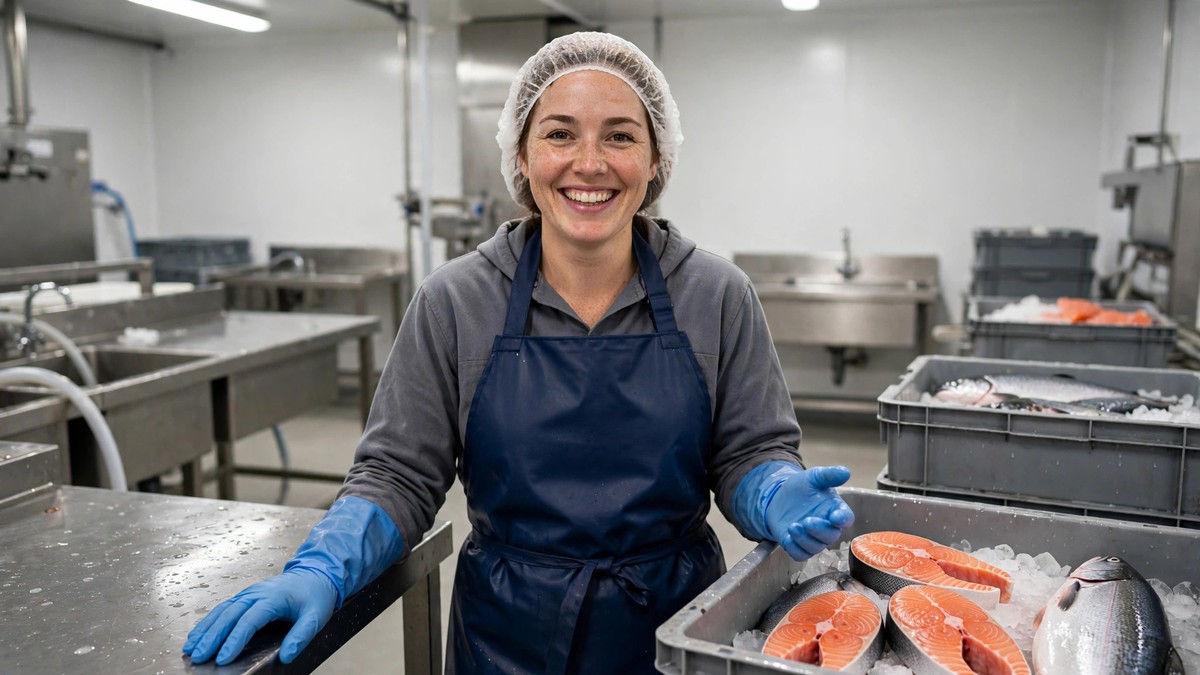
Iceland is a small island nation in the North Atlantic, known for its dramatic landscapes, geothermal energy, and one of the most important fishing industries in the world. Fish processing is at the heart of the Icelandic economy. Factories in Reykjavik, Akureyri, Grindavik, Vestmannaeyjar, Isafjordur and smaller fishing towns process cod, haddock, salmon, herring and other fish for export to Europe, North America and Asia. Because the work is physically demanding, involves cold and wet conditions, and often requires shift work, fish processing plants regularly look for foreign workers, and some employers are willing to support a work visa for the right candidate. Sponsorship is never guaranteed and it always depends on the employer and on the applicant meeting the requirements, and Iceland has specific rules for non-EU workers that applicants should understand. This guide explains what fish processing worker jobs in Iceland involve, what duties and requirements employers expect, what pay looks like in approximate terms, how the visa process usually works, and how to apply safely in 2026.
Why Iceland Needs Fish Processing Workers
Fishing has shaped Iceland for centuries. The country’s location in the North Atlantic gives it access to rich fishing grounds, and its fish processing industry is modern, export-focused and highly regulated for quality and food safety. Fish is caught by Icelandic and international vessels, landed at Icelandic ports, and processed in factories where workers fillet, trim, pack, freeze and prepare fish for export.
Fish processing plants need workers all year, but demand rises when catches are large and when export orders increase. Local workers are not always available for factory work in small fishing towns, especially for night shifts and weekend work, and many Icelandic workers prefer other sectors. Employers therefore recruit internationally, often through agencies, and sometimes offer help with a work permit and accommodation.
For foreign workers, fish processing jobs are attractive because they do not always require a high level of language skills or formal qualifications, and they provide a legal job with a contract in a country with high wages and strong labour protection. The work is cold, wet and repetitive, but it is straightforward to learn, and many workers stay for a season or longer, save money, and gain experience in food production.
What a Fish Processing Worker Does in Iceland
A fish processing worker in Iceland works in a factory where fresh fish is prepared for sale and export. The work is carried out on a production line, often in a cold room, and workers wear protective clothing, including waterproof aprons, gloves, boots and hairnets.
Duties depend on the factory and the type of fish, but most roles share a common set of tasks. Workers receive fish from the boats or from cold storage, sort fish by size and quality, fillet fish by hand or with a machine, trim fillets, remove bones and skin, check fillets for quality, weigh and pack fillets in boxes or trays, label products, and move packed fish to cold storage or freezing tunnels. Some workers operate filleting machines, packing machines or freezing equipment, while others work on quality control, checking that products meet the factory’s standards.
Hygiene is critical in fish processing. Workers must wash hands regularly, wear protective clothing correctly, follow rules about jewellery and personal items in production areas, and keep workstations clean. Food safety standards are strict, and factories are inspected regularly. Workers are trained in hygiene and safety before they start, and they must follow those rules every day.
Shift work is normal. Fish processing plants often run morning, afternoon and night shifts, and weekend work is common when a large catch arrives. The work is physical, involving standing for long periods, repetitive hand movements, lifting boxes of fish, and working in cold and wet conditions. Good physical fitness and the ability to work in the cold are essential.
Types of Fish Processing Jobs Available
Fish processing worker covers several roles in Iceland. The most common are fish filleter, trimmer, packer, general factory worker, machine operator, quality controller, and cold-store worker.
Filleters cut fish into fillets, either by hand with a knife or with a machine. This is skilled work that needs practice, and experienced filleters are valued highly. Trimmers remove skin, bones and unwanted parts from fillets and prepare them for packing. Packers weigh, pack and label fillets, and prepare boxes for freezing or dispatch. General factory workers assist with sorting, cleaning, moving fish, and keeping the factory tidy. Machine operators set up and monitor filleting, skinning and packing machines, and carry out basic cleaning and maintenance. Quality controllers check fish for freshness, size and defects, and record results. Cold-store workers move packed fish to freezers, check temperatures, and prepare orders for dispatch.
For a first job in Iceland, the most common entry points for foreign workers are general factory worker, packer and trimmer. Those roles usually need the least prior experience and the least language skills, and employers often provide training. Experienced filleters and machine operators can apply for higher-paid skilled roles, but they should be ready to show their skills.
Duties and Responsibilities in Detail
A fish processing worker’s day starts with a briefing, collection of protective clothing, and movement to the assigned station on the production line. The worker then carries out the assigned task repeatedly, following the factory’s procedure for that product. This might mean filleting fish, trimming fillets, packing boxes, or checking quality. Every step must be done in the same way each time so that quality and food safety stay consistent.
Workers are responsible for checking their work, reporting damaged or poor-quality fish to a supervisor or quality controller, and keeping their workstation clean. If a machine stops or makes an unusual noise, the worker must stop and inform a supervisor or maintenance worker rather than trying to fix it alone. In a food factory, hygiene rules are strict, and workers must follow them at all times.
Safety is also important. Workers must wear safety shoes, gloves and protective clothing, use knives and machines correctly, keep walkways clear, and report spills or hazards immediately. Cold rooms can be slippery, so good footwear and careful movement matter. Workers must also be aware of the risks of repetitive strain from filleting and trimming, and should follow the factory’s guidance on posture, breaks and hand care.
Teamwork matters on a production line. If one worker is slow or absent, the whole line can be delayed, and fresh fish must be processed quickly to maintain quality. Workers are expected to communicate with colleagues, help in another area when it is busy, and inform a supervisor if a task cannot be finished on time.
Requirements Employers Usually Ask For
Most fish processing jobs in Iceland do not require a university degree. Employers look for people who are physically fit, reliable, and able to work in cold and wet conditions. A basic education is usually enough, and training is often provided on the job.
Legal eligibility to work is essential. Non-EU workers need a work visa or work permit linked to a specific job offer. The employer can support the application, but the applicant must meet the immigration requirements, including a valid passport and a clean criminal record. The final decision is made by the Icelandic authorities. Sponsorship means the employer offers you the job and supports the application. It does not guarantee approval, and the rules for non-EU workers in Iceland are specific, so applicants should check the latest official information.
Physical fitness is very important. Fish processing involves standing for long periods, repetitive hand work, lifting boxes, and working in cold rooms where temperatures are low. Workers should be honest about their fitness and any health conditions, especially problems with hands, wrists or back, because the work can aggravate them. Some employers ask for a medical check before starting.
Language requirements are generally lower than in customer-facing jobs. In many Icelandic fish processing plants, English is used as a working language, and teams include workers from several countries. Icelandic is not usually required for a factory role, but learning basic Icelandic phrases for safety and daily life is helpful and appreciated. For quality control or supervisory roles, better English is usually expected.
Previous experience in fish processing, food production, factory work or similar manual work is helpful, but many employers provide training for new workers. Experience with knives, filleting, packing or food hygiene is an advantage. Employers also value punctuality, attention to detail, the ability to follow hygiene and safety rules, and a willingness to work shifts, including nights and weekends.
Salary and Benefits: Approximate Guide
Iceland has high wages and a high cost of living, especially for food, rent and transport, so it is important to look at both together. Pay for fish processing work varies by employer, location, shift pattern and experience. As a rough and approximate guide only, many fish processing workers in Iceland are offered a gross monthly salary in the range of approximately 450,000 to 650,000 Icelandic krona for full-time work, with higher figures possible for experienced filleters, machine operators, night-shift workers and team leaders. These are approximate ranges, not fixed promises. Overtime, night and weekend allowances can increase pay, while tax and social insurance are deducted from the gross amount. The actual offer depends on the employer, the contract and the hours worked, and many factories pay by the hour with allowances for unsocial hours.
Benefits vary, but many fish processing employers provide protective clothing, paid holidays, sick pay, and training in food hygiene and safety. Some provide help with accommodation, especially in small fishing towns where housing is limited, and some provide transport to the factory or a transport allowance. Some provide subsidised meals or a meal allowance. The exact benefits should be written in the employment contract, so check them before you sign.
Working hours are usually around 40 hours per week on a standard contract, with overtime paid separately. Shifts are often 8 hours, and night work usually attracts an extra allowance. Workers are entitled to paid annual leave, and public holidays are observed according to the Icelandic calendar. The exact hours, overtime rules and leave entitlement should be written clearly in the contract.
Be careful about offers that promise a very high salary with no experience and ask for a large upfront fee. Genuine employers explain the gross and net pay, the shift pattern, and the deductions, and they give a written contract. If an offer is vague or pressures you to pay quickly, check the employer carefully and do not send money.
Where Fish Processing Jobs Are Located
Fish processing jobs are found in fishing towns and ports across Iceland. Reykjavik, the capital, has fish processing plants and a large labour market. Akureyri in the north is a major fishing and processing centre. Grindavik and the Reykjanes peninsula in the south-west have processing plants near the main fishing grounds. Vestmannaeyjar, a small island off the south coast, is famous for fishing and processing. Isafjordur in the Westfjords, Husavik in the north-east, and smaller towns such as Seydisfjordur, Djupivogur and Thorlakshofn also have fish processing work.
Living costs and housing differ by location. Reykjavik and Akureyri have higher rents but more services, shops and transport. Smaller fishing towns are cheaper for rent but more isolated, with fewer shops and less public transport. Many employers in small towns help with accommodation, which is a major benefit. When you consider a job, check the location, rent, and whether the employer helps with housing or transport, because those factors affect your real standard of living as much as the salary.
Visa and Work Permit: How It Usually Works
For non-EU citizens, working legally in fish processing in Iceland usually requires a work permit and residence permit linked to a specific job offer. The process generally starts with a job offer and a signed employment contract. The employer may need to show that the job could not be filled locally or from the European Economic Area, and the worker then applies at an Icelandic embassy or through the relevant immigration process, with the contract, proof of accommodation, health insurance, and other documents required by the authorities.
Processing times vary and can take several weeks or months, so allow plenty of time and do not give up a current job or book travel until the permit is approved. The exact steps depend on your nationality and the type of work, so check the latest official information from the Icelandic Directorate of Immigration or the Icelandic embassy in your country. Sponsorship in this context means the employer offers you the job and supports your application with the documents the authorities require. It does not guarantee approval, because the final decision is made by the Icelandic authorities.
Some workers apply through a recruitment agency that works with Icelandic fish processing companies. A reputable agency will explain the process, the timeline and the costs clearly, and will not charge an excessive fee for a job. Always verify the agency and the employer before signing or paying anything.
How to Apply for Fish Processing Jobs in Iceland
Prepare a clear CV in English that lists your personal details, work experience in reverse order, skills, and availability. Include any fish processing, food factory, warehouse or manual work, even if it was short-term. Mention experience with knives, filleting, packing, food hygiene, or cold-store work. If you have a food hygiene certificate or similar training, list it. Keep the CV honest and easy to read.
Search for jobs on reputable job portals, fish processing company websites, and through licensed recruitment agencies that specialise in Iceland. Look for employers that mention help with a work permit, accommodation or transport. Read the job description carefully and apply only for roles you can do safely in cold and wet conditions.
Write a short cover message with each application. Explain why you want to work in Iceland, what relevant experience you have, and when you can start. Be honest about your ability to work in the cold, your willingness to work shifts, and your language level.
Interviews may be by phone or video call. Be ready to talk about your previous factory or food work, your physical fitness, your understanding of hygiene and safety, and your experience with knives or machines. Ask about the factory location, shift pattern, accommodation, pay, and the visa process. A good employer will answer clearly. If an employer avoids questions about pay, hours or the contract, treat that as a warning sign.
If you are offered a job, you should receive a written offer and a contract. Read it carefully before signing. Check the job title, salary, hours, place of work, probation period, notice period and benefits. Ask for clarification in writing if anything is unclear, and keep a copy of everything you sign.
Documents You Will Usually Need
Most applicants are asked for a valid passport, a signed employment contract, proof of accommodation, proof of health insurance, a criminal record check, and passport photos. Proof of previous employment or training may also be requested. Documents may need to be translated into English and officially verified. Start gathering them early, because a criminal record check or translation can take time.
Tips to Improve Your Chances
Experience in food production or factory work helps, but reliability and the ability to work in the cold matter most. If you have worked in a cold store, a food factory, or a similar environment, describe it in your application. References from a previous factory employer carry weight.
Prepare for the cold. Fish processing plants are cold by design, to keep fish fresh. Warm layers, thermal clothing, good waterproof boots and gloves are essential, and many employers provide protective clothing, but workers should also have warm personal clothing for travel to work.
Learn basic Icelandic and English before you arrive. Even a few words for greetings, safety and daily life help you at work and in the community, and show the employer that you are serious about living in Iceland. Free language apps are a good starting point.
Be realistic about the first job and the location. Many foreign workers start as a general factory worker or packer in a small fishing town, where accommodation is provided, and move into a filleting or machine operator role after showing they are reliable. That progression is normal and often brings better pay.
Living in Iceland as a Fish Processing Worker
Life in Iceland is safe, clean and well organised, but it is expensive and the weather is challenging. Rent, food and transport are higher than in many European countries, especially in Reykjavik. Smaller fishing towns are cheaper for rent but more isolated, with fewer shops, restaurants and services. Workers should check salary, rent and food costs carefully before accepting a job.
Icelandic culture values honesty, punctuality, equality and respect for nature. In a fish processing plant, following hygiene and safety rules and respecting colleagues is expected. Outside work, learning Icelandic and joining a local community helps you settle in. Iceland offers stunning nature, including waterfalls, volcanoes, glaciers and the Northern Lights in winter, and many workers enjoy exploring the country in their free time, although travel in winter can be difficult due to snow and wind.
Weather in Iceland is changeable, with cold winters, strong winds, rain and snow. Summers are cool and daylight lasts for many hours. Warm, waterproof and windproof clothing is essential all year, and workers should be prepared for sudden changes in weather.
Frequently Asked Questions
Do I need to speak Icelandic to work in fish processing?
Not usually for factory roles. Many plants use English as a working language, and teams include workers from several countries. Basic Icelandic is helpful for daily life and is appreciated by employers, but it is not usually a strict requirement to start. For supervisory roles, better English is usually expected.
Can a fish processing company sponsor my visa?
Some employers do support a work permit by offering a job and providing the contract and documents the authorities need. Sponsorship depends on the employer, the vacancy and whether you meet the legal requirements. It is not guaranteed, and the final decision is made by the Icelandic authorities.
How much do fish processing workers earn in Iceland?
Pay varies by employer, shift and experience. As an approximate guide only, many full-time fish processing workers earn about 450,000 to 650,000 Icelandic krona gross per month, with more possible for experienced filleters and night work. Always check the written offer for exact figures, and remember that living costs in Iceland are high.
Do I need fish processing experience?
Experience helps, especially for filleting roles, but many employers provide training for general factory workers, packers and trimmers. Physical fitness, reliability and willingness to work in cold conditions are often more important than long experience. Any previous food factory or manual work should be mentioned.
How long does the visa process take?
Processing times vary and can take several weeks or months. Prepare documents early and do not make final travel plans until your permit is approved.
Is accommodation provided?
Some employers help with accommodation, especially in small fishing towns where housing is limited. Others expect workers to find their own housing. Ask about accommodation before accepting a job and confirm what is included and what you will pay. Workers weighing a second destination can also read our guide to food packing worker jobs in Canada.
Final Thoughts
Fish processing worker jobs in Iceland offer a legal job with a contract in a country with high wages, strong labour protection, and a world-famous fishing industry. The work is cold, wet and physically demanding, but it is straightforward to learn, and it can be a first step towards a longer stay in Iceland and other food production jobs in Europe. Success depends on choosing a genuine employer, understanding the contract and the visa process, preparing for the cold, and arriving with realistic expectations about pay and living costs. If you apply carefully and work steadily, a fish processing job in Iceland can be a solid foundation for a better life in Europe. If that route does not suit you, our guide to hotel worker jobs in Iceland covers a similar option.