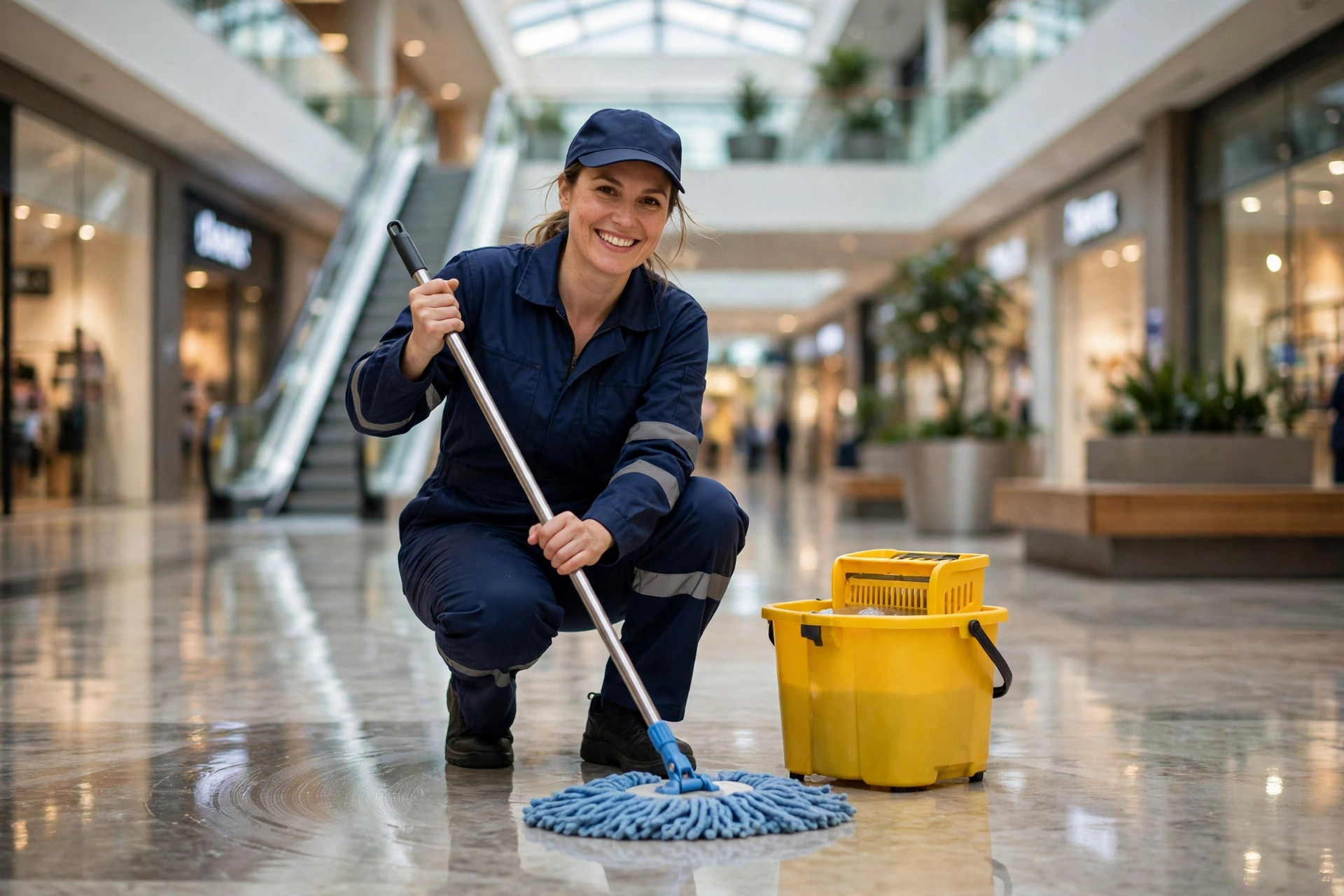
Cleaning work in Germany is the work that happens before everyone else arrives and after everyone else has gone home. In an office tower in Frankfurt, the cleaners start while the streets are still dark, vacuuming open-plan floors, wiping desks and emptying bins so the building is ready for the working day. In a hotel in Berlin, the day turns on check-out times, with rooms to strip, bathrooms to scrub and fresh linen to lay before the next guests arrive. In a hospital in Hamburg or a school in Leipzig, the standard is stricter still, because hygiene is part of patient and pupil safety, not just appearance. This guide describes that work as it really is: the different settings, the chemicals and machines, the early and late shifts, the pay in approximate terms, and the honest route to a work visa. No one can promise a visa. Sponsorship depends on a genuine employer and on meeting the immigration requirements, and anyone who says otherwise is not telling the truth.
Why Germany Needs Cleaners
Germany runs on buildings that are used hard every day, and every one of them needs cleaning. Office blocks in Frankfurt, Munich and Dusseldorf fill with workers each morning. Hotels in Berlin, Hamburg and Cologne turn over rooms every day. Hospitals, schools, airports, shopping centres and factories all need floors, washrooms and work areas kept to a set standard. When local workers move into office, technology or professional roles, cleaning teams find it hard to recruit, and the gap is filled by large cleaning contractors, hotel groups and hospital service firms that are used to hiring from abroad. That openness varies a lot. A national cleaning contractor with contracts across several cities usually has a personnel department that understands work permits, while a small local firm that cleans a handful of offices may never have sponsored anyone and may not be able to. The language of the workplace is German, although many international teams use English day to day, and even basic ability in the local language helps a great deal, both at work and in daily life. A cleaner who can read a chemical label, understand a supervisor’s instructions and report a broken tap in German is safer and easier to roster than one who cannot, and employers see language effort as a sign that a worker plans to stay and settle in.
Duties and Responsibilities
The daily duties of a cleaner in Germany usually include several of the following tasks, depending on the employer and the shift:
- Cleaning offices, hotels, shops, schools and clinics in Berlin, Munich and Hamburg to the standard the client sets, including corridors, stairwells and entrance areas
- Vacuuming, mopping and dusting floors, furniture and fittings, using the machine the site provides after training
- Cleaning and disinfecting washrooms, toilets and kitchenettes, including sinks, taps, mirrors and tiled surfaces, with the right product for each surface
- Emptying bins, replacing liners and sorting waste and recycling under German sorting rules, including glass and paper where the building requires it
- Restocking consumables such as soap, paper towels and toilet paper, and reporting low stock to the supervisor before a floor runs out
- Handling cleaning chemicals safely, following the label, the dilution table and the safety data sheet, and never mixing products
- Reporting damage, leaks, broken fittings or maintenance problems to the supervisor or the site manager the same day
- Operating vacuum cleaners, scrubber-driers and floor polishers after instruction, and cleaning the machines after use
- Following hygiene and safety rules, which are strict in German hospitals, care homes and food premises, and wearing the protective equipment the site requires
- Wearing gloves and other protective equipment, washing hands regularly, and changing gloves between a washroom and a kitchen area
Cleaning jobs are not all the same, and the advertisement will say whether training or a certificate is provided. Read it carefully before you apply, and ask the employer if anything is unclear. A general-sounding office job may in fact need hospital hygiene training, while a specialist-sounding hospital role may include full training for beginners.
Job Overview: What a Cleaner Does in Germany
A cleaner keeps workplaces, hotels, homes, schools and public buildings clean, safe and pleasant. The work is practical and physical: sweeping, mopping, dusting, vacuuming, cleaning washrooms and kitchens, emptying bins and restocking supplies. Cleaners often work early mornings, evenings or nights, when buildings are quieter. Some roles are in offices, others in hotels, hospitals, airports or private homes. Employers value workers who are thorough, trustworthy, punctual and able to work without constant supervision. Most cleaner roles in Germany are full time, and the working week, shift patterns and overtime rules depend on the employer and the sector. Some roles run on fixed daytime hours, while others need early starts, evenings, nights or weekend work. The work is active and demanding, and a typical shift starts with a list of rooms or areas to clean and the supplies needed. The cleaner works through the list methodically, cleaning surfaces, floors and washrooms, emptying bins and restocking supplies, then checks the work against a standard before moving on. In hotels the pace is faster, with rooms to turn around between guests; in offices the work is steadier and often done before staff arrive. Employers expect workers to follow safety rules, report problems early and treat colleagues and customers with respect. A good record of punctuality and reliability is often more valuable than a long list of qualifications.
Requirements for Foreign Applicants
Most Germany cleaner jobs do not require a university degree. Employers usually look for attention to detail, honesty, reliability and the ability to work independently. That said, meeting the employer’s requirements is only part of the process. For a work permit, you must also meet immigration requirements, and the employer must be willing and able to support your application.
Common requirements include:
- Being at least 18 years old, with a valid passport that remains valid for the duration of your stay and beyond
- Good physical health and the ability to work a full shift on your feet or doing physical tasks
- Basic ability in German, and ideally some of the local language, for safety instructions and teamwork
- A clean criminal record, with a police clearance certificate from your home country when requested
- No previous immigration violations in Germany or the wider region
- Flexibility on hours is one of the first things a Germany employer will ask about. cleaner teams in Berlin run early, late and weekend shifts, and public holidays are often the busiest days of all. If you can cover the full pattern of cleaner work in Germany, say so clearly in your application; if there are hours you genuinely cannot work, say that too, because a rota agreed honestly lasts longer than one agreed under pressure
- Attention to detail, honesty, punctuality and the ability to work as part of a team
- Experience is an advantage, not a gate. Many Germany employers hiring cleaner staff will train a newcomer from the first week, showing them the tools, the safety rules and the daily routine before expecting speed. If you have done cleaner work before, say so with dates and duties, because it can mean a quicker start and sometimes better shifts in Germany. If you have not, say so honestly and point to the closest work you have done, such as physical work, shift work or work with the public, so the Berlin employer can judge the fit
- Read the advertisement for the certificate line before you apply. A cleaner job in Germany sometimes requires a driving licence or a food hygiene certificate, and the employer in Berlin will say so plainly when it matters. If the cleaner post in Germany asks for one and you do not have it, say so and ask whether training is provided, rather than claiming a certificate you cannot produce
- Medical fitness for the role, which may involve a basic health check arranged by the employer
School certificates are not the deciding factor for a cleaner in Germany. A few employers ask to see secondary school completion, but most do not, and a degree is never expected. What a supervisor actually checks is whether the worker can clean to the required standard without being watched, can handle chemicals and machines safely, and will stay for the whole contract. A CV that names the buildings cleaned before, the kind of work done there, and the size of the team says far more than a list of school grades. Someone new to the work should stress punctuality, care with detail, and a willingness to take early or late shifts.
Types of Cleaner Jobs Available in Germany
There are several common types of Cleaner jobs in Germany in 2026:
- Office cleaners who work in German business buildings, usually before staff arrive in the morning or after they leave in the evening
- Hotel cleaners and room attendants in Berlin and Munich who prepare guest rooms between stays, including the busy trade-fair weeks
- Hospital and care-home cleaners, where German hygiene rules are strict, protective clothing is worn, and training is given before the first shift
- Industrial cleaners who clean factories and warehouses around Hamburg and Frankfurt, sometimes with scrubber machines and high-pressure equipment
- Domestic cleaners who clean private homes in German cities, usually through an agency that sets the schedule and supplies the equipment
Short-term cleaning contracts exist, for example covering a trade fair in Leipzig or a seasonal peak in a hotel, and they can be a way into Germany, but a full-time, open-ended contract is generally stronger for a work permit and for long-term residence. Ask about contract length before you accept an offer. Some cleaners start through a temporary agency and later move to a direct contract with the cleaning firm, which is a common and legitimate route when the agency is licensed and reputable.
Salary and Benefits
Pay for cleaner work in Germany varies by location, employer, shift, experience and whether overtime is included. The figures below are approximate ranges only and should not be taken as a fixed salary or a guarantee. Your actual pay will be stated in your employment contract, and you should read it carefully before you sign or travel.
A cleaner in Germany can typically expect around €2,000 to €2,800 gross per month for full-time work, before tax, depending on the employer, the city and the shift pattern. Workers in the largest cities sometimes earn slightly more because living costs are higher. Night shifts, weekend work and overtime usually attract additional pay under local labour law or the company agreement, and experienced workers may earn toward the higher end of the range or slightly above it.
Beyond basic pay, many cleaning employers offer benefits that make the total package more valuable. Common benefits include paid annual leave, paid public holidays, training, and in some cases help with accommodation for the first weeks, especially when hiring from abroad. Always confirm in writing whether accommodation is provided, whether it is free or deducted from pay, and for how long it lasts. Never accept a job where accommodation, food or transport deductions leave you with almost nothing. Keep copies of your contract and payslips. These documents are important for permit renewals and for proving legal employment in Germany.
Where the Jobs Are in Germany
Cleaner jobs are concentrated around the major cities and economic centres, including Berlin, Munich, Hamburg, Frankfurt, Cologne, Stuttgart and Leipzig. Larger cities offer more vacancies and better public transport, but rents are usually higher. Smaller cities and towns can be cheaper and quieter, with a growing number of employers. When choosing a location, think about living costs, transport and community. Munich and Frankfurt are pricey, while many eastern and smaller western cities offer lower rents. Ask the employer about the exact workplace location before you accept, and check how you would travel there. In Germany, transport is by trains, trams, buses and the U-Bahn and S-Bahn in larger cities, and many workers use public transport or a bicycle where that is practical. The climate is continental, with cold winters, warm summers and distinct seasons, so suitable clothing for the season matters, especially for outdoor or early-morning work.
Visa Process: What to Expect in General Terms
Germany’s work visa routes for qualified and semi-skilled workers include the Skilled Immigration Act and, for some roles, the EU Blue Card, though most cleaner roles come through the general employment route with a contract from an employer who can sponsor. The exact permit category, documents and processing time can change, and they depend on nationality, the type of contract and the authority handling the case. In general, the employer provides the contract and supporting documents, the applicant submits a work permit application in the home country or online as directed, and attends an appointment for biometrics and an interview if required. Processing can take several weeks or longer, especially during busy periods, so apply early and do not book non-refundable travel until the permit is approved.
After you arrive, registration with the local authorities is normally next, along with a residence card or permit and tax and health registration, with the employer helping. Keep all original documents safe. If a permit is refused, read the refusal reasons carefully. You may be able to put right a missing document and reapply, but do not turn to another agent or pay for a shortcut that promises a guaranteed visa. No one can guarantee a visa outcome, and anyone who charges for a guaranteed result is not honest.
How to Apply for Germany Cleaner Jobs with Visa Sponsorship
How you apply matters as much as whether you can do the work. A careful, honest application keeps you safe from scams and shows a genuine employer that you are serious.
- A cleaner CV for Germany is a working document, not a life story. Put your name and contact details at the top, then your work history with dates, then skills and languages, and stop at two pages, because a Berlin hiring manager will not read a third. Every claim in it should be something you can explain in an interview for cleaner work in Germany, so describe real duties, the machines, the shifts, the teams, rather than adjectives about yourself.
- Prepare a short cover note explaining why you want cleaner work in Germany, your availability for shifts, and your readiness for the role.
- Search for jobs on reputable job portals, company career pages, and licensed recruitment agencies that list Germany cleaner roles. Look for employers that state clearly whether they can support a work permit.
- Apply where the employer can be checked. A cleaner vacancy in Germany posted on the company’s own website or a recognised job portal lets you verify the business, read the full description and see how to contact them directly. The same job offered through a stranger’s social media account, with the details in a chat message, cannot be verified at all, and that is exactly how most cleaner scams in Germany begin.
- Treat every approach from an agent about cleaner work in Germany as a check, not a favour. Licensed recruiters placing cleaner workers in Germany will give you their registration details without hesitation and will not ask you to pay a large fee upfront for the offer. If the person cannot produce those details, or the fee keeps growing with each message, stop the conversation and apply to the Germany employer directly.
- Attend interviews by video call or phone. Be ready to answer questions about your experience, your health, your shift availability, and your plans to live in Germany.
- Do not accept a cleaner offer in Germany on the strength of a phone call. Ask the Berlin employer for the contract or a formal offer letter, then check seven things before signing: the job title, the salary, the hours, the length of the contract, the town or city where you will work, whether accommodation is included or deducted, and the notice period. If the employer in Berlin will not put those in writing, that refusal tells you more than the offer itself, and you should walk away.
- With a genuine offer from a sponsoring employer in Germany, the next step is the permit, not the plane ticket. Lodge the application through the Germany embassy, consulate or visa centre in your country, using the employer’s documents to prove the cleaner job is real. Processing takes time and the Germany office may ask for an extra paper halfway through, so keep your phone and email active, reply quickly, and do not resign from a current job until the permit is approved.
- Think of the application as a folder, not a form. For a cleaner post in Germany, the folder normally holds your passport, the contract or offer letter, proof of somewhere to live near Berlin, health cover where required, a police certificate, and the completed application forms. Employers in Munich and Hamburg ask for the same set, so one careful folder serves every application. Keep originals and clear scans together, and never post originals to anyone you have not verified as a genuine Germany employer offering cleaner work.
- Do not travel to Germany on a tourist visa and expect to start work. You need the correct work authorisation first, and starting a cleaner job in Germany without it can lead to fines, removal and a ban on returning. Wait for the permit, then travel on the right visa.
Tips to Improve Your Chances
Learn some German before you arrive. Even simple phrases for greetings, safety, numbers and directions make a strong impression on a cleaning supervisor, and the words for chemicals, rooms and equipment are worth learning early. Be honest about your experience and health, because cleaning is physical work and an employer would rather know the truth in advance. Keep your documents organised and translated where needed. Avoid agents who promise a visa in days, ask for payment through unofficial channels, or refuse to give a written contract. Apply to several genuine employers rather than relying on one offer. If you have cleaned before, describe the buildings, the tasks and the machines you used. If you are new, stress reliability, shift flexibility and a willingness to learn. A reference from a previous employer, or experience in a hotel or hospital, can also help you stand out.
Scam Warnings: Protect Yourself
Job scams target people who want to work abroad, and cleaner roles are a common target. Never pay for a job offer, a visa guarantee or a place on a waiting list. A genuine employer does not ask workers to pay for the job itself. Be suspicious of offers that arrive by message with no interview, salaries far above the normal range, or pressure to pay quickly through a money transfer or a gift card. Check that the employer is real: look up the company, its address and its website, and call the company on a number you find yourself, not one the agent gives you. Never send your passport, bank details or a large payment to someone you have not verified. If an offer feels wrong, stop, ask for a written contract, and check with the embassy or an official source before you pay anything or travel.
Life in Germany as a Cleaner
Life in Germany can be pleasant for a cleaner who plans carefully. The climate is continental, with cold winters, warm summers and distinct seasons, and an early-morning shift in January feels very different from one in July. Food, housing and transport cost more in the big cities than in smaller towns, but wages are higher in the expensive areas and worker protection is generally strong. Sharing accommodation with colleagues is common in the first months. Public transport is by trains, trams, buses and the U-Bahn and S-Bahn in larger cities, and many cleaners use it daily to reach early shifts. Healthcare is available through the public system once you are registered and contributing, although the exact rules depend on your permit. Many workers use their time abroad to learn the language, save money, and later bring family or apply for longer residence when they meet the legal requirements.
The work itself is demanding. You will be on your feet for the whole shift, working to a list of rooms or areas and sometimes to a time target. Good shoes, proper technique and regular rest help prevent injury, and gloves and handwashing matter after every washroom. Follow safety training, report hazards, and do not use a chemical or a machine you have not been trained for. A good team looks after each other, and supervisors expect workers to speak up if equipment is broken or a situation is unsafe. Cleaning firms in Germany value punctuality, honesty and teamwork, and workers who show those qualities are often offered longer contracts and more responsibility.
Frequently Asked Questions
Do Germany cleaner jobs offer visa sponsorship in 2026? Some employers do, especially large companies and licensed agencies that regularly hire foreign workers. Sponsorship depends on the employer and on the applicant meeting immigration requirements. Many small employers do not offer sponsorship, so always confirm before you apply.
Do I need to speak the local language to work as a cleaner in Germany? Not always. Many employers hire workers with basic English, especially in international teams. Some ability in the local language is a strong advantage for safety, teamwork and daily life, and it improves your chances of being hired and promoted.
How much can a cleaner earn in Germany? Pay varies by employer, location and shifts. A rough approximate range for full-time work is around €2,000 to €2,800 gross per month for full-time work, before tax. Always check your contract for the exact figure.
Do I need experience to get a cleaner job in Germany? Previous experience helps, but many general roles accept workers without experience and provide on-the-job training. Specialised roles, such as driving or skilled work, do require experience or a licence.
Can I bring my family to Germany on a work permit? It may be possible after you have legal residence and meet the income and accommodation requirements. The rules vary with the permit type and personal circumstances, so check the current immigration guidance before making plans.
Conclusion
Germany cleaner jobs with visa sponsorship in 2026 offer a realistic route into legal work abroad for people who are ready for practical, shift-based work and who apply through genuine channels. The jobs are real, the demand is steady, and the lifestyle can be rewarding for workers who plan their budget, learn some of the local language, and respect safety and immigration rules. Sponsorship is never automatic and never guaranteed, but a strong application, a genuine employer, and complete documents give you the best chance. Prepare carefully, avoid shortcuts and upfront fees, and treat your first contract as the foundation for a longer stay in Germany. Workers weighing a second destination can also read our guide to nursing jobs in Germany.