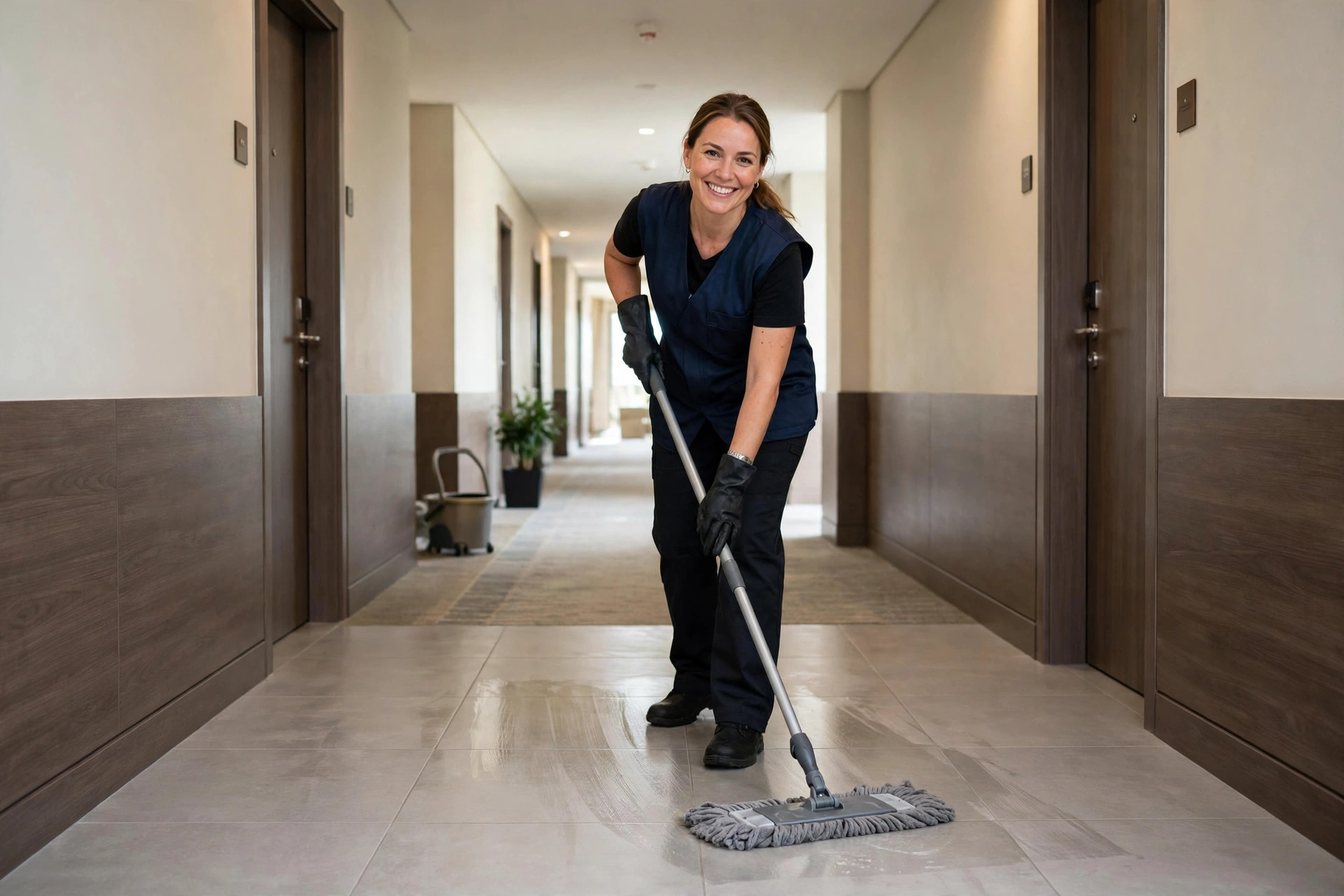
Belgium is a small country with a surprisingly large cleaning sector, and in 2026 that sector keeps hiring. The work sits behind the scenes of everyday Belgian life: the offices around the European quarter in Brussels get cleaned before civil servants arrive, the hotels along the canals of Bruges turn over rooms between tourist groups, the hospitals in Leuven and Ghent run round-the-clock cleaning rotas, and the big food plants around Antwerp and Aalst need industrial cleaners on every shift. Much of this work is organised through cleaning companies that hold contracts with offices, schools and hospitals, and through the Belgian system of service vouchers, known as dienstencheques in Flanders and titres-services in Wallonia, which subsidises domestic cleaning in private homes. For a foreign worker, the honest picture is this: cleaning jobs exist in real numbers, some larger employers do support a work permit, and the work itself is steady and paid monthly. Sponsorship is never guaranteed, it depends on the employer and on whether you meet the immigration rules, and small household employers almost never sponsor. This guide walks through the job as it actually works in Belgium, the places where cleaners are hired, what the day looks like, what the pay looks like in approximate terms, and how to apply without falling for the scams that target people looking for work abroad.
Job Overview: What a Cleaner Does in Belgium
A cleaner in Belgium usually works for a cleaning company rather than directly for the building being cleaned, and that shapes the whole job. Your employer sends you to one or several sites during the week: a glass office block near Brussels North station on Monday morning, a school in Mechelen after classes finish, a clinic in Leuven on a night rota. Each site has its own checklist, its own supervisor and its own standard, and part of the skill is learning each building quickly. The trolley is your mobile base. You load it with cloths, spray bottles, a vacuum cleaner, mop heads and bin bags, work through the rooms in order, and sign off the checklist before moving on. Floors in Belgian offices are often a mix of carpet tiles, vinyl and polished stone, so you learn which tool suits which surface rather than treating every floor the same. In hospitals and care homes the routine is stricter, with colour-coded cloths for different zones and hand hygiene between tasks, and supervisors check the work against infection-control standards rather than just appearance. Shifts vary widely. Office cleaning often runs from around six in the morning or after six in the evening, hotel housekeeping runs through the late morning after check-out, and hospital cleaning runs twenty-four hours. Most contracts are part-time to start, often twenty to thirty hours a week, and workers who prove reliable are the ones offered fuller hours. Training is usually given in the first days and covers chemical safety, how to dilute products, how to use a scrubber dryer, and what to do when you find damage. Ask in the interview whether training is paid and who your named supervisor is. A company that cannot name a supervisor or explain the rota clearly is not a company to trust.
Why Belgium Needs Cleaners
Belgium needs cleaners because so much of its economy runs on buildings that cannot close. Brussels hosts the European institutions, NATO offices, law firms and lobby groups, and all of them need daily cleaning by teams that arrive before staff and leave after them. Antwerp runs one of Europe’s largest ports, with warehouses, cold stores and logistics offices that need industrial cleaning around the clock. Ghent has its university hospital and its port industries, Liège has hospitals and public buildings, and Bruges and the coast live on tourism, which means hotel rooms turned over every day of the season. At the same time, fewer local workers want early-morning or evening cleaning shifts, so cleaning companies recruit widely and many have experience with work permits. That does not mean every cleaning company can sponsor. A large national cleaning firm with a human resources department has usually handled foreign hires before, while a small local firm with ten staff often has no idea how the single permit works and will not start the process. Check each advert for a clear statement about work-permit support and ask directly. Language is the other half of the story. Flanders speaks Dutch, Wallonia and much of Brussels speak French, and English is common in international offices, but on a cleaning team your colleagues will mostly speak Dutch or French. Even a modest ability in the local language changes everything: you understand the supervisor’s instructions, you read the chemical labels correctly, and you can ask for help instead of guessing. Learning greetings, numbers, safety words and the names of tools before you travel is one of the best investments you can make, and free apps and online videos are enough to start.
Types of Cleaner Jobs Available in Belgium
There are several common types of Cleaner jobs in Belgium in 2026:
- Hotel housekeeping and room attendants, busiest in Bruges, Brussels and the coast, where rooms are turned over between check-out and check-in and the pace is set by the number of departures that day
- Office and commercial cleaners working early mornings or evenings in banks, ministries, law firms and business parks, often the same building every day on a fixed rota
- Hospital and care-home cleaners, where hygiene standards are strict, colour-coded equipment is used, and training in infection control is provided before you work alone
- Residential and domestic cleaners who clean private homes, usually on a regular schedule, often arranged through the service voucher system that many Belgian households use
- Industrial and factory cleaners who clean production areas, warehouses and staff facilities, including food plants where hygiene audits are frequent and protective clothing is standard
Short contracts and seasonal cleaning work also exist, for example when a hotel needs extra hands in summer or an office block needs a deep clean after renovation. They can be a way into Belgium, but a full-time, open-ended contract is generally stronger for a work permit and for long-term residence, so ask about contract length before you accept. Some cleaners start through a temporary agency and later move to a direct contract with the cleaning company, which is a common and legitimate route when the agency is licensed and reputable. Check that the agency is registered, ask for its licence number, and never pay a large fee to an agency for finding you work.
Duties and Responsibilities
The daily duties of a cleaner in Belgium usually include several of the following tasks, depending on the employer and the shift:
- Sweeping, mopping and vacuuming floors in offices, hotels, hospitals, schools and homes, adjusting the method to carpet, vinyl, tile or stone
- Dusting furniture, shelves, desks and other surfaces, and wiping down windows and glass doors and partitions
- Cleaning and disinfecting bathrooms, toilets, kitchens and other shared areas, including descaling taps and sanitising touch points
- Emptying bins, sorting rubbish and recycling, and taking waste to the correct collection point, following the local rules on sorted waste
- Changing bed linen and towels in hotels and guesthouses, and restocking rooms with toiletries and drinking glasses
- Replenishing soap, paper towels, toilet paper and other cleaning supplies from the store cupboard and reporting low stock
- Using cleaning machines such as floor scrubbers and carpet cleaners after training, and cleaning the machines themselves afterwards
- Reporting damage, broken equipment or safety hazards to a supervisor, in writing where the company asks for it
- Following health and safety rules, including the safe use and storage of cleaning chemicals, with products kept in labelled bottles
- Keeping cleaning equipment and storage rooms tidy and in good working order, with mops washed and cloths changed daily
Cleaning roles vary more than they look from the outside. The job description will say whether training or a certificate is provided, so read it carefully before you apply and ask the employer if anything is unclear. A general-sounding role may in fact need a hygiene certificate, while a specialist-sounding role may include full training for beginners. Keep a copy of the job description and compare it with the contract when the offer arrives, so you can check that the duties, hours and location match what was advertised.
Requirements for Foreign Applicants
Most Belgium cleaner jobs do not require a university degree. Employers usually look for reliability, physical fitness, willingness to work shifts, and a basic ability to follow instructions. That said, meeting the employer’s requirements is only part of the process. For a work permit, you must also meet immigration requirements, and the employer must be willing and able to support your application. A cleaner is expected to be thorough, honest and discreet, because the work often takes place in other people’s rooms, offices and homes. Employers value workers who notice detail, finish tasks without being reminded, and respect privacy. Previous cleaning experience helps, but many employers provide training, and the most important qualities are reliability, physical stamina and a willingness to work early, late or weekend shifts. Common requirements include:
- Being at least 18 years old, holding a passport that stays valid well beyond the planned stay
- Being physically fit enough to stay on your feet for a full shift, bending, lifting buckets and pushing trolleys
- Speaking some Dutch or French, even at a basic level, so safety instructions and team briefings are understood
- Holding a clean criminal record and being able to supply a police clearance certificate from home when asked
- Having no earlier immigration breaches in Belgium or elsewhere in the region
- Accepting the shift pattern the job needs, which can mean early mornings, evenings, weekends or public holidays
- Showing attention to detail, honesty and punctuality, and working well as part of a small team
- Having done similar work before is useful, though plenty of employers train newcomers from the start
- Holding any extra certificate the advert names, for example a driving licence or a food hygiene certificate
- Passing a basic medical check arranged by the employer where the role requires one
Schooling is seldom the deciding factor for cleaning work in Belgium. A few employers ask for secondary school completion, but most do not. What carries weight is safe working, steady attendance and finishing the full contract. If you have cleaned before, say where, what kind of building it was, and how large the team was. If you have not, stress that you are reliable, flexible on shifts and quick to learn.
Salary and Benefits
Pay for cleaner work in Belgium varies by location, employer, shift, experience and whether overtime is included. The figures below are approximate ranges only and should not be taken as a fixed salary or a guarantee. Your actual pay will be stated in your employment contract, and you should read it carefully before you sign or travel. No article, agent or advertisement can promise you an exact wage, because pay is set by the employer and by local law, and it changes with the city, the season and the shift pattern. A cleaner in Belgium can typically expect around €1,700 to €2,200 gross per month for full-time work, before tax, depending on the employer, the city and the shift pattern. Workers in the largest cities sometimes earn slightly more because living costs are higher. Night shifts, weekend work and overtime usually attract additional pay under local labour law or the company agreement, and experienced workers may earn toward the higher end of the range or slightly above it. In some sectors, tips, meal allowances or a thirteenth-month payment are part of the package, but these are not universal, so confirm them in writing before you accept. In addition to basic pay, many employers offer benefits that make the total package more valuable. Common benefits include paid annual leave, paid public holidays, training, and in some cases help with accommodation for the first weeks, especially when hiring from abroad. Always confirm in writing whether accommodation is provided, whether it is free or deducted from pay, and for how long it lasts. Never accept a job where accommodation, food or transport deductions leave you with almost nothing. Keep copies of your contract and payslips. These documents are important for permit renewals and for proving legal employment in Belgium.
How to Apply for Belgium Cleaner Jobs with Visa Sponsorship
How you apply matters as much as whether you can do the job. A tidy, truthful application keeps you safe and gives a Belgian cleaning company a clear reason to take you seriously.
- Put together a short, clear CV in English, with your full name, contact details, work history, skills and languages, kept to one or two pages without false claims
- Write a short cover note saying why you want cleaning work in Belgium, which shifts you can do, and that you are ready to start
- Look for vacancies on reputable job portals, company career pages and licensed recruitment agencies that list Belgium cleaning roles, and favour employers that state plainly whether they can support a work permit
- Start with the employer’s own channels. Companies hiring cleaner staff in Belgium advertise on their careers pages and on well-known job boards, and those listings carry the company name, the workplace and a real contact. If the only way to apply for a cleaner post in Belgium is through an unknown agent on social media, stop and look for the same employer directly, because a job that cannot be found on any official channel is not a job you should pay to chase
- If an agency contacts you, check that it is licensed, ask for its registration details, and never pay a large upfront fee for a job offer, since genuine employers do not normally charge workers for a job
- Attend interviews by video call or phone, ready to talk about your experience, your health, your shift availability and your plans to live in Belgium
- Do not accept a cleaner offer in Belgium on the strength of a phone call. Ask the Brussels employer for the contract or a formal offer letter, then check seven things before signing: the job title, the salary, the hours, the length of the contract, the town or city where you will work, whether accommodation is included or deducted, and the notice period. If the employer in Brussels will not put those in writing, that refusal tells you more than the offer itself, and you should walk away
- Once you have a genuine offer from an employer that can sponsor, follow the work permit process through the embassy, consulate or visa centre in your country, with the employer providing documents proving the job offer and that the role is genuine
- The paperwork stage is where cleaner applications in Belgium most often stall, so treat it as a job in itself. Start with the passport, then the written offer from the Brussels employer, then evidence of a place to stay, and only then the supporting pieces: a police clearance certificate, health insurance if the permit route asks for it, and the official forms. A missing certificate or an unsigned form sends the file back, so read the checklist from the Belgium visa office twice and tick each item off as the paper lands in your folder
- A tourist visa is not a work visa, and Belgium treats the difference seriously. Arriving as a visitor and then starting cleaner work in Brussels can end with fines, removal and a ban, and it can also close the door on future permits. The safe order is fixed: offer, permit, then travel
Visa Process: What to Expect in General Terms
Belgium runs a single permit system, where the employer applies for authorisation to employ you and you then apply for a work visa through the Belgian consulate or visa centre in your home country. The exact permit category, documents and processing time can change, and they depend on your nationality, the type of contract and the authority handling your case. In general, the employer provides the contract and supporting documents, you submit a work permit application in your home country or online as directed, and you attend an appointment for biometrics and an interview if required. Processing can take several weeks or longer, especially during busy periods, so apply early and do not book non-refundable travel until your permit is approved. After arrival, you will normally need to register with the local commune within days of arrival, obtain a residence card, and complete tax and social security registration with your employer’s help. Keep all original documents safe, and keep copies in a separate place, including digital copies. If your permit is refused, read the refusal reasons carefully. You may be able to correct a missing document or reapply, but you should not use a different agent or pay for a shortcut that promises a guaranteed visa. No one can guarantee a visa outcome, and anyone who charges for a guaranteed result is not honest. Visa rules change from time to time, so always check the current guidance from the embassy or the official immigration authority before you apply, and do not rely on old advice from social media.
Where the Jobs Are in Belgium
Cleaner jobs are concentrated around the major cities and economic centres, including Brussels, Antwerp, Ghent, Bruges, Liège, Leuven, Charleroi, Mechelen. Larger cities offer more vacancies and better public transport, but rents are usually higher. Smaller cities and towns can be cheaper and quieter, with a growing number of employers. When choosing a location, think about living costs, transport and community. Rents in Brussels are higher than in Ghent, Liège or smaller towns, and sharing a flat with colleagues is common in the first months. Ask the employer about the exact workplace location before you accept, and check how you would travel there. In Belgium, transport is by trains run by SNCB/NMBS connecting all major cities, plus metro, tram and bus networks in Brussels, Antwerp and Ghent, and many workers use public transport or a bicycle where that is practical. The climate is temperate maritime, with mild summers, cool winters and frequent rain through the year, so suitable clothing for the season matters, especially for outdoor or early-morning work. Some employers are based outside the big cities, in industrial zones, farming regions or tourist resorts, and they may provide transport from a nearby town or help with accommodation. If the workplace is far from public transport, ask the employer how workers get there and whether a bus or a shared car is provided. A job that looks well paid can be a poor choice if transport costs eat most of the wage, so work out the full cost of living in that location before you decide.
Scam Warnings: Protect Yourself
Job scams target people who want to work abroad, and cleaner roles in Belgium are a common target. Never pay for a job offer, a visa guarantee or a place on a waiting list, because a genuine employer in Brussels does not ask workers to pay for the job itself. Be suspicious of offers that arrive by message with no interview, salaries far above the normal range for Brussels offices, or pressure to pay quickly through a money transfer or a gift card. Check that the Brussels employer is real: look up the cleaning company, its address and its website, and call the company on a number you find yourself, not one the agent gives you. Never send your passport, bank details or a large payment to someone in Belgium you have not verified. If an offer feels wrong, stop, ask for a written contract, and check with the Belgian embassy or an official source before you pay anything or travel. Common warning signs in Belgium include an agent who refuses to give a written contract, a cleaning company with no website or address, an offer letter full of spelling mistakes or copied logos, and anyone who says the visa is guaranteed if you pay today. Real Brussels employers interview you, give you time to read the contract, and let you verify them independently. Keep every message, receipt and document from anyone who offers you work, and if you believe you have been scammed, report it to your local police and to the Belgian embassy. Telling others about the scam can stop the same agent from targeting more cleaners in Belgium.
Tips to Improve Your Chances
Start learning Dutch or French before you travel, even a few phrases for greetings, safety, numbers and directions. Be honest about your experience and your health, because employers prefer a worker who is upfront about what they can do. Keep your documents organised and translated where needed. Avoid agents who promise a visa in days, ask for payment through unofficial channels, or refuse to give a written contract. Apply to several genuine cleaning companies rather than relying on one offer. If you have cleaned before, describe the type of building, the tasks and the equipment you used. If you have not, highlight reliability, shift flexibility and a willingness to learn. A food hygiene certificate or a clean driving record can also help you stand out. Keep your CV short, honest and easy to read, with your contact details, your work history in order and the languages you speak. Tailor it to each job by mentioning the skills that job needs, and remove anything that is not relevant. A short, polite message with each application, explaining why you want that job and when you can start, works better than sending the same message to a hundred employers. Follow up once if you hear nothing after a reasonable time, but do not send repeated messages to the same employer.
Life in Belgium as a Cleaner
Daily life in Belgium is manageable for a foreign cleaner who budgets carefully. Bread, potatoes, vegetables and market produce are good value, and most cities have weekly markets alongside the supermarkets. Brussels rents are the highest, while Ghent, Liege and smaller towns are cheaper, and sharing a flat with colleagues is normal at first. Many cleaners later take a flat of their own once the city feels familiar and the income is steady. Trains run by SNCB/NMBS link the cities, with metro, tram and bus networks in Brussels, Antwerp and Ghent, and a bicycle covers many short trips. Healthcare comes through the public system once you are registered and contributing, though the exact rules depend on your permit. Many workers spend their time abroad learning Dutch or French, saving money, and later bringing family or applying for longer residence when they meet the legal requirements. The work is demanding: long hours on your feet, working to a schedule and sometimes to targets. Good shoes, proper technique and regular rest prevent injury. Follow safety training, report hazards, and never attempt a task you have not been trained for. A good team looks after each other, and supervisors expect workers to speak up when equipment is broken or a situation is unsafe. Belgian workplaces value punctuality, honesty and teamwork, and workers who show those qualities are often offered longer contracts and more responsibility. Outside work, explore your city, join community groups and learn local customs. Settling in well makes the job easier and the experience far more rewarding.
Frequently Asked Questions
Do Belgium cleaner jobs offer visa sponsorship in 2026? Some employers do, especially large companies and licensed agencies that regularly hire foreign workers. Sponsorship depends on the employer and on the applicant meeting immigration requirements. Many small employers do not offer sponsorship, so always confirm before you apply. Do I need to speak the local language to work as a cleaner in Belgium? Not always. Many employers hire workers with basic Dutch and French, especially in international teams. Some ability in the local language is a strong advantage for safety, teamwork and daily life, and it improves your chances of being hired and promoted. How much can a cleaner earn in Belgium? Pay varies by employer, location and shifts. A rough approximate range for full-time work is around €1,700 to €2,200 gross per month, before tax. Always check your contract for the exact figure, and remember that no one can promise an exact salary before the employer offers it. Do I need experience to get a cleaner job in Belgium? Previous experience helps, but many general roles accept workers without experience and provide on-the-job training. Specialised roles, such as driving or skilled work, do require experience or a licence. Can I bring my family to Belgium on a work permit? Family reunification may be possible after you have legal residence and meet income and accommodation requirements. The rules depend on your permit type and personal circumstances, so check current immigration guidance before making plans.
Conclusion
Belgium cleaner jobs with visa sponsorship in 2026 offer a realistic route into legal work abroad for people who are ready for practical, shift-based work and who apply through genuine channels. The jobs are real, the demand is steady, and the lifestyle can be rewarding for workers who plan their budget, learn some of the local language, and respect safety and immigration rules. Sponsorship is never automatic and never guaranteed, but a strong application, a genuine employer, and complete documents give you the best chance. Prepare carefully, avoid shortcuts and upfront fees, and treat your first contract as the foundation for a longer stay in Belgium. For a closer look at a similar route, see our guide to construction worker jobs in Belgium.