Latvia does not usually appear at the top of lists about working in Europe, and that is exactly why it deserves a closer look. This small Baltic country on the eastern shore of the Baltic Sea has a manufacturing sector that keeps growing quietly while larger countries take all the attention. Factories in and around Riga, Daugavpils, Liepaja, Jelgava and Valmiera produce timber products, processed food, metal parts, electronics and textiles, and many of them struggle to fill production lines with local workers alone. Young Latvians often move to Western Europe for higher wages, which leaves real openings for workers from outside the European Union. Some Latvian employers are willing to sponsor a work visa for the right candidate, although sponsorship always depends on the individual employer, the specific vacancy and whether the applicant meets Latvian immigration requirements. Nobody can promise it in advance.
This guide explains what factory work in Latvia actually involves in 2026, which industries are hiring, what employers expect, what pay looks like in approximate terms, what life costs in Latvia, and how the application and work permit process usually works. Everything here is general information to help you prepare. Rules, wages and employer policies change, so always confirm the details in the actual job offer and with the official Latvian immigration authorities before you make plans or pay anyone.
Why Latvian factories hire workers from abroad
Latvia has a population of under two million people, and its working-age population has been shrinking for years. Factories feel that shortage every day. A timber plant in Valmiera, a fish processing plant in Liepaja, or a food factory on the edge of Riga cannot run a full shift if a quarter of the production line is empty. At the same time, Latvia is a member of the European Union, so its factories export across Europe and must keep up with orders from Germany, Scandinavia and the United Kingdom. Export orders do not wait for recruitment to catch up.
The result is a labour market where foreign workers are not a curiosity but a normal part of the workforce. In many plants you will work alongside people from Ukraine, Moldova, Central Asia, South Asia and Africa. Supervisors are used to training new arrivals, and larger employers often have at least one English-speaking or Russian-speaking member of staff who helps newcomers settle in. Latvian is the official language, and Russian is widely understood in Riga and Daugavpils, but English is increasingly the working language on international production lines.
Another reason factories look abroad is the nature of the work itself. Factory jobs involve early starts, night shifts, weekend rotations and standing for long hours. Local workers with other options sometimes prefer office or service work. Employers therefore value applicants who are honest about being ready for shift work and physical work, and who plan to stay for the full length of a contract rather than leaving after a few weeks.
Where the factory jobs are
Riga, the capital, holds the largest concentration of manufacturing. Industrial zones in the suburbs, such as Maskavas district, the port area and the outskirts towards Salaspils and Olaine, host food processing, printing, pharmaceuticals, electronics assembly and packaging plants. Jobs here suit people who want city life, public transport and the biggest choice of employers, although rents in Riga are the highest in the country.
Daugavpils, in the south-east near the borders with Lithuania and Belarus, is Latvia’s second city and an industrial centre in its own right. It has metalworking, railway repair workshops, food production and building materials. Russian is very widely spoken here, which can make the first months easier for applicants who know Russian. Living costs are noticeably lower than in Riga.
Liepaja, on the western coast, is a port city with fish processing, metalworking and a growing wind-energy supply chain. Factory work here often connects to the sea: processing, freezing, packing and shipping. The city is smaller and quieter than Riga, with a strong seaside character, and employers sometimes provide transport from nearby towns.
Jelgava, a short train ride south-west of Riga, is known for food processing, including a large dairy and confectionery presence, as well as metal and machinery plants. Valmiera, in the north, has timber processing, glass fibre production and food manufacturing. Smaller towns such as Rezekne, Ventspils, Jekabpils and Tukums also have individual factories that hire, often one large employer that dominates local employment. A job in a smaller town usually means cheaper rent and a shorter commute, but fewer choices if you later want to change employer.
The industries that hire most
Wood and timber processing is Latvia’s signature industry. The country is heavily forested, and sawmills, furniture component plants and wood pellet factories operate across the country. Work here involves feeding timber into machines, sorting boards, stacking, sanding, varnishing and packing. Sawdust, noise and heavy lifting are part of the job, and employers provide protective equipment.
Food processing is the second big employer. Dairy plants turn milk into cheese, butter and yoghurt. Meat processing plants prepare sausages, smoked meats and ready meals. Fish plants in Liepaja and Riga process sprats, herring and salmon. Bakeries and confectionery factories run around the clock. Food factories are strict about hygiene: hairnets, gloves, aprons, handwashing routines and temperature rules are enforced every shift, and anyone who cannot follow hygiene rules will not last long.
Metalworking and machinery plants make parts for construction, agriculture and transport. This work suits people with some technical background, although many entry-level roles involve simple machine operation, deburring, assembly and quality checking rather than skilled welding or machining.
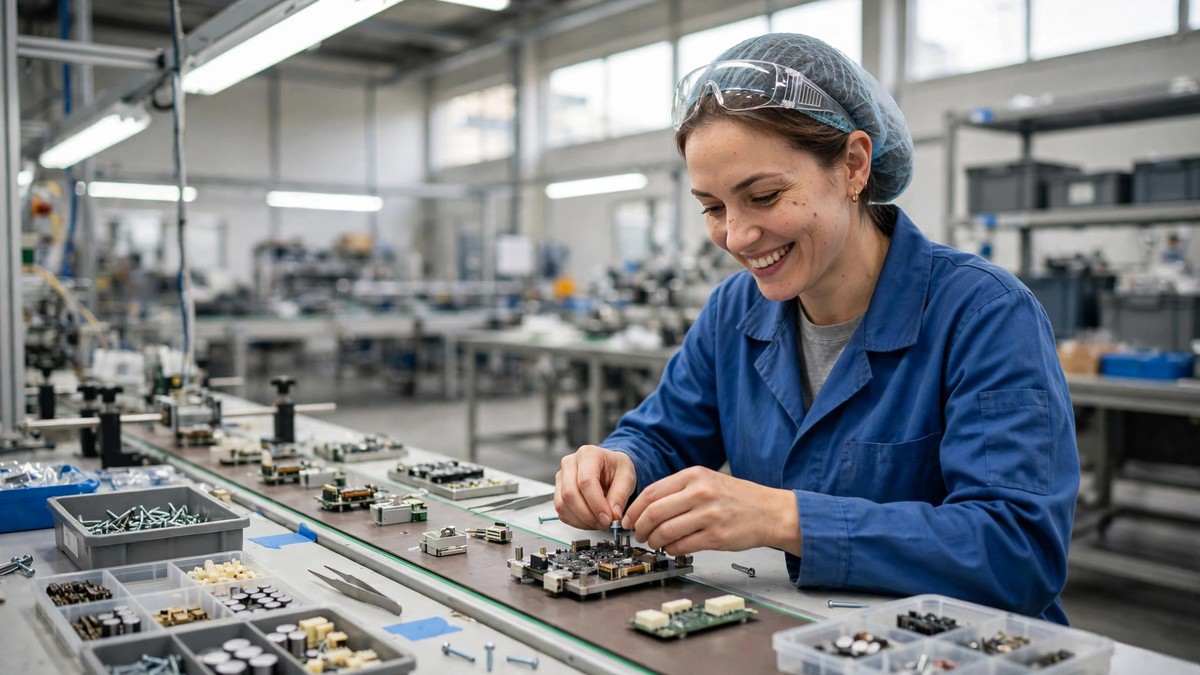
Electronics assembly is concentrated around Riga. Workers assemble circuit boards, cables and small devices, often in clean, well-lit halls where precision and patience matter more than strength. This is a good fit for applicants who prefer lighter work and steady, repetitive tasks.
Textiles and garment production still exists in Latvia, though on a smaller scale than in the past. Sewing, cutting, ironing and packing roles appear regularly, and some employers specifically look for people with sewing experience.
What a working day on the line looks like
A typical factory shift in Latvia lasts eight hours, although twelve-hour shifts exist in some food and timber plants. Many factories run two or three shifts: a morning shift starting around six or seven, an afternoon shift, and a night shift. Rotating shifts are common, which means your body clock has to adapt. Overtime is often available during busy periods, especially before Christmas in food and confectionery plants and in summer in timber and construction materials.
Your day usually starts with a short briefing from the shift supervisor, who explains the production target, any change in the product being run, and any safety point for the day. Then you take your place on the line. Depending on the plant, that could mean loading raw material, watching a machine, checking products as they pass, packing finished goods into boxes, labelling them, and stacking pallets. Supervisors check quality at intervals, and a batch that fails inspection may need rework.
Breaks are scheduled rather than taken whenever you like, because the line does not stop for one person. Latvian labour law provides rest breaks, and most factories give a meal break of around thirty minutes plus shorter pauses. Some plants have a canteen with subsidised meals, which is worth asking about because it can save a meaningful amount each month.
The work is physical and repetitive. You will be on your feet for most of the shift, lifting boxes that can weigh ten to twenty kilograms, and working in halls that may be warm near ovens or cold in chilled food areas. Cold-store and fish processing roles require thermal clothing, which the employer should provide. If you have a health condition that makes standing or lifting difficult, be honest with yourself about which roles fit you before applying.
Duties you can expect
Although the exact tasks depend on the factory, most production worker roles share a core set of duties. You will operate or feed production machines according to instructions, monitor them for jams or faults, and report problems to a supervisor rather than trying to fix dangerous equipment yourself. You will sort, check and pack products, making sure labels, dates and weights are correct. You will keep your workstation clean and tidy, because a messy line causes accidents and rejected batches. You will follow safety rules every time, wearing the helmet, gloves, ear protection or safety shoes the role requires. You will record simple production information, such as how many boxes were completed or how much material was used, sometimes on paper and sometimes on a basic computer terminal. In food plants you will also follow strict hygiene and temperature procedures without exception.
Workers who do well in Latvian factories are usually the ones who arrive on time without fail, because one missing person can slow a whole line. Reliability matters more than speed in the first weeks. Employers would rather have a steady worker who makes few mistakes than a fast worker who produces waste.
What employers usually ask for
Most factory jobs in Latvia do not require a university degree or advanced qualifications. Employers typically look for applicants who are at least eighteen years old, physically fit for the work, and able to work shifts including nights and weekends when the rota requires it. Previous factory experience is helpful and can improve your chances, but many plants train complete beginners, especially for packing, sorting and simple machine operation.
Language requirements vary. Some employers ask for basic English so you can understand safety instructions and communicate with a supervisor. Others accept Russian, which is common in Riga and Daugavpils. A few large plants with many foreign workers run onboarding in English. Learning a few Latvian phrases before you arrive is a genuine advantage: greetings, numbers, and words for safety, break, help and finished. It signals respect and makes daily life outside work much easier.
Documents matter as much as attitude. You will normally need a valid passport with enough validity remaining, and you must be able to pass any medical check the employer or the immigration process requires. A clean criminal record is usually expected. Some employers ask for proof of previous employment or a simple CV in English. Keep your CV short and honest: your name, contact details, work history, any machine or forklift experience, and languages you speak.
Forklift licences, food hygiene certificates and basic technical training are not required for most entry roles, but they can move you into better-paid positions. If you already hold a forklift certificate, mention it clearly. If you do not, ask whether the employer provides training after a probation period.
Pay, benefits and what the money is really worth
Wages in Latvian factories vary a lot by industry, location, shift pattern and experience. As a rough approximate guide only, entry-level production workers often earn in the region of 800 to 1,300 euros per month before tax for a standard full-time schedule, with higher amounts possible when night shifts, weekend work and overtime are included. Skilled machine operators, forklift drivers and workers with technical experience can earn more, roughly in the range of 1,200 to 1,800 euros per month before tax. These are approximate ranges, not promises, and the exact figure depends on the employer and the contract. Always read the employment contract carefully and confirm the gross and net pay, the pay date, and how overtime is calculated before you accept.
Benefits differ between employers. Larger factories often provide free or subsidised transport from Riga or nearby towns to the plant, work clothing and protective equipment, and a subsidised canteen. Some employers help with finding accommodation, especially for workers arriving from abroad, or provide shared housing for the first months with rent deducted from pay. Ask exactly how much the deduction is and what it includes before agreeing. Health insurance is part of the Latvian system for legally employed workers, and your employer should register you properly so you can access healthcare. Annual paid leave is a legal entitlement in Latvia, usually around four weeks per year for full-time workers, plus public holidays.
Be cautious about any offer that sounds far above the ranges above for basic packing work. Very high pay promises are a common sign of a dishonest recruiter. A genuine employer will give you a written contract in a language you understand, or with a translation, and will not ask you to pay a large fee for the job itself.
Cost of living, housing and getting around
Latvia is one of the more affordable countries in the European Union, which is part of its appeal. Rents in Riga for a room in a shared flat are roughly in the region of 200 to 350 euros per month, while a small one-bedroom flat in the city can cost roughly 400 to 600 euros. In Daugavpils, Liepaja, Jelgava or Valmiera, rents are usually lower by a noticeable amount. Shared housing provided by an employer is often cheaper still, although privacy is limited and house rules apply.
Monthly food shopping for one person who cooks at home is roughly in the range of 200 to 300 euros, depending on habits. Eating out in Riga costs more, but local markets and supermarkets such as Rimi and Maxima keep everyday costs manageable. A monthly public transport pass in Riga costs roughly in the region of 30 to 50 euros. Trains connect Riga with Jelgava, Valmiera, Daugavpils, Liepaja and other towns, and buses cover smaller places. Many factory workers cycle in warmer months, and Latvia’s flat terrain makes that practical.
Heating is the cost newcomers underestimate. Latvian winters are cold, with temperatures often below freezing from December to February, and heating bills in older apartment blocks can rise sharply. If you rent privately, ask whether heating is included in the rent or charged separately. Budget for warm clothing, good boots and a proper winter coat before your first winter.
The work permit path in outline
For citizens of countries outside the European Union, working legally in Latvia normally requires a visa or residence permit with the right to work, based on a job offer from a Latvian employer. The employer usually starts the process by registering the vacancy and applying for approval to employ a foreign worker. You then apply for the relevant visa or temporary residence permit at a Latvian embassy or consulate, or through the Office of Citizenship and Migration Affairs, depending on your situation and where you are applying from. The exact route, documents and processing times change, so check the current requirements on the official Latvian government and migration websites, or confirm them with the employer.
Sponsorship is never automatic. An employer sponsors a worker because the vacancy is genuine, the worker meets the requirements, and the authorities approve the application. If any of those elements fails, the application can be refused. Never pay an agent who guarantees a visa, and never travel on a tourist visa intending to work, because that can lead to removal and a ban on future applications.
Processing can take weeks or months. Use the waiting time well: gather your documents, get any translations or legalised copies that are needed, arrange your medical checks, and learn basic Latvian and workplace English. Workers who arrive prepared settle faster and keep their jobs longer.
How to apply without wasting your effort
Start by identifying real employers rather than vague middlemen. Look for Latvian factories and recruitment agencies that publish full company names, addresses and contact details. Latvian job portals, company career pages and the State Employment Agency listings are better starting points than social media posts with no company name. When you find a vacancy, read it fully before applying: the location, the shift pattern, the language requirement and the pay range tell you whether it fits you.
Prepare a simple one-page CV in English. Include your full name, date of birth, nationality, contact details, education, work history with dates, and any relevant skills such as machine operation, packing, forklift driving or food hygiene. Add a short line about the kind of shift work you are willing to do. Attach a copy of your passport details page only when the employer asks for it through a proper application channel, not in a public comment or chat message.
Apply to several employers rather than putting everything on one application, and keep a record of where you applied and when. If an employer responds, expect a video interview or a phone call, often in English or Russian. Be ready to explain your experience, your health and fitness for physical work, and why you want to work in Latvia specifically. Employers notice when an applicant knows something about the city and the industry rather than giving a generic answer.
If you are offered a job, ask for the contract before you pay for anything or resign from a current job. Check the job title, the salary, the working hours, the probation period, the notice period, who pays for accommodation and transport, and what happens if the work permit is refused. A genuine employer will answer these questions plainly. If the answers are vague, or you are pressured to pay quickly, walk away.
Settling in and staying in work
The first month is the hardest. The language is unfamiliar, the winter is cold, and shift work disrupts sleep. Workers who settle best usually do a few simple things: they learn basic Latvian quickly, they cook at home and save money rather than spending everything in the first weeks, they keep in touch with family on a regular schedule, and they build one or two friendships at work. Latvia is a safe country overall, but like anywhere, keep your documents secure, register your address as required, and know where the nearest clinic and police station are.
Longer term, factory work in Latvia can lead to better roles. Workers who stay, learn the machines and show reliability are often offered training as machine operators, team leaders or quality checkers. Some move into logistics or maintenance. Others use the experience and savings to apply for roles elsewhere in Europe. Whatever your plan, keeping a clean employment record, paying taxes properly and respecting your contract will keep your options open.
Frequently asked questions
Can I get a factory job in Latvia without speaking Latvian? Many factories hire workers with basic English or Russian, especially in Riga and Daugavpils, and provide training in one of those languages. Daily life is easier if you learn Latvian, and some roles that involve paperwork or customer contact need more of the language. Check the language requirement in each vacancy rather than assuming it is the same everywhere.
Do Latvian factories provide accommodation? Some do, particularly larger employers hiring from abroad, often as shared housing near the plant with rent deducted from pay. Others help you find a room or flat but expect you to pay for it yourself. Always confirm the cost, the location, how many people share, and whether the deduction appears in the contract before you accept.
Is factory work in Latvia seasonal? Some food processing and timber work peaks at certain times of year, but most factory jobs are year-round, full-time positions. Confectionery and food plants are busiest before Christmas, and construction materials peak in spring and summer. A permanent contract is more stable than a short seasonal one if you want to stay longer.
What should I do if a recruiter asks for a large fee? Be very careful. A genuine employer pays for recruitment or charges only small, transparent administrative costs that are explained in writing. Large upfront fees, guarantees of a visa, and pressure to pay immediately are warning signs. Verify the employer exists, check reviews, and never send money through untraceable methods.
How cold does it get, and does work continue in winter? Latvian winters are cold, often well below freezing, with snow from December to February. Indoor factory work continues normally, and employers provide appropriate clothing for cold areas. Outdoor loading and timber yard work continues with warm clothing and shorter rotations in extreme cold. Good winter boots and a warm coat are essential.