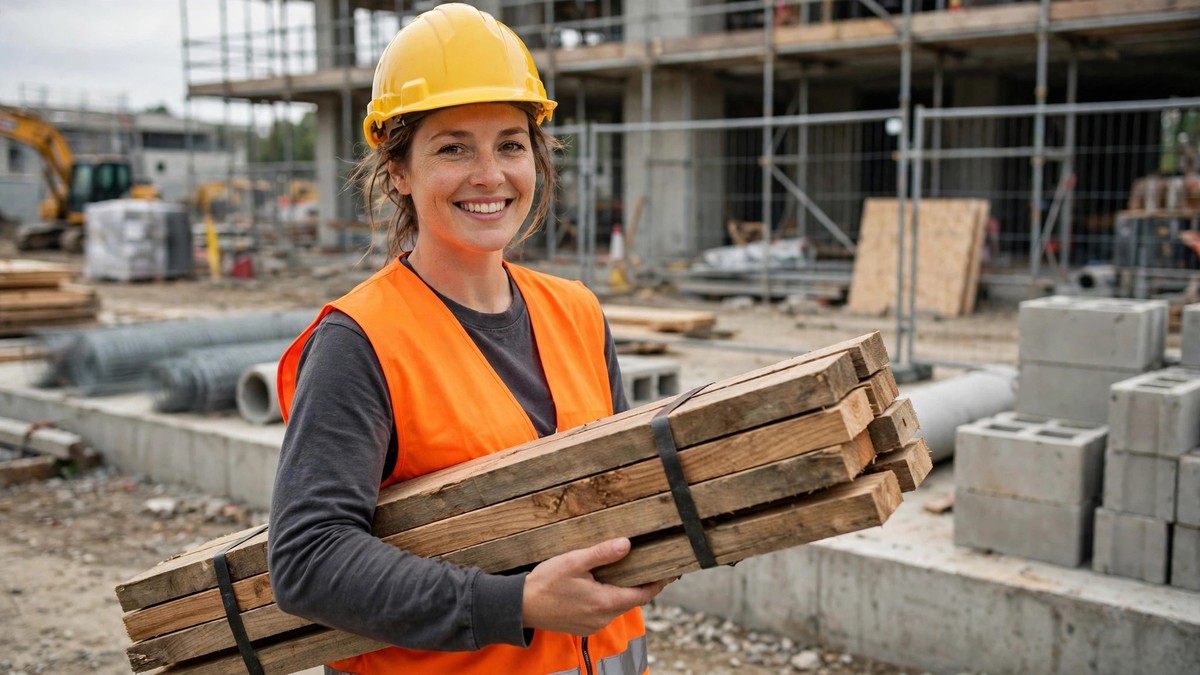
Drive through the outskirts of Bucharest on a weekday morning and the first thing you notice is the cranes. They stand over half-finished apartment blocks in Pipera and Militari, over office buildings near the ring road, and over roadworks that seem to stretch for kilometres. Travel to Cluj-Napoca and the picture repeats itself on a smaller scale, with new housing estates rising on former farmland and students filling the cafes below them. Timisoara, Iasi and Constanta each have their own version of the same scene. Romania is building, and it is building faster than its own construction workforce can keep up with. That gap is the reason construction firms in Romania now recruit from outside the European Union, and why some of them are prepared to support a work permit for a foreign worker who has the right trade and the right attitude. Sponsorship is not promised to everyone who applies. It depends on the employer, the specific role and whether the applicant meets the requirements, and the final decision always belongs to the Romanian authorities. But for a skilled or semi-skilled construction worker, the opportunity in 2026 is genuine.
This article takes a different route from a simple job advert. It looks at the kinds of construction work that are actually available, the trades that are most in demand, the way a building site in Romania runs day to day, the safety rules that matter, what pay looks like in approximate terms, what life costs in Romanian cities, and how the permit process usually works. If you work in construction and you are weighing a move, the aim is to give you enough detail to make a clear decision.
The building boom, and why it needs foreign hands
Romania’s construction demand comes from several directions at once. The first is housing. Romanians are moving to the big cities for work and study, and developers are responding with apartment blocks, many of them sold before they are finished. The second is infrastructure. European Union funding has paid for motorways, bridges, rail upgrades and water systems, and those projects need large crews for years at a time. The third is commercial and industrial building: logistics halls, retail parks, factories and offices, especially around Bucharest, Cluj, Timisoara and Brasov. The fourth is renovation. Older blocks from the communist era are being insulated, re-roofed and modernised, and that work alone keeps thousands of people busy.
At the same time, many Romanian construction workers have left to work in Germany, the United Kingdom, France or the Netherlands, where wages are higher. Their departure leaves a shortage at home, particularly for the trades that are hardest to replace quickly: steel fixing, formwork carpentry, bricklaying, plastering, scaffolding, welding and heavy machine operation. Employers have responded by raising pay, offering accommodation, and looking abroad, including to Asia and Africa, for workers who are willing to stay for the length of a project. A foreign worker who arrives with a real trade and a willingness to work through a Romanian winter is often welcomed, because the employer has already spent months trying to fill that same vacancy locally.
The trades employers are actually looking for
Construction is not one job. It is a collection of trades, and the pay, the conditions and the competition are different in each of them. Understanding where you fit matters more than any general claim about construction work.
General labourers are the largest group and the easiest to enter. They carry materials, clean the site, dig, mix, load and unload, and support the skilled trades. No formal qualification is needed, but physical strength, stamina and a willingness to do repetitive heavy work are essential. Labouring is the usual starting point for a worker with no construction trade, and it can lead into a trade if the worker watches, learns and asks to be trained.
Masons and bricklayers build walls, partitions and structural elements. Romanian sites use brick, block and concrete, and a mason who can work to a line, keep courses level and maintain a steady pace is always in demand. This is one of the better paid manual trades on a Romanian site, and employers often test a mason’s work on the first day rather than relying on a certificate alone.
Steel fixers and formwork carpenters work on the skeleton of a building. Steel fixers cut, bend and tie reinforcement bars according to drawings, while formwork carpenters build the timber or steel moulds into which concrete is poured. Both trades are physically demanding and both require the ability to read basic drawings and measurements. They are also among the trades with the greatest shortage, because the work is hard and the learning curve is steep.
Plasterers, tilers and painters do the finishing work that a buyer actually sees. A good plasterer who can produce a flat, smooth wall without rework, or a tiler who can lay large format tiles cleanly, can command better pay and steadier work than a general labourer, because finishing is the stage where quality is most visible and where mistakes are most expensive to fix.
Welders and metal workers are needed on industrial and infrastructure projects, for structural steel, pipework and repairs. A welder usually needs a certificate, and the employer will want to see a test piece before offering a role. The work can involve heights, confined spaces and hot conditions, and the safety rules are strict.
Scaffolders, crane operators and machine operators form a smaller but well paid group. Scaffolding requires training and a licence, and a licensed scaffolder is rarely out of work. Crane and excavator operators need a licence recognised in Romania, and employers will check it carefully before allowing anyone to operate a machine on their site.
Electricians and plumbers, sometimes called installers in Romania, work on the services inside a building: wiring, lighting, heating, water and drainage. These roles usually require a qualification and some experience, and the pay reflects that. A foreign electrician should expect the employer to ask about qualifications, and should be prepared for the possibility that a Romanian recognition process or additional training is needed.
A day on a Romanian building site
A typical construction day in Romania starts early. Most sites begin between seven and eight in the morning, and in summer the start can be earlier to avoid the worst of the afternoon heat. The working day is usually eight to nine hours, with a lunch break of around thirty minutes and shorter breaks during the day. Saturday work is common, especially when a project is behind schedule, and it is normally paid at a higher rate. Sunday work is less common on residential projects, though infrastructure work can run seven days a week in shifts.
The morning begins with a short briefing, sometimes called a toolbox talk. The foreman explains the day’s tasks, any changes to the plan, and any specific safety risks. Workers then collect their tools and materials and go to their assigned area. A mason might spend the morning building a wall on the third floor, a steel fixer might be tying reinforcement on a slab, and a labourer might be moving pallets of block with a wheelbarrow or a small loader. The work is noisy, dusty and physical, and the site changes shape every week as floors are added and new trades arrive.
Weather shapes the day more than in most jobs. Summer in Bucharest can reach well over thirty degrees, and working on an exposed slab in that heat is exhausting, so water, shade and rest breaks matter. Winter is the opposite problem. Temperatures in Brasov, Cluj and the mountains can fall well below freezing, concrete work slows or stops, and sites can close for days in heavy snow. Employers usually provide winter clothing and heated rest rooms, but a worker should be prepared for cold, wet and muddy conditions for several months of the year.
Safety is not optional, and it is taken seriously on larger sites. Helmets, high visibility vests, safety boots and gloves are required, and the employer should provide them. Working at height requires a harness and proper scaffolding, and anyone who is asked to work without those protections should refuse and report it. Romanian labour inspectors do visit sites, and a reputable employer will have safety procedures, first aid provision and insurance in place. A worker who ignores safety rules to save time is putting himself and his colleagues at risk, and most foremen will remove a repeat offender from the site rather than tolerate it.
What employers expect before they offer a job
For general labouring, the expectations are straightforward: be physically fit, be on time, follow instructions, and work steadily for the full shift. Previous site experience is helpful, but many employers will take a strong and willing worker with no construction background and train him on the job.
For a trade, the employer will want evidence. That might be a certificate, a reference from a previous employer, photographs of completed work, or a practical test. A mason may be asked to build a short wall, a welder to produce a test weld, a tiler to lay a small area. This is normal and it is not a sign of distrust. It is how a foreman decides whether a worker can be trusted with work that will be inspected by a client.
Documents matter too. A valid passport with enough validity remaining, a clean criminal record in some cases, and medical fitness for physical work are the usual requirements. The employer may also ask for proof of qualifications, translated if necessary. Workers should keep originals safe and provide copies unless an official body asks for the original.
Language is a practical question rather than a formal barrier. Romanian is the language of the site, and learning basic Romanian makes a large difference to safety and to getting along with colleagues. In practice, many sites with foreign workers use a mix of Romanian, English and gestures, with a foreman or a team leader who speaks English. A worker who knows even a few dozen Romanian words for tools, materials, directions and warnings will be safer and better liked than one who knows none. English alone can be enough to start in a larger company, but it is not a substitute for learning Romanian over time.
Pay, overtime and what the money really buys
Construction pay in Romania varies widely by trade, city and project, so the figures here are only approximate ranges. A general labourer might earn roughly 3,500 to 5,000 Romanian lei net per month on a standard schedule, with more when overtime and weekend work are added. A mason, plasterer or tiler might earn roughly 5,000 to 8,000 lei net per month, and a skilled steel fixer, welder or machine operator might earn roughly 6,000 to 9,000 lei net per month, again before overtime. These are broad ranges, not promises. The exact wage depends on the employer, the location, the worker’s skill and the hours worked, and it should always be confirmed in a written contract before the worker travels.
Overtime changes the picture. Many construction workers in Romania earn a meaningful part of their income from extra hours, especially in summer when daylight is long and projects are pushing to finish a phase. Overtime should be paid at a higher rate and recorded on the payslip. A worker should check each month that the hours on the payslip match the hours actually worked, and should keep a personal record of start and finish times.
Benefits are uneven. Larger firms often provide accommodation, usually a shared room in a flat or a workers’ dormitory near the site, and transport to and from the site. Some provide a meal or a meal allowance, and work clothing and protective equipment should always be provided free by the employer. Smaller subcontractors may offer higher cash pay but no accommodation, which can leave the worker worse off once rent is paid. Comparing offers means comparing the whole package, not just the headline wage.
Living costs are lower in Romania than in Western Europe, but Bucharest is the most expensive city. A room in a shared flat in Bucharest might cost roughly 1,500 to 2,500 lei a month, while a similar room in Iasi, Craiova or Timisoara might be roughly 1,000 to 1,800 lei. Food shopping for one person who cooks at home might cost roughly 1,200 to 1,800 lei a month. Public transport in the big cities is inexpensive by European standards, and many sites are reached by company transport anyway. A worker who shares accommodation and cooks at home can save a solid part of the wage. A worker who rents alone and eats out every day will save very little.
The permit route in outline
For a non-EU citizen, the usual route into construction work in Romania starts with the employer. The employer obtains a work authorisation for the foreign worker, then the worker applies for a long-stay visa for employment at a Romanian consulate, providing the passport, the authorisation, the employment contract and other documents the consulate asks for. After arrival, the worker applies for a residence permit. The permit is normally linked to that employer and that job in the first period, and it is issued for a fixed term, often one year, with the possibility of renewal.
The timeline is not fixed. Some cases move in a matter of weeks, others take two to three months, and incomplete paperwork is the most common cause of delay. Workers should not resign, sell belongings or buy a flight until the visa is issued. Fees for the official process are modest compared with what some agents charge, and any agent who demands a large upfront payment for a guaranteed visa should be treated with caution. The Romanian immigration authorities make the decision, not the agent, and no one can guarantee the result in advance.
A permit also brings obligations. The worker must live at the address declared, must work for the employer named on the permit unless a change is properly approved, and must keep the permit valid by renewing it before it expires. Workers who follow these rules, keep their documents in order and maintain continuous legal employment are in a far stronger position at renewal than those who do not.
Applying well, and avoiding the traps
The best applications are direct and honest. A CV for construction work should be one or two pages, list the worker’s trade, years of experience, previous employers and projects, any certificates or licences, language skills and availability, and include a phone number and email address that actually work. Photographs of work, where the worker has them, help a foreman judge skill far better than a long description. References from a previous foreman or site manager are valuable, and the worker should ask the referee’s permission before giving their details.
Interviews are often by video call. The employer may ask about experience with specific materials or methods, about working at height or in cold weather, and about willingness to work weekends. The worker should ask about the project location, the trade and the tasks, the shift pattern, the pay and how overtime is calculated, accommodation and transport, who pays for the permit process, and the length of the contract. Clear answers are a good sign. Vague answers, pressure to pay quickly, or a refusal to provide a written contract are warning signs.
The traps are familiar and they repeat every year. An offer with pay far above the ranges in this article and no interview is almost certainly false. A request for a large fee before any interview, a demand to hand over an original passport to a private agent, or a contract in a language the worker cannot read with no translation offered are all reasons to stop. A genuine employer will not ask a worker to pay for the job. The worker should keep copies of every document and every payment receipt, and should verify the employer’s name and address independently before travelling.
Life after the first project
Construction work in Romania is often project based. A worker may finish one apartment block and move to another site with the same employer, or to a new employer if the permit rules allow. Workers who stay with one reputable employer for a year or more often find their pay rises, their tasks become more skilled, and their language improves. Some move from labouring into a trade, some gain a Romanian licence for scaffolding or machine operation, and some become team leaders for a small crew. Others save for a year or two and then move on, with Romanian site experience on their CV and a reference from a European employer.
The work is hard and the winters are cold, and nobody should pretend otherwise. But for a construction worker who has a trade, who is fit and reliable, and who chooses a real employer, Romania in 2026 offers legal work, a regular income and a chance to build experience inside the European Union. The decision should be made with the pay, the accommodation, the permit process and the conditions all understood in advance, not on the strength of a promise made in a message.
Frequently asked questions
Which construction trades are most wanted in Romania right now? Masons, steel fixers, formwork carpenters, plasterers, tilers, welders, scaffolders and machine operators are among the hardest roles to fill, because Romania has lost many of its skilled workers to higher paying countries. General labourers are also needed in large numbers, especially on big housing and infrastructure projects.
Do I need a qualification to work on a Romanian building site? For general labouring, no formal qualification is usually required, though experience helps. For a skilled trade, the employer will usually want a certificate, a reference or a practical test. Welders, scaffolders, crane operators and electricians normally need a recognised licence or certificate.
How much does a construction worker earn in Romania? It depends on the trade and the hours. As an approximate guide, a general labourer might earn roughly 3,500 to 5,000 lei net per month, a mason or tiler roughly 5,000 to 8,000 lei net, and a skilled welder or machine operator roughly 6,000 to 9,000 lei net, before overtime. Always confirm the exact figure in a written contract.
Is accommodation provided on construction jobs? Often, yes, especially by larger employers, who may provide a shared room near the site and transport to work. Smaller firms may pay more in cash but offer no housing. Ask exactly what is included, what it costs and how many people share before accepting.
Can a Romanian construction employer sponsor my work permit? Some employers can and do obtain work authorisation for foreign workers when they cannot fill a role locally. Sponsorship depends on the employer, the role and the applicant meeting the requirements, and the Romanian authorities make the final decision. No employer or agent can guarantee a visa.
Is construction work in Romania safe? Large, reputable sites have safety rules, protective equipment, training and insurance. The work still carries risk, especially at height and with heavy machinery, so following safety rules, wearing the equipment provided and refusing unsafe work are essential.
Romania’s cranes are not going to disappear in 2026. The housing, infrastructure and renovation work will continue, and the shortage of construction workers will continue with it. For a worker who brings a real trade, a strong work ethic and a clear understanding of the pay and the permit process, that shortage is an opening worth taking seriously. If that route does not suit you, our guide to farm worker jobs in Romania covers a similar option.