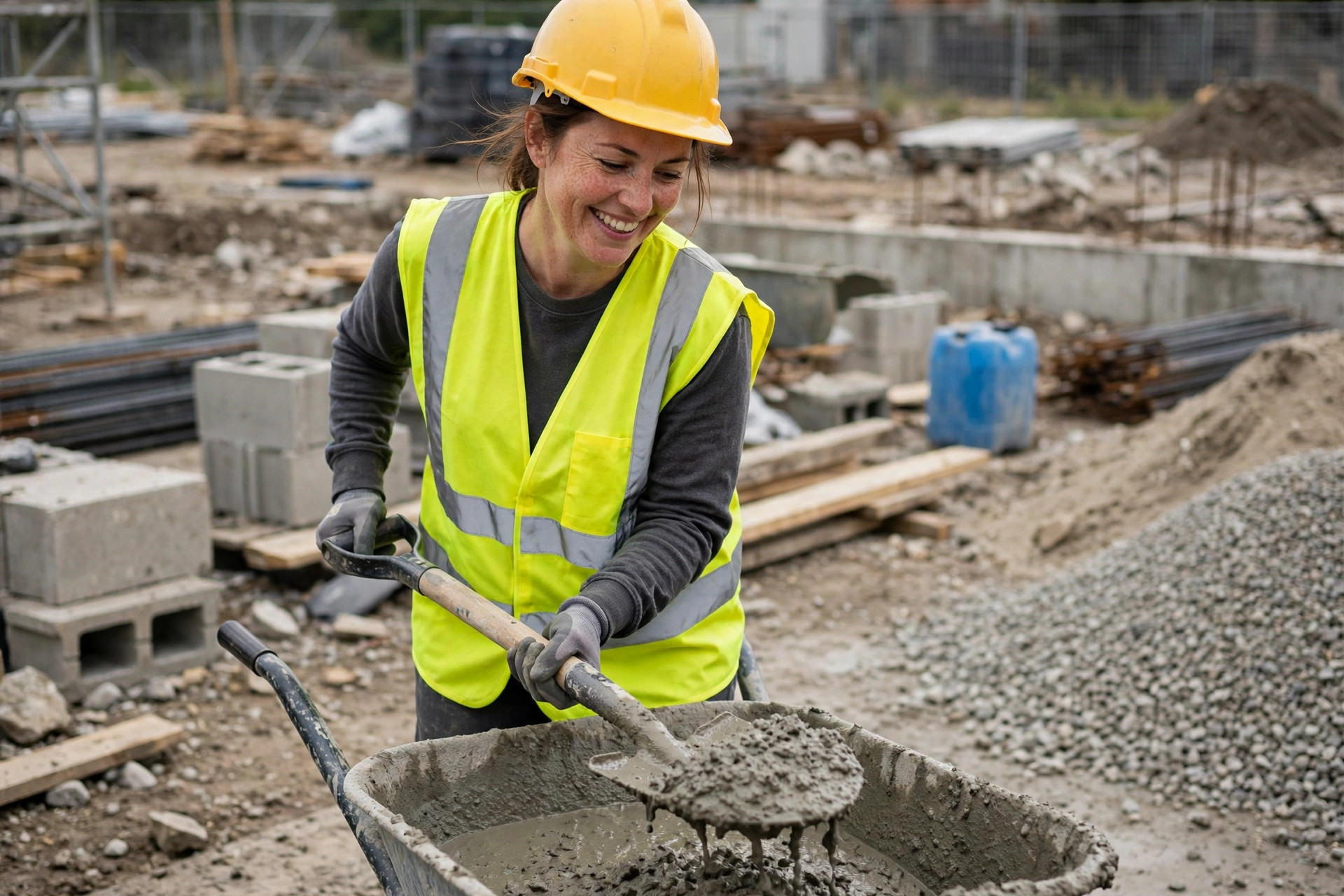
Qatar is a small Gulf state that builds on a large scale. Towers rise along the Doha Corniche, new districts grow in Lusail and Msheireb, stadiums and roads built for the World Cup now sit beside fresh housing, hotel and infrastructure projects, and cranes are a permanent part of the skyline. In 2026, employers across Doha, Al Rayyan, Lusail, Al Wakrah and Mesaieed keep looking for reliable construction workers, and much of that demand falls on roles the local labour market cannot always fill. Qatar’s economy is built on energy, construction, hospitality and services, and employers in building continue to hire foreign staff. For many applicants from South Asia, Africa, Southeast Asia and Eastern Europe, a construction worker job in Qatar is a way to earn a living abroad, gain experience in a new country and build a longer-term future. This guide explains what the work involves day to day, what employers usually expect, what pay and benefits look like in approximate terms, and how to apply safely. Sponsorship depends on the employer and on the applicant meeting immigration requirements. No employer can guarantee a visa, and no article can promise that every applicant will be sponsored. What you can do is understand the process, prepare strong documents and apply only to genuine employers and licensed recruitment channels.
Why Qatar Needs Construction Workers
Qatar’s building never really stops. After the World Cup, the focus moved to housing, hotels, offices, metro extensions, roads, the port at Mesaieed and the new districts of Lusail, and every one of those projects needs labourers, groundworkers, steel fixers, concreters, scaffolders and trades assistants. The demand is not abstract. Building sites across Doha and Al Rayyan need people to do the hands-on work that keeps them running, and when local workers move into office, technology or professional roles, gaps open up in practical jobs. Employers in this sector are therefore more open to hiring foreign workers than employers in some other industries, and large companies, agencies and contractors often have experience with the work permit process.
Smaller employers may not offer sponsorship at all, so it is important to check each advertisement carefully and ask directly whether the employer can support a work permit application. The language of the workplace is Arabic, with English widely used on sites and in offices, and even basic ability in Arabic helps a great deal, both at work and in daily life. Employers see language effort as a sign that a worker plans to stay and settle in. On a construction site, understanding a safety warning the first time it is given can matter more than anything else.
Job Overview: What a Construction Worker Does in Qatar
A construction worker in Qatar helps build houses, offices, roads, bridges and other structures. The work is outdoors in most cases, physical and varied: preparing sites, carrying materials, mixing concrete, assisting skilled tradespeople and keeping the site safe and tidy. Qatar’s summer heat shapes the working day. Sites start very early, take a long break in the middle of the day when the sun is at its worst, and often resume in the late afternoon. Employers value workers who are strong, reliable, safety conscious and willing to work long days when a project deadline approaches. Most construction worker roles in Qatar are full time, and the working week, shift patterns and overtime rules depend on the employer and the sector. Some roles run on fixed daytime hours, while others need early starts, evenings, nights or weekend work. The work is active and demanding, and a typical day starts early with a safety briefing and a check of the tasks for the day. Workers may spend the morning unloading deliveries and preparing an area, the middle of the day assisting tradespeople or pouring concrete, and the end of the day tidying the site and securing tools and materials. The pace is brisk and teamwork matters, because each trade depends on the others. Employers expect workers to follow safety rules, report problems early and treat colleagues and customers with respect. A good record of punctuality and reliability is often more valuable than a long list of qualifications.
Duties and Responsibilities
What you actually do each day depends on the site, the trade and the stage of the build, but a construction worker in Qatar can expect tasks such as these:
- Getting building sites ready, including clearing ground, digging and carrying materials
- Mixing concrete, laying bricks and blocks, and helping skilled tradespeople
- Putting up scaffolding, fences and temporary structures under supervision
- Using hand tools and basic power tools safely after training
- Loading and unloading deliveries of bricks, timber, steel and other materials
- Following site safety rules, wearing a helmet, boots and high-visibility clothing
- Keeping the site tidy and clearing away waste and rubble
- Helping carpenters, electricians, plumbers and other trades on site
- Measuring, cutting and fitting basic materials as directed
- Telling a supervisor at once about hazards, damaged equipment or unsafe conditions
Posts differ in how specialised they are, and the advertisement should say whether training or a licence is included. Read it with care before you apply, and ask the employer if anything is unclear. A post that sounds general may in fact need a particular certificate, while a specialised-sounding post may include full training for beginners.
Types of Construction Worker Jobs Available in Qatar
Construction work in Qatar covers several distinct roles, and the tools and the risks are different for each:
- General labourers who prepare sites and carry materials
- Groundworkers who dig, lay drains and prepare foundations
- Steel fixers and concreters who work on frames and structures
- Scaffolders who put up and take down scaffolding
- Skilled trades assistants who support carpenters, bricklayers and electricians
Short contracts and project-based posts also turn up in construction, and they can be a useful way to get into Qatar, but a full-time, open-ended contract is generally stronger for a work permit and for long-term residence. Ask how long the contract runs before you accept. Some workers begin through a temporary agency and later move onto a direct contract with the builder, which is a normal and legitimate route when the agency is licensed and reputable.
Requirements for Foreign Applicants
Most construction jobs in Qatar do not ask for a university degree. Employers look for physical strength, reliability, safety awareness and a willingness to work outdoors. Meeting the employer’s wishes is only half the story. For a work permit, you must also meet immigration rules, and the employer must be willing and able to support your application. The usual requirements for applicants are:
- Being at least 18, with a passport that stays valid for the length of your stay and beyond
- Good health and the stamina to work a full shift on your feet doing physical tasks
- Some Arabic, or at least a willingness to learn it, for safety instructions and teamwork
- A clean criminal record, with a police clearance certificate from home if asked for
- No earlier immigration breaches in Qatar or the wider region
- Readiness for the shifts the post needs, including early starts, evenings, weekends or public holidays when scheduled
- Care with detail, honesty, punctuality and the ability to work inside a team
- Earlier experience in a similar post, which helps but is not always essential, as many employers train on the job
- Read the advertisement carefully, because a Qatar construction worker vacancy may require a licence or certificate that is not needed for every post: a driving licence, a machine certificate, or a food hygiene certificate, depending on the site in Lusail. If you hold it, name it on your CV with the issuing body and date; if you do not, say so and ask whether the Qatar employer provides the construction worker training. Never claim a certificate you do not have
- Medical fitness for the work, which can mean a basic health check arranged by the employer
Schooling is rarely a barrier. Some employers ask for secondary school completion, but many do not. What counts most is doing the work safely, following procedures, and staying for the full contract. If you have relevant experience, describe it in your CV, including the type of project, the tasks you did and the size of the team. If you have no experience, stress reliability, flexibility on shifts and a willingness to learn.
Salary and Benefits
Construction pay in Qatar changes with the city, the employer, the shift, experience and whether overtime is included. The figures below are approximate ranges only and should not be read as a fixed salary or a promise. Your real pay is whatever your employment contract states, so read it with care before you sign or travel.
A construction worker in Qatar can typically expect around QAR 1,800 to QAR 3,500 per month, often with accommodation or an allowance on top, depending on the employer, the city and the shift pattern. Workers in the biggest cities sometimes earn a little more because living costs are higher. Night shifts, weekend work and overtime usually bring extra pay under local labour law or the company agreement, and experienced workers may earn toward the top of the range or slightly above it.
On top of the wage, many employers offer benefits that add real value. Common extras include paid annual leave, paid public holidays, training, and in some cases help with a place to stay for the first weeks, above all when hiring from abroad. Always confirm in writing whether accommodation is provided, whether it is free or deducted from pay, and how long it lasts. Never accept a job where deductions for a room, food or transport leave almost nothing in the hand. Keep copies of your contract and payslips. These papers matter for permit renewals and for proving legal employment in Qatar.
Where the Jobs Are in Qatar
Construction jobs cluster around the big cities and economic centres, including Doha, Al Rayyan, Lusail, Al Wakrah and Mesaieed. Bigger cities offer more vacancies and better public transport, but rents are usually higher. Smaller cities and towns can be cheaper and quieter, with a growing number of employers. When you pick a location, weigh up living costs, transport and community. Many employers provide shared accommodation, which helps new workers settle in. Ask the employer for the exact site address before you accept, and work out how you would get there. In Qatar, transport means the Doha Metro, buses and taxis, and many workers use public transport or a bicycle where that is practical. The climate is hot and humid in summer, warm and mild in winter, so suitable clothing for the season matters, above all for outdoor or early-morning work.
How to Apply for Qatar Construction Worker Jobs with Visa Sponsorship
A tidy, honest application is as important as being qualified for building work in Qatar. It protects you and improves your chances.
- A short, honest CV opens more doors for a construction worker in Qatar than a long, padded one. For a construction worker application in Qatar, put your name and contact details first, then your work history in order, the practical skills you bring, and your languages, and stop at two pages. Hiring managers in Lusail see hundreds of these, so make the relevant experience easy to find and do not invent qualifications or jobs, since a Qatar employer that sponsors a work permit will verify what you claim.
- Add a short cover note saying why you want construction work in Qatar, when you can work shifts, and that you are ready for the role.
- Look for jobs on reputable job portals, company career pages and licensed recruitment agencies that list construction roles in Qatar. Choose employers that say plainly whether they can support a work permit.
- Start with the employer’s own website when you look for construction worker work in Qatar, and use established job portals as a second channel: the vacancy should name the employer, the location, whether that is Doha, Lusail or a named site, and the terms. If the only way to apply for a construction worker job in Qatar is through an unknown contact on social media who will not name the company, walk away. Employers in Qatar hiring construction worker workers from abroad expect direct applications, and a direct application also leaves you with a record of exactly what you sent and when.
- If an agency approaches you, check that it is licensed, ask for its registration details, and never pay a large upfront fee for a job offer. Genuine employers in Qatar do not normally charge workers for a job.
- Go to interviews by video call or phone, ready to talk about your experience, your health, your shift availability, and your plans to live in Qatar.
- A verbal promise is not enough for a construction worker job in Qatar. Ask for a signed contract or a formal offer letter and check it against the advertisement: same job title, same pay, same hours, same place, whether that is Doha, Lusail or another named site, plus the contract length, the accommodation terms and the notice period. Keep a copy of the construction worker contract for yourself, and do not resign from a current job or book travel to Qatar until the written version matches what you were told.
- A genuine construction worker offer is only the start of the Qatari work visa process process in Qatar. In most cases the employer begins the sponsorship paperwork, then you complete the visa step for the construction worker job at the Qatar embassy or consulate in your own country, bringing the contract, your passport and the supporting papers the office asks for. Do not pay anyone who promises to shortcut this: the employer’s documents proving the construction worker role is real are the backbone of the Qatar application, and no agent can replace them.
- The Qatar file for a construction worker application is built from the same pieces in most cases, so assemble it early: your passport, the employer’s contract or offer letter, proof of an address in Qatar, health cover where the role requires it, a criminal record certificate, and the completed forms. In Lusail especially, hiring managers move faster with candidates whose papers are already scanned and ready to send, and a missing police certificate is the delay that most often pushes a start date back.
- Do not travel to Qatar on a tourist visa and expect to start work at once. You need the correct work authorisation first. Working without it can lead to fines, removal and a ban.
Visa Process: What to Expect in General Terms
Qatar runs its work visa process with the employer sponsoring the worker’s visa and residence permit. The exact permit category, documents and waiting time can change, and they depend on your nationality, the type of contract and the authority handling your case. In general the employer supplies the contract and supporting documents, you lodge a work permit application in your home country or online as directed, and you attend an appointment for biometrics and an interview if asked. Processing can take several weeks or longer, above all in busy periods, so apply early and do not book travel you cannot refund until the permit is approved.
After arrival, you will normally need to register with the relevant local authorities, get a residence card or permit, and finish tax and health registration with the employer’s help. Keep every original document safe. If a permit is refused, read the refusal reasons with care. You may be able to fix a missing document and reapply, but do not pay a different agent for a shortcut that promises a guaranteed visa. Nobody can guarantee a visa outcome, and anyone who charges for a guaranteed result is not honest.
Scam Warnings: Protect Yourself
Construction jobs are a favourite target for job scams aimed at people who want to work in the Gulf. Never pay for a job offer, a visa guarantee or a place on a waiting list. A genuine employer does not ask workers to pay for the job itself. Be wary of offers that arrive by message with no interview, wages far above the normal range, or pressure to pay quickly through a money transfer or a gift card. Check the employer is real: look up the builder or contractor, its address and its website, and ring the company on a number you find yourself, not one the agent gives you. Never send your passport, bank details or a large payment to someone you have not verified. If an offer feels wrong, stop, ask for a written contract, and check with the embassy or an official source before you pay anything or travel. Warning signs include an agent who will not give a written contract, a company with no website or address, an offer letter full of spelling mistakes or copied logos, and anyone who says the visa is guaranteed if you pay today. Real employers interview you, give you time to read the contract, and let you verify them independently. Keep every message, receipt and document from anyone who offers you work, and if you believe you have been scammed, report it to your local police and to the embassy of the country concerned. Telling others about the scam can stop the same agent from targeting more people.
Tips to Improve Your Chances
Pick up some Arabic before you travel. Even simple phrases for greetings, safety, numbers and directions make a strong impression. Tell the truth about your experience and your health. Employers would rather hear a straightforward answer than find out about a problem in the first week. Keep your documents organised and translated where needed. Stay away from agents who promise a visa in days, ask for payment through unofficial channels, or refuse to give a written contract. Apply to several genuine employers instead of depending on one offer. If you have relevant experience, describe it with the type of site, the tasks you did and the equipment you used. If you have no experience, stress reliability, flexibility on shifts and a willingness to learn. A certificate, a clean driving record, or experience in a similar setting can also help you stand out. Your CV should be short, honest and easy to read, with your contact details, your work history in order, and the languages you speak. Tailor it to each job by mentioning the skills that job needs, and remove anything that is not relevant. A short, polite message with each application, saying why you want that job and when you can start, works better than sending the same message to a hundred employers. Follow up once if you hear nothing after a reasonable time, but do not send repeated messages to the same employer.
Life in Qatar as a Construction Worker
Life in Qatar can be good for foreign workers who plan with care. The climate is hot and humid in summer, warm and mild in winter. Food, housing and transport cost more in the big cities than in smaller towns, but wages are higher in the expensive areas and worker protection is generally strong. Sharing accommodation with colleagues is normal in the first months. Public transport means the Doha Metro, buses and taxis, and many workers use it daily. Healthcare comes through the public system once you are registered and contributing, although the exact rules depend on your permit and the country. Many workers use their time abroad to learn the language, save money, and later bring family or apply for longer residence when they meet the legal requirements.
The work itself is demanding. You will be on your feet, working to a schedule and sometimes to targets. Good shoes, proper technique and regular rest help prevent injury. Follow the safety training, report hazards, and do not attempt tasks you have not been trained for. A good team looks after each other, and supervisors expect workers to speak up when equipment is broken or a situation is unsafe. Workplaces in Qatar value punctuality, honesty and teamwork, and workers who show those qualities are often offered longer contracts and more responsibility. Outside work, take time to explore your city, join community groups, and learn about local customs. Settling in well makes the job easier and the experience far more rewarding.
Frequently Asked Questions
Do construction jobs in Qatar sponsor visas in 2026? Some do, above all large companies and licensed agencies that hire foreign workers regularly. Sponsorship rests with the employer and with whether the applicant meets immigration rules. Many small employers do not sponsor, so always confirm before you apply.
Must I speak the local language to work in construction in Qatar? Not always. Many employers take workers with basic English, above all in international teams. Some ability in the local language is a strong advantage for safety, teamwork and daily life, and it improves your chances of being hired and promoted.
What does a construction worker earn in Qatar? Pay changes with the employer, the city and the shifts. A rough approximate range for full-time work is around QAR 1,800 to QAR 3,500 per month, often with accommodation or an allowance on top. Always check your contract for the exact figure.
Is experience needed for a construction job in Qatar? Earlier experience helps, but many general roles take workers without experience and train them on the job. Specialised roles, such as driving or skilled work, do need experience or a licence.
Can family join me on a work permit in Qatar? Family reunification may be possible once you have legal residence and meet income and accommodation requirements. The rules depend on your permit type and personal circumstances, so check current immigration guidance before making plans.
Conclusion
Construction work in Qatar with visa sponsorship in 2026 offers a realistic route into legal work abroad for people who are ready for practical, outdoor, shift-based work and who apply through genuine channels. The jobs are real, demand holds steady, and the lifestyle can be rewarding for workers who plan their budget, learn some of the local language, and respect safety and immigration rules. Sponsorship is never automatic and never guaranteed, but a strong application, a genuine employer, and complete documents give you the best chance. Prepare with care, avoid shortcuts and upfront fees, and treat your first contract as the foundation for a longer stay in Qatar. If you are comparing options, our guide to factory worker jobs in Qatar explains the permit route in detail.